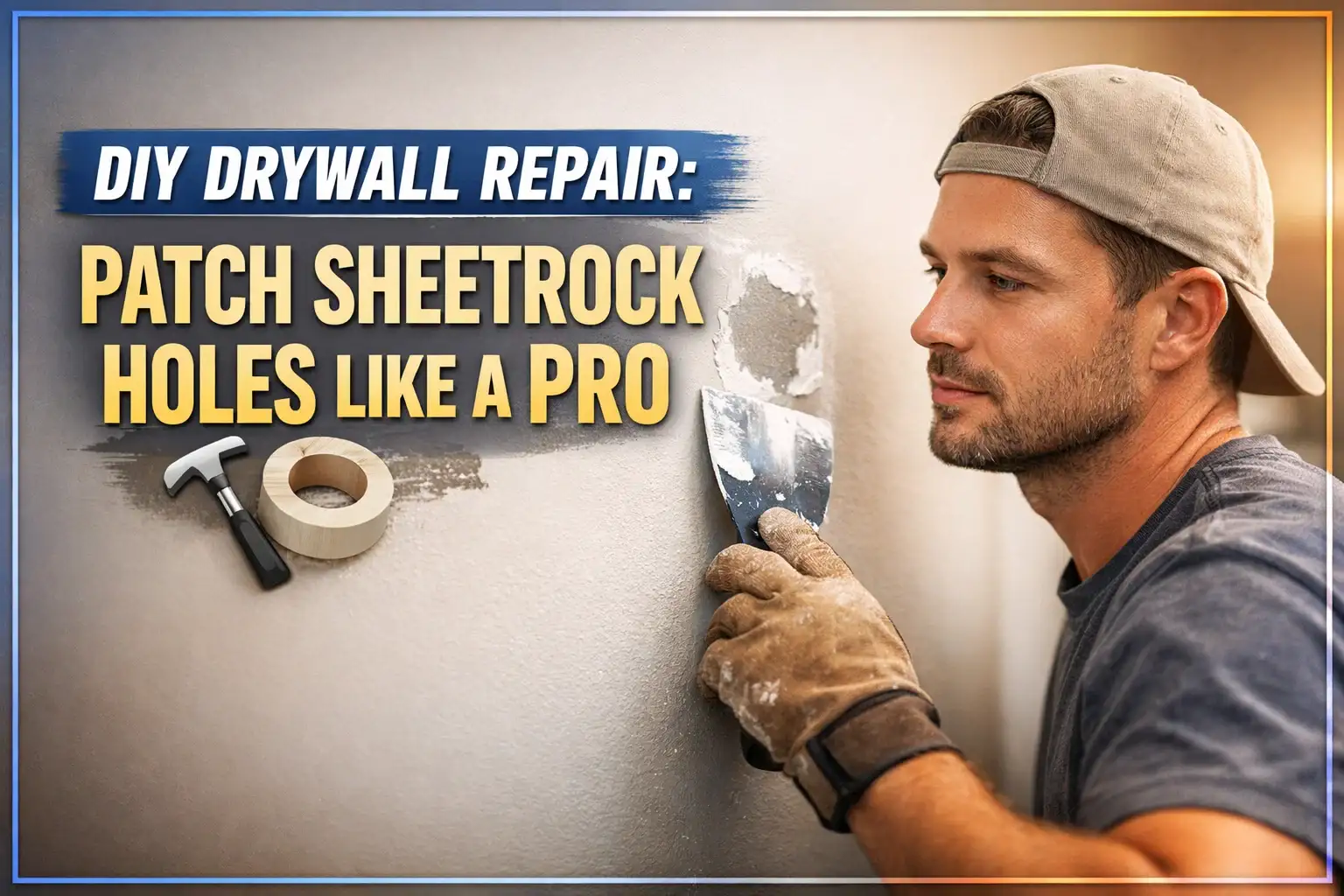

Running a business means dealing with buildings that take a beating. Office lobbies lead to the retail stores; there are spots on the walls where the ceilings are worn, carts are dented, drips are overhead, or simply worn out of use. You are not alone in a world where you are staring at a hole in the ceiling or a hanging commercial drywall. This guide breaks it all down simply.
We are going to discuss all aspects of identifying the problems to correcting them properly, regardless of whether you are a property manager in Dallas or a shop owner in any state in the country. There is no jargon; the information is straightforward on how to repair the ceiling, how to repair a wall, and so on. It is time to give your space a clean-up.
What Is Commercial Drywall and Why Does It Matter?
Commercial drywall is not something that is used at home. The harder and heavier panels are designed to be placed in areas with lots of traffic, such as offices, warehouses, and stores. Consider 5/8-inch papers having a core of fire-resisting material, fastened or screwed to metal supports. It also works with heavy loads and has very rigid building codes throughout the US, unlike residential.
Why care? A good commercial drywall system ensures your company is secure and presentable. Wet spots cause mould, fissures are propagated at a rapid rate in congested spots, and shoddily made repairs yell cheap. Selecting fire-rated options is required by codes in such places as Texas or California. Skip the hassle, good drywall-and-plaster combinations (yes, plaster still pops up in older builds), avoid legal settlements, and leave insurance content.
Where Do Commercial Drywall, Ceiling, and Wall Repairs Happen Most?
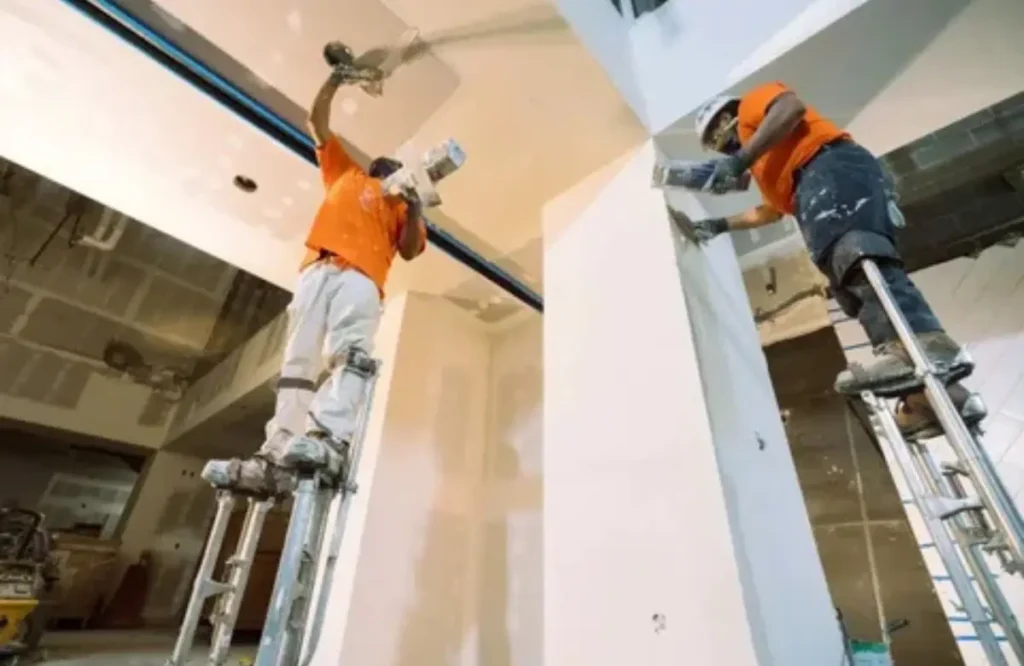
You can find commercial drywall repair all around the places of operation of businesses. The wallboard of the office buildings has to be repaired by the movers pounding on the doors. Retail strips are used to seal the holes in the ceiling that have been caused by leaks in the ceiling during storms. In warehouses, forklift dents are fought and the drywall repair in the lobby of a hotel.
Hot spots are areas characterized by a significant amount of traffic: Break rooms, stairwells, entry way. The West Coast is one of the seismic regions in the US that requires flexible repairs. Moist places such as Florida struggle with moisture and gnawing drywall and plaster. Gyms, too, are covered with ceiling repair due to sweat and sprinklers. Identify problems at the spot and save a lot of money in terms of drywall replacement.
In-Depth Guide to Commercial Drywall, Ceiling & Wall Repairs
This is the meat of it, your full playbook for tackling commercial drywall, ceiling repair, and wall repair. We will tour troublesome issues, troubleshooting solutions, equipment, and the time to hire experts. Whether you are looking at how difficult it is to dry walling diy, or how much it would cost to repair drywall, we are there. Expect real examples from US jobsites.
Spotting the Damage: Know What You’re Dealing With
First, inspect. Walk your space like a hawk. Above the hole in the ceiling, leaks brown. Find any soft spots in the walls; water rot in commercial drywall. Dents over 6 inches? Cracks wider than a pencil? Time to act.
In one of the strip malls in Dallas where I was working, a roof leak drilled a hole in the ceiling as large as a basketball. The wet section of the plaster and drywall below was being bubbled by water. Bad bit removed, key to patch wallboard.
Attributes to repair drywall Cost: Small patch, $150-$300 per spot. Big replacing drywall in a 10×10 room? $1,000–$2,500 materials and labor. Factor location, urban spots like NYC run 20% higher.
Tools and Prep: Gear Up Like a Pro
Grab basics: Utility knife, drywall saw, taping knife (6, 10, 12), mud pan, sandpaper (120-220 grit), joint compound (pre-mixed to be easy), mesh tape, screws, and a shop vac. With commercial drywall, coarse thread screws into metal studs of 1-1/4.
The first one is safety: A dust mask, goggles, and gloves. Spread drop cloths on the floor, paint flies all around. Switch of power, particularly around outlets.
Pro Advice: Hire a drywall lift to repair the ceiling; one can do it on their own on high areas, but it breaks the back.
How hard is dry walling diy? On small jobs, medium is time-consuming. Big commercial? Tough without a crew. A Chicago office DIY patch was better at saving $500, but only on weekends. Pros finish in hours.
Step-by-Step: Hole in Ceiling Repair
Light or leakage is common in a hole in the ceiling. Here’s how:
- Cut it out: Mark a rectangle on the hole with a utility knife. Made a starter opening, cut him loose. Hope that the damage will be smaller than the mark.
- Frame support: Furring strips Screw 1×3 wood over the hole (thread a string through it). They hold your patch.
- Cut and fit a patch: Measure, cut a commercial drywall panel that is a bit smaller. Screw to furring. Fill gaps with backer rod.
- Tape and mud: Apply mesh tape over seams. Apply a coating of joint compound in a thin coating (mud). Feather edges 12 inches out. Dry 24 hours.
- Sand and repeat: Sanding in between two additional mud coats. Prime, paint to match. Done, strong as new.
- Scenario: Repair of a hurricane-damaged Florida gym ceiling. We replaced 200 sq ft for $3,500 total. Bulk panels lowered the replacement cost of drywall.
Fixing Wallboard and Wall Repairs
Fixing wallboard dents or how to repair a wall? Easy tiers:
- Small dents/cracks: Sand high spots, wipe dust, mud thin. Tape if cracked. Sand smooth.
- Holes of medium size (the size of a golf ball): Cut California patch, X-slit hole edges, fold back flaps, add backing board, and screw patch over.
- Massive passages: Complete replacement of drywall. Excavate poor stuff between studs. Measure, cut a new panel screw tight. Tape all seams.
- In case of drywall and plaster hybrids (old buildings), scrape loose plaster, cracks of mesh-tapes, mud heavy.
- Philly warehouse mixed job: We bridged drywall and plaster to give a smooth appearance, and saved $800 as compared to a complete rip-out.
- Trick: The cracks are stopped by skimpy coats of mud. Wet sand for less dust. Apply a green board that is not moldable in damp places in the US.
Full Drywall Replacement: When to Go Big
Replacing drywall shines for widespread damage. Signs: multiple holes in the ceiling, mold, or fire hits. Process:
- Demo safely: Score walls, dragging panels (wearing mask, lead paint in an old building?). Save undamaged.
- New install: Commercial, which is strong in metals. To have fewer seams hang horizontally. Screws every 12 inches.
- Finishing: Three mud coats: fill, tape, skim. Sand to 180 grit. Touch match (knockdown, orange peel, rent hopper).
- Costs: Drywall replacement cost material: 2-4/sq ft, labor: 1.50-3 labor costs: 1,000 sq ft office? $3,500-$7,000. Bulk buys reduce the replacement cost of drywall by 15%.
- True work: Texas retail space after the floods. Removed 500 sq ft of commercial drywall and insulated it. Business resuming in 3 days and costing less than $4,000.
Common Pitfalls and Commercial Twists
Do not use bubbles (poor adhesion of the tape), over-mudding (shrinkage) or missing primer (peeling of the paint). Business requirements: Type x fire-rated boards, office sound channels and moisture seals in the kitchens.
The difficulty of the dry walling diy ramps increases with height or volume. A solo ceiling repair? Doable. Full office? Outsource, insurance pays professionals.
Timeline: Patch 1–2 days. Full room 3–5. Hot seasons kill time; fans assist.
Budget tricks: Home Depot/Lowe sales. Crews bid 10–20% under retail.
This portion alone will make you fit in 90% of the jobs. Practice on scraps. And your building stands firm, tenants glad.
Top Tips and Strategies for Successful Repairs
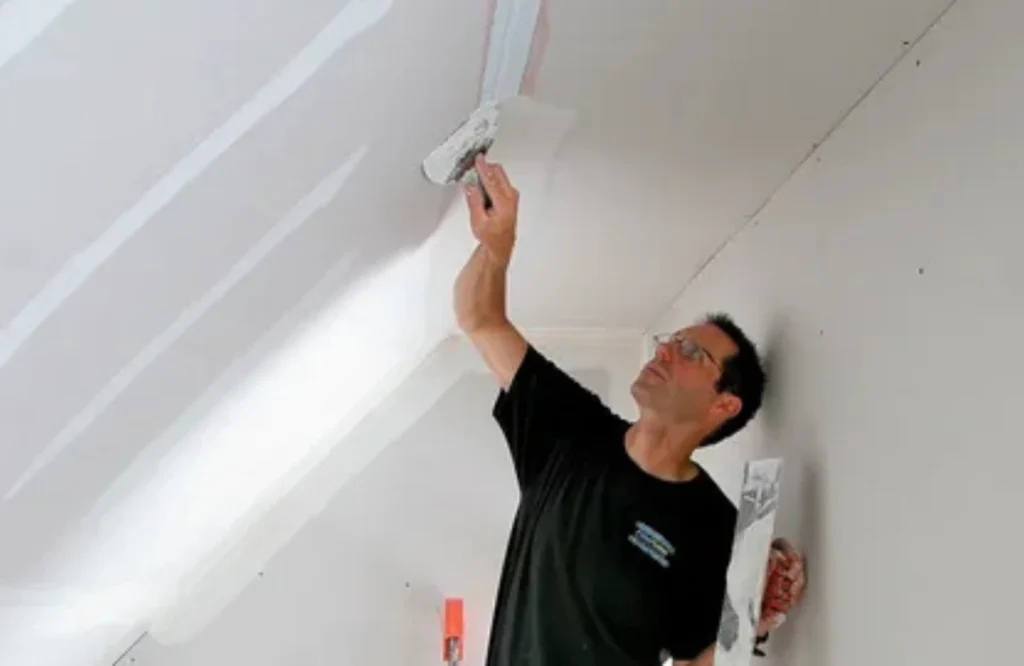
Nail repairs with these commercial drywall strategies. Save time, money, dodge mistakes.
- Prevent first: Seal roofs yearly, stops hole in the ceiling. Use chair rails in high-traffic walls.
- Budget smart: Get 3 bids. Factor cost to fix drywall +10% buffer. DIY small, pro for big.
- Match finishes: Test texture on scrap. Prime twice for a pro paint job.
- Speed hacks: Pre-cut patches. Use setting-type mud (hot mud) for fast drying.
- Go green: Low-VOC compounds, recycled panels. US tax credits for energy-efficient installs.
- Maintenance plan: Inspect quarterly. Fix small for low drywall replacement cost.
Key Benefits of Timely Commercial Repairs
Quick fixes pay off big.
- Safety boost: Patched ceiling repair prevents falls, meets OSHA.
- Value add: Sharp walls hike rent 5–10%. Lowers vacancy.
- Cost savings: $300 patch vs. $2,000 later rip-out.
- Pro image: Customers trust clean spaces. Boosts reviews.
- Compliance: Fire-rated commercial drywall passes inspections easily.
Conclusion
There you have it, the full scoop on commercial drywall, ceiling repair, how to repair a wall, and smart fixes like replacing drywall. From spotting a hole in the ceiling to weighing drywall replacement cost, you’re set to keep your US business humming without headaches. Act fast, choose quality, and watch savings stack.
Ready for pro help? Visit Patch Pros of North Dallas for free quotes on all your commercial repairs.
FAQs
What’s the average cost to fix drywall in a commercial space?
The cost to fix drywall typically ranges from $150–$500 for small patches like dents or holes. Larger rooms or full sections jump to $1,000 or more. Factor in your location, add about 20% extra in big cities like New York or LA for labor and access.
How hard is drywalling DIY for beginners?
How hard is dry walling diy? It’s medium difficulty for simple patches if you’re handy. Full commercial drywall jobs get tough with tools and height. Start small, gather basic gear, and watch free YouTube tutorials for step-by-step demos. Practice beats perfection.
Can you mix drywall and plaster repairs?
Yes, drywall and plaster repairs mix well in older commercial buildings. Scrape loose plaster first, then apply mesh tape over seams between materials. Spread joint compound smoothly in thin layers, feathering edges for a seamless finish that paints perfectly. No one spots the blend.
What’s involved in replacing drywall commercially?
Replacing drywall commercially means cutting out damaged sections carefully, adding framing if studs are exposed, then hanging new fire-rated panels with screws. Follow with taping seams, multiple mud coats, sanding, and texturing. Pros handle codes and finish fast to minimize downtime.
How do you repair a hole in the ceiling quickly?
For a quick hole-in-the-ceiling fix, cut the damaged area larger into a square, insert wood backing strips from above, screw in a drywall patch, and apply mesh tape. Mud three thin coats, sanding between each, let dry 24 hours per layer for a pro result.
When should I call pros for wall repairs?
Call pros for how to repair a wall jobs with large areas over 4×4 feet, tricky heights, electrical nearby, or strict codes. DIY saves on fixing wallboard for small stuff, but experts speed things up, ensure quality, and avoid costly redo’s in busy businesses.