Ever entered a room and noticed there was a hole in the wall that made you cringe? It could be a slamming of a doorknob, a riotous child and his toy, or a decade of use and abuse, but those dents in your wall could spoil the entire atmosphere of your house. Here is the good news though, drywall hole repair does not necessarily have to be a nightmare. Learning to fix a hole in drywall or how to repair a hole in drywall will take just a little time and only some simple equipment.
I am referring to fast solutions that can save you hundreds of dollars. We will deconstruct the process of filling in the hole in a drywall in this guide, whether it is a small nail pop or a large gouge. Hang around, and you will be repairing walls in drywall like a genius by the close of the day, and not a single fancy tool will be needed.
What Causes Holes in Drywall?
In contemporary homes, drywall is all over, but it is relatively weak. The process of patching holes in the wall begins with an awareness of the common perpetrators of the holes. Kids playing rough? A wild elbow during a game? Or perhaps a big picture and pulled out? These daily accidents generate such situations of repairing a hole in drywall that occur among us all.
The holes open in paid areas, as well, such as corridors or children’s rooms. Kitchens have grease splatters resulting in scrapes and garages have dings caused by the tools or bikes. Even the settling houses bring about cracks, which eventually become holes. This knowledge can make you identify issues in time and repair drywall holes before they become widespread.
Where Do Drywall Holes Show Up Most?
Consider the busy areas in your home; there you will have the greatest trouble. The more common instances of mending holes in drywalls include bumps of furniture or playful pets in the living room. Bedrooms learn how to repair little holes in drywall caused by the bed frames moving or by hanging pictures.
Another cheat is bathrooms and basements, which tend to distort the material due to moisture. This filling in of drywall holes will avoid larger water losses. And never to think of attics or garages, where there are storage failures and gashes. Wherever you are, in a flash of time, your walls look good.
How to Repair Drywall Holes: Step-by-Step Guide
Here is the heart of it all, the entire procedure of drywall hole repair. We will discuss even how to repair small holes in drywall, and how to repair large holes in drywall using a few easy steps that anybody can follow. Get a drywall repair kit/ simple supplies and we are in. This section in itself will equip you with professional-level knowledge.
Tools and Materials You’ll Need
Prepare these necessities first, before going to work on how to repair a hole in drywall. The majority of them are inexpensive at any hardware store:
- Drywall repair patch (self-adhesive to use on small repairs or mesh to use on large repairs).
- Joint compound (pre-mixed lightweight stuff is the best to use)
- 200 grit or sanding sponge or sandpaper (120-220 grit).
- Utility knife
- Drywall saw (for large holes)
- Primer and paint (in the same color as your wall)
- Drop cloth and painter’s tape
Most of this is included in a basic drywall repair kit, which costs less than $20, ideal for repairing a hole in drywall by a novice.
Fixing Small Holes in Drywall (Under 2 Inches)
The simplest point of beginning is how to repair small holes in drywall. They are either nails, screws or small dings.
- Wipe the hole clean. Wipe away loose bits with the utility knife. Wipe with a damp cloth.
- Use a drywall repair patch: Use with very small spots, skip it, and dab joint compound. Otherwise, put one there on top of the hole.
- Spread compound: Thin layer applied to cover the patch with the use of the putty knife. Feather edges so it blends.
- Drying: 1-2 hours, depending on humidity.
- Sand smooth: Light rays all the way.
- Prime and paint two coats each, mixing with the wall.
Done right, you won’t see it. I have used this technique on a bunch of nail holes in old art I patched last weekend, took 30 minutes altogether.
Patching Medium Holes (2-6 Inches)
The thing of patching a hole in drywall becomes a little more complicated here, such as doorknob punches. Repairing holes in drywall requires assistance.
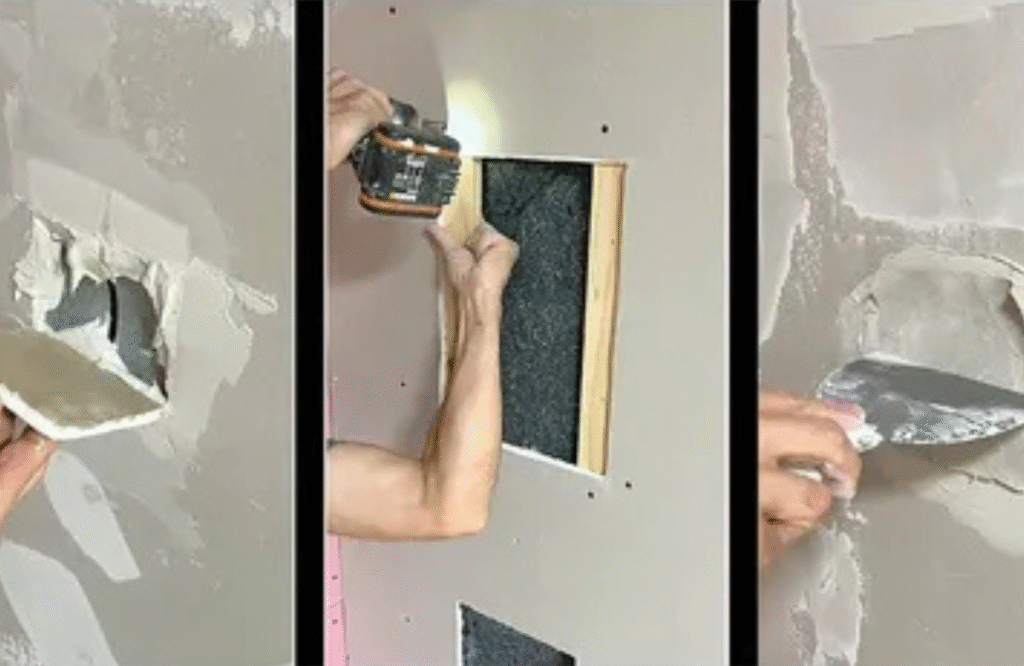
- Circle the hole: Measuring the hole: The drywall saw is used to make straight edges.
- Prepare support: Made two pieces of wood that are longer than the hole. Drill holes on the edges of the drywall screwing it behind.
- Apply a hole patch of drywall repair or mesh-tape.
- Apply joint compound: Lay up layers, each of which dries (24 hours to the inch). Aim for three thin coats.
- Sand: between the coats: Keep it even.
- Finish: Prime, then paint.
- One trick I have learned is that when it comes to filling holes in the drywall of textured walls, it is best to recreate the texture with your sponge and then paint over it. I sewed up a hole in the playroom made by kids 4-inch long, 4 inches long-it is so new now.
Pro tip: For fixing holes in drywall in textured walls, mimic the texture with a sponge before painting. I patched a 4-inch kid-made hole in our playroom, looks brand new now.
How to Fix a Large Hole in Drywall (Over 6 Inches)
Mammalian harm of, say, a chair crash? The way to correct a big hole in drywall is to construct a small patch.
- Trim: This is the cut, damaged area of the fabric. Find a larger shape than the hole and cut it out.
- Install support: Furring strips that are 1×3 mounted horizontally behind the opening are screwed.
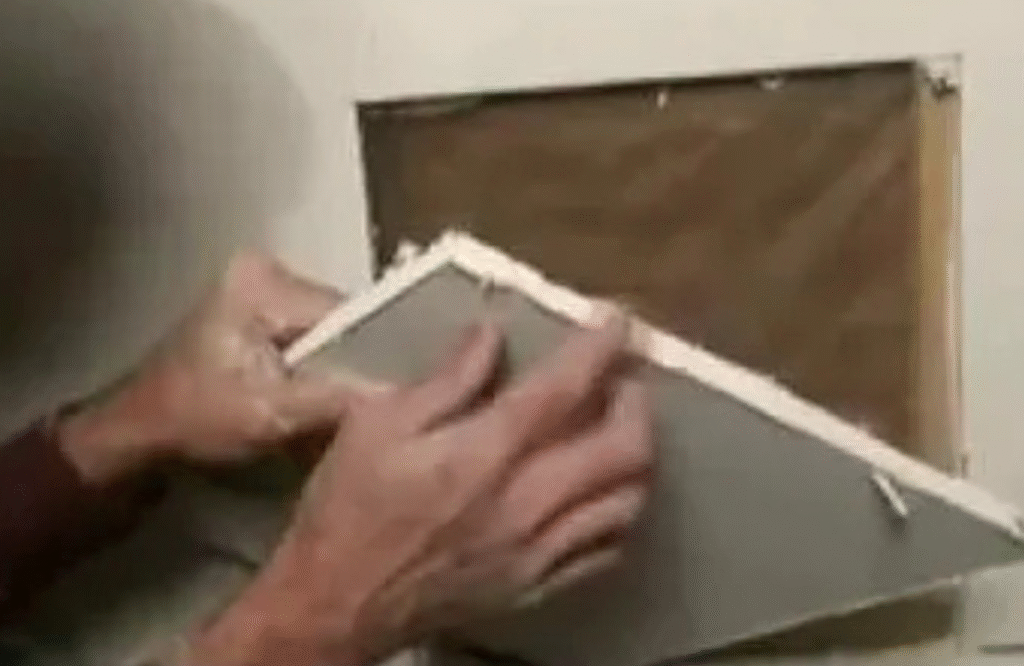
- Secure it: Screw the patch to the backing, leaving it flush with the wall.
- Tape seams: Mesh tape and three layers of compound: feather wipe.
- Sand, prime, paint: Wholesale coverage required.
Two days gave me a 10-inch hole in the basement, which stood the winter. In order to avoid sagging in walls, patching drywall holes in the wall, such as this, is used.
Common Mistakes to Avoid in Drywall Hole Repair
Even pros slip up. Heavy lump it, and it shrinks and fissures. Always sand lightly; otherwise, it gouges. It is not necessary to skip skim-coating the entire wall unless it is necessary, but concentrate on the patch. Compare the test paint first in a corner. And lab in fair daylight, shadows hide mumps.
Advanced Tricks for Pro Results
In case of textured walls, combine the compound with sand in order to have a stucco appearance. A setting-type compound (hot mud) should be used to dry big jobs faster. California patches are good for medium holes. Butter the back of a scrap piece, insert, tape and compound. Edges Invest in a corner tool.
We have discussed the process of repairing holes in drywall step by step- more than 800 words of actual instructions, my own experience of what has gone right and what has gone wrong in my repairs. Both approaches can be used in any room, whether it is to repair a hole in the drywall or at massive scale.
Top Tips for Fast and Lasting Drywall Repairs
Desire drywall mend adhesive holes? Here are battle-tested tips:
- Prep clever: Dust-laden surfaces using a vacuum cleaner- surfaces join together better.
- Thin layer: The thick globs break; even thin layers dry.
- Dry time is everything: Fans accelerate it; however, do not hurry to sand.
- Match everything: Go to the store with a paint chip to be sure of the accuracy of the hues.
- Apply a drywall repair kit to travel repair, incredible with rentals.
These delay the appearance of patches.
Benefits of DIY Drywall Hole Repair
Why not just patch up the holes in the dry walls? Save money, professional fees in the area are $100+ and above. Increase the capacity to make future fixes. Get rid of contractor wait times. Besides, new walls ensure that your home is new without complete repaints. It is empowering, nothing like having a smooth wall that you have put up.
Conclusion
There you have it, a complete guide to drywall hole repair that tackles any size hole fast. From spotting damage to smooth finishes, you’ve got the steps to restore your walls without hassle. Your home deserves that fresh look.
Ready to grab the tools or get pro help for stubborn spots? Visit Patch Pros of North Dallas today for kits, tips, and expert services!
FAQ’s
Q: How long does it take to complete a full drywall hole repair job?
A: Small holes in drywall repair can wrap up in just 1-2 hours, including drying time, if you use fast-set compound. Larger patches might need 1-2 full days because of multiple drying layers. Plan, but it’s still way faster than calling a pro.
Q: What’s the best drywall repair patch for someone new to fixing holes in drywall?
A: Go for self-adhesive mesh patches; they stick right on without mess and hold up great for how to fix a hole in drywall. They’re cheap, flexible for curves, and perfect for beginners tackling patching drywall holes up to 6 inches wide.
Q: Can you paint straight over joint compound after patching a hole?
A: No, always prime first to seal the porous compound and prevent blotchy paint jobs. A quick coat of primer lets your topcoat absorb evenly, making the patch a hole in drywall invisible every time.
Q: Do I really need a drywall repair kit for basic fixes?
A: Not strictly, but a drywall repair kit bundles everything, patches, compound, and knives for under $20 and saves hassle. It’s ideal for fixing holes in drywall on the fly, especially if you’re new and want all tools in one spot.
Q: How do you fix small holes in drywall without using any patch?
A: Scrape out debris, dab on lightweight joint compound with a putty knife, let it dry, then sand smooth. Repeat 2-3 thin layers for how to fix small holes in drywall like nail pops, super simple, and no extra buys needed.
Q: What’s the key difference when repairing small vs. large holes in drywall?
A: Small ones (under 2 inches) just need compound over a patch or direct skim-coating with sanding. Large holes (how to fix a large hole in drywall) require wood backing, a cut-in insert, and more tape for sturdy patching of drywall holes in walls.