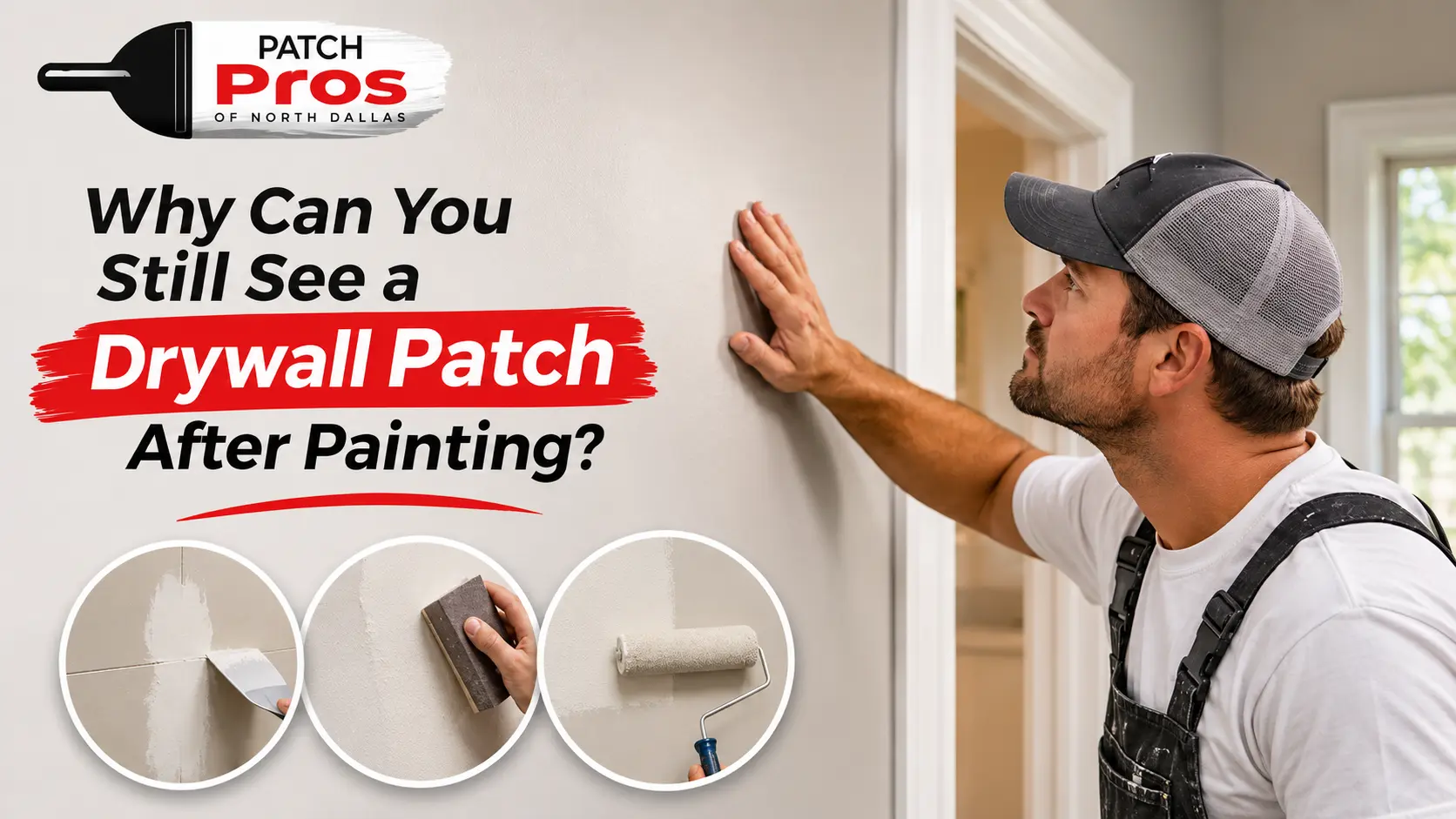
A freshly painted wall should look consistent, but sometimes a repaired area stands out even after the paint has dried. You might notice a dull spot, a shiny outline, or a slightly raised shape where the damage was fixed. This can be frustrating, especially when the repair felt smooth before painting.
A visible drywall patch after painting does not necessarily mean the repair was done poorly. Differences in surface absorption, texture, preparation, and lighting can all make a repaired section look different from the surrounding wall. Identifying the cause is the first step toward choosing the right correction.
What Does a Visible Drywall Patch Actually Look Like?
Not all visible repairs have the same appearance. The way a patch stands out can provide useful clues about what went wrong.
| What You Notice | Possible Cause |
| Dull or shiny patch | Uneven paint absorption or sheen |
| Raised outline | Insufficient feathering or excess compound |
| Smooth area on a textured wall | Texture mismatch |
| Sanding marks or ridges | Uneven surface preparation |
| Patch visible mainly in daylight | Critical or angled lighting |
These signs are not definitive diagnoses, but they can help narrow down the problem before another round of painting begins.
Why Does a Drywall Patch Show Through Paint?
1. Joint Compound Absorbs Paint Differently
Joint compound is generally more porous than the surrounding painted drywall surface. When paint is applied directly over an unprimed repair, the compound may absorb it at a different rate. This can create a dull or uneven-looking area commonly associated with paint flashing.
Even when the color matches, the repaired section may reflect light differently. Drywall primer helps create a more uniform surface, reducing the contrast between the compound and the existing wall.
2. The Repair Was Not Feathered Properly
A patch can feel smooth to the touch but still have visible edges. If joint compound was not spread gradually beyond the damaged area, a slight ridge or boundary may remain.
Feathering creates a gradual transition between the repaired section and the original wall. When that transition is too narrow or uneven, paint can highlight the outline rather than conceal it.
3. Sanding Left Uneven Areas
Sanding removes excess compound, but inconsistent pressure or incomplete finishing can leave ridges, shallow depressions, and scratches. These imperfections may become more noticeable after painting because light travels across the surface and reveals subtle changes.
A repair does not need to feel dramatically uneven to show through a fresh coat. Even small differences can become visible under strong side lighting.
4. The Wall Texture Does Not Match
A smooth patch on an orange-peel or knockdown-textured wall can stand out even when its edges are properly finished. The original wall has a particular surface pattern, while the repaired area may be noticeably flatter.
Texture differences are especially obvious on larger repairs. Applying matching paint alone will not recreate the missing surface pattern, so the underlying finish may need attention.
5. Paint Sheen Makes the Difference More Noticeable
A paint’s sheen determines how much light bounces off the wall’s surface. Flat paint generally hides minor surface imperfections better, while satin and semi-gloss finishes can highlight uneven areas.
Using the same paint color does not guarantee an identical appearance. The existing wall may have aged, been cleaned, or experienced fading, and the finish can also vary between products or batches.
Paint Flashing vs. a Poorly Finished Patch: What Is the Difference?
These problems can look similar, but they point to different causes.
| Paint Flashing | Visible Patch Outline |
| Often appears as a dull or shiny area | Often follows the shape of the repair |
| Related to differences in absorption or sheen | Related to surface height or feathering |
| May occur even when the wall feels smooth | May be noticeable by touch or under angled light |
A patch that feels level but looks different may need attention to priming or paint finish. A visible ridge, depression, or texture difference suggests the surface itself may require further work.
Will Another Coat of Paint Hide the Patch?
Not always. If the problem is simply uneven color coverage, another coat may improve the appearance. However, additional paint usually cannot correct a raised edge, poor texture match, or an unprimed porous repair.
Before repainting, inspect the area from different angles and compare its texture with the surrounding wall. Check whether the patch feels raised or recessed, and look for a difference in sheen. This helps prevent repeated painting over a problem that actually needs surface correction.
How Should You Diagnose the Repair Before Fixing It?
Use these checks to identify what the wall needs:
- Inspect in natural light: Look at the repair during daylight, especially when light enters from the side.
- Check the surface: Run your hand gently over the patch to identify ridges or depressions.
- Compare textures: Look closely at whether the repaired section matches the surrounding wall pattern.
- Observe the finish: Determine whether the area looks dull, shiny, or simply different in color.
- Look for moisture signs: Bubbling, recurring discoloration, or peeling may indicate an unresolved moisture issue rather than an ordinary finishing problem.
A persistent stain or bubbling area deserves further investigation before it is covered again.
When Is More Than Repainting Necessary?
If the repair has a visible ridge, uneven feathering, or mismatched texture, additional finishing may be necessary. If the surface is level but absorbs paint differently, appropriate drywall primer may address the issue. A sheen mismatch or aged surrounding paint may require repainting a larger section to achieve a consistent finish.
In North Dallas homes, the correct approach still depends on the wall’s existing finish and the condition of the repaired area. A small touch-up and a full-wall correction are not always interchangeable.
Frequently Asked Questions
Why can I see a drywall patch even after two coats of paint?
The underlying compound may still absorb paint differently, or the repair may have uneven texture, sanding marks, or visible edges. More paint will not necessarily correct these issues.
Does drywall primer prevent visible patches?
Primer helps seal porous joint compound and create a more consistent surface for paint. However, it cannot correct poor sanding, raised edges, or texture differences.
Should I repaint the entire wall?
Not always. A small repair may blend with suitable preparation and matching paint. However, differences in color, sheen, or paint age can make repainting the full wall a better option.
Final Thoughts: Finding the Real Cause Behind the Patch
A drywall patch that remains visible after painting usually points to a difference in surface preparation, absorption, texture, or finish. Identifying that difference matters more than simply applying another coat of paint.
For homeowners dealing with visible damage, Patch Pros of North Dallas provides professional drywall and paint repair services to restore damaged surfaces. Correctly identifying the cause makes it easier to achieve a repair that blends naturally with the rest of the wall.