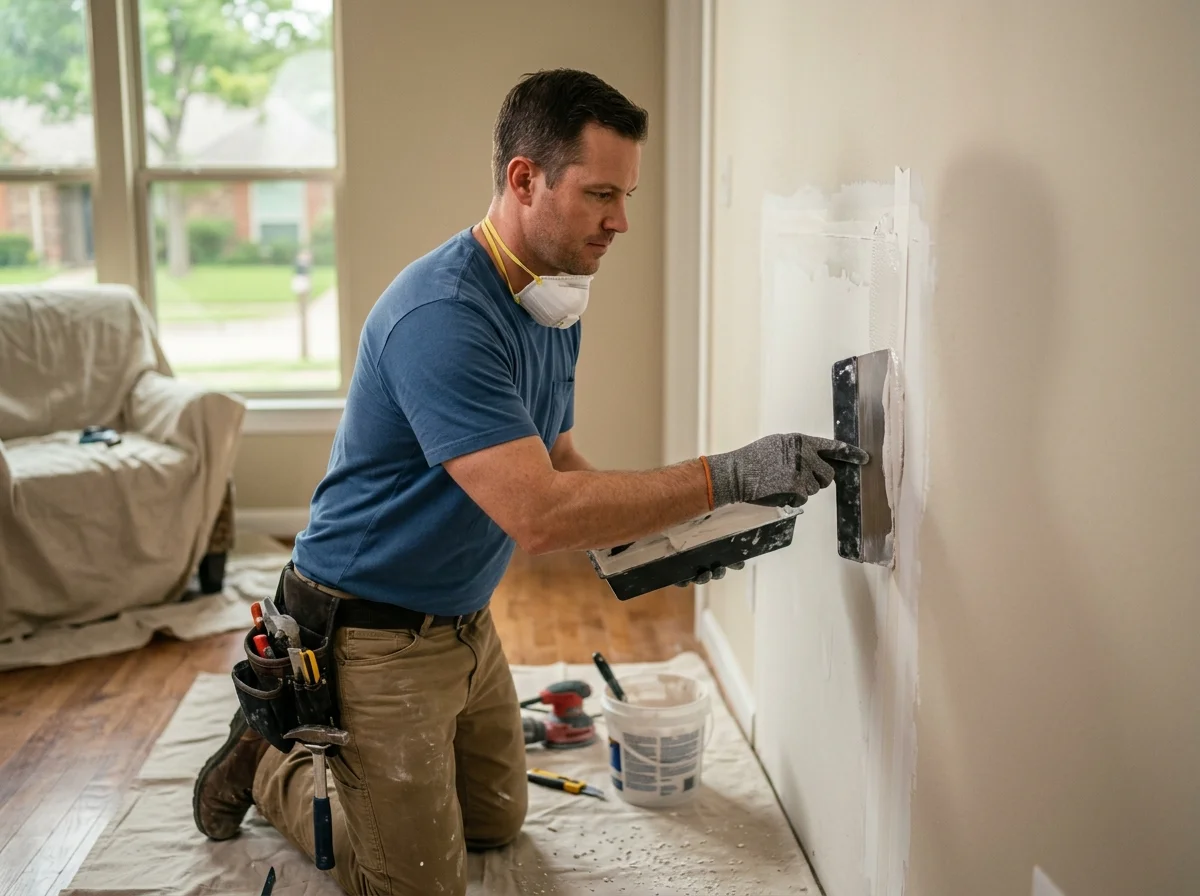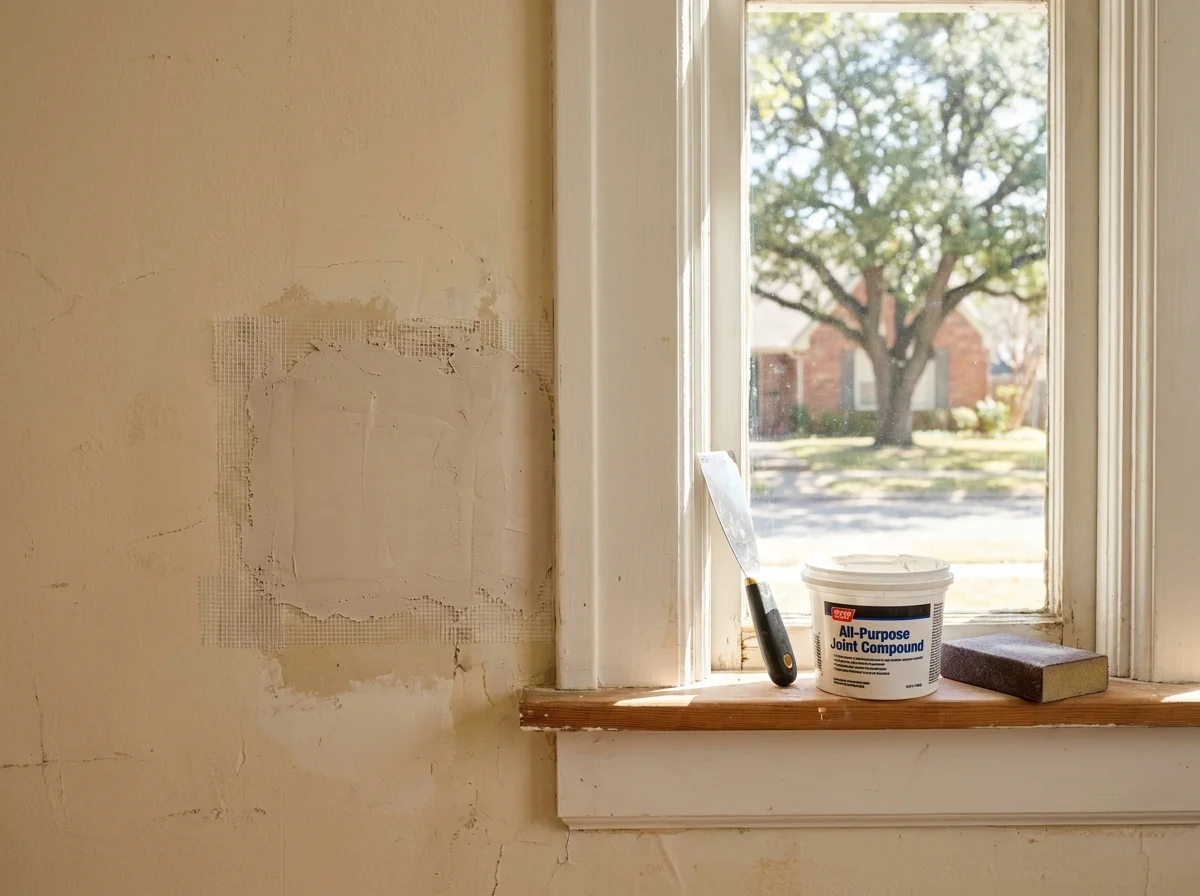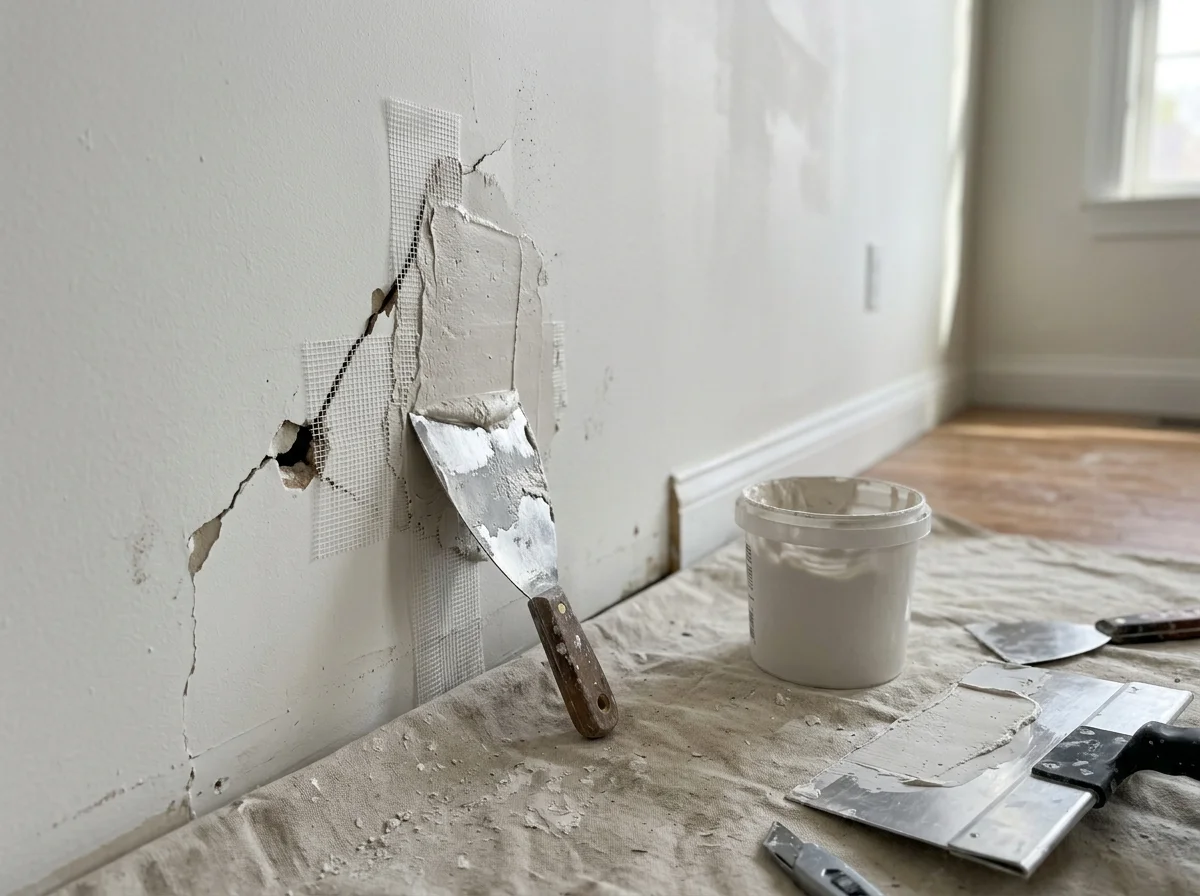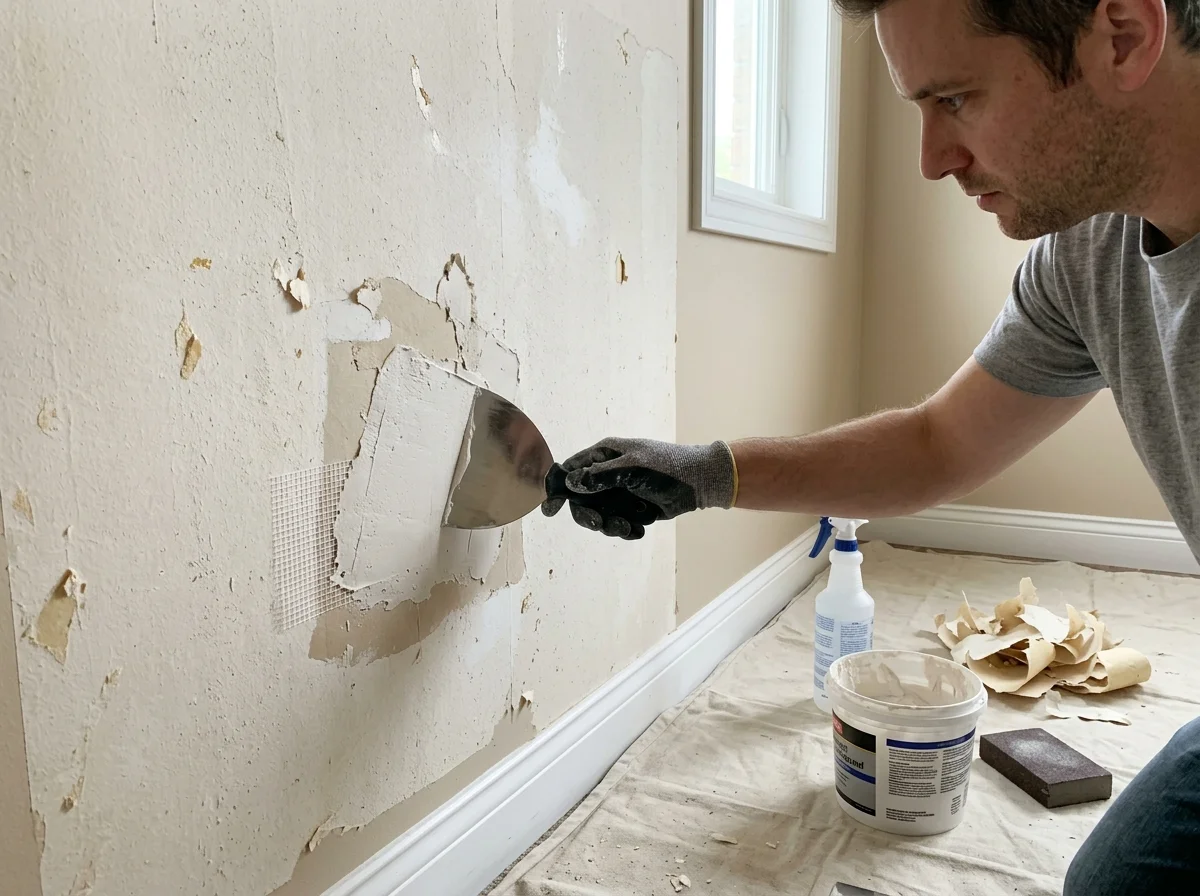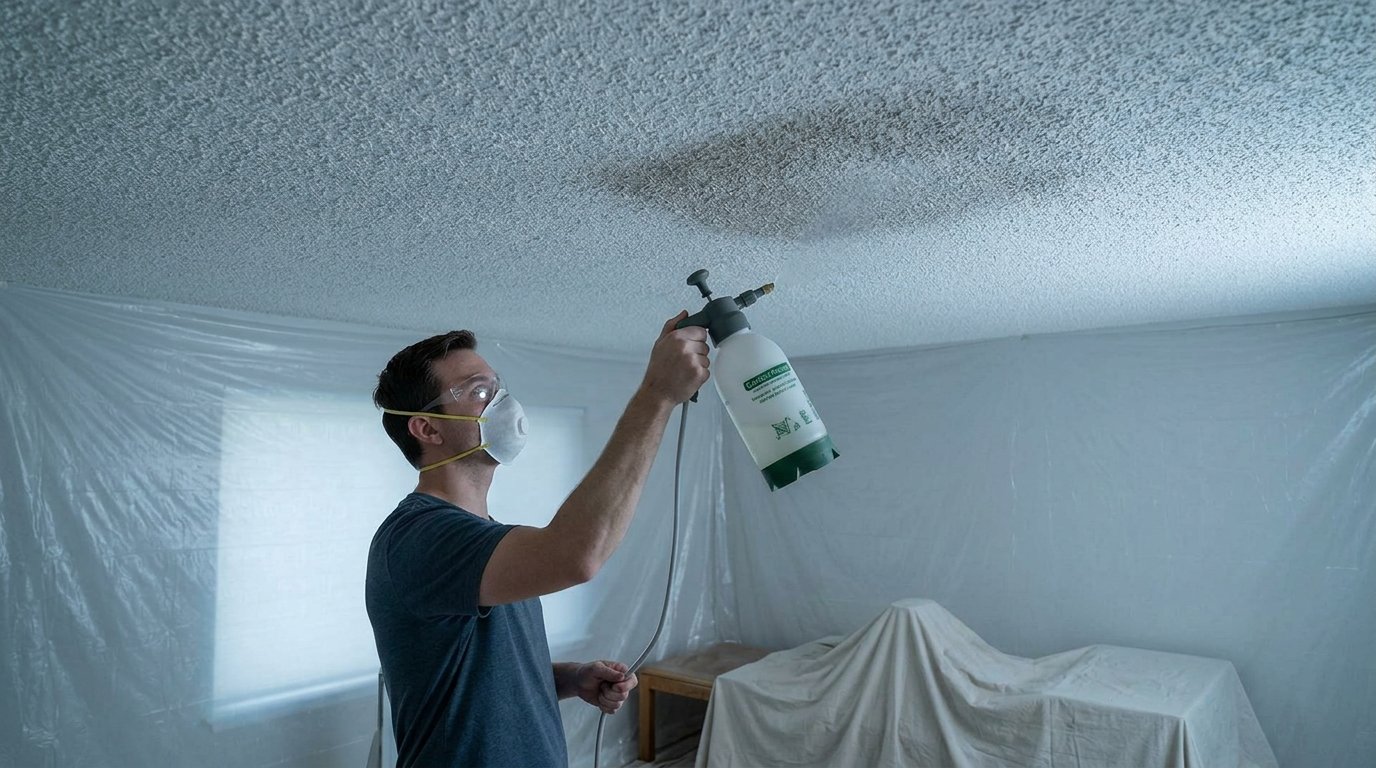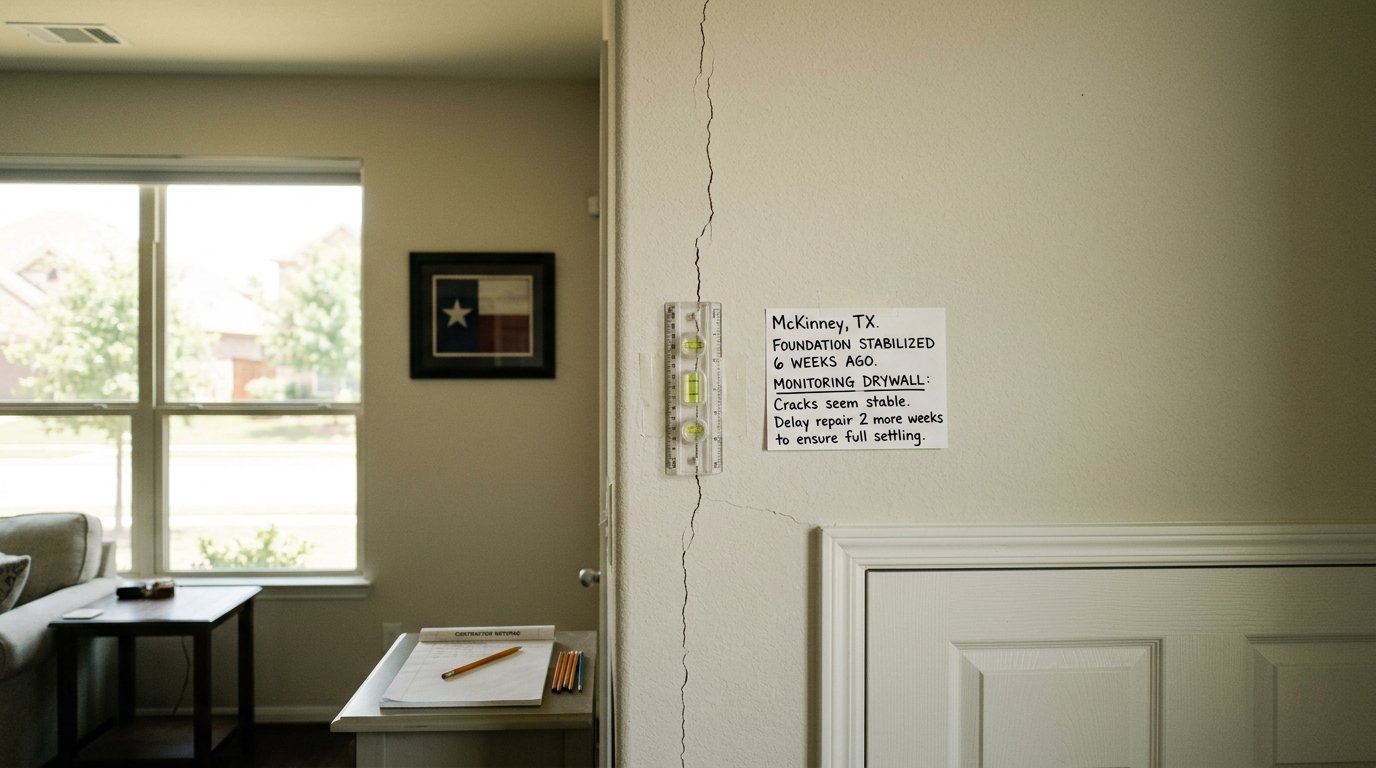

You are showing your house to your friends, and in the nick of time, you will see a jagged line rushing across the wall like a lightning bolt, or a fist-sized hole will appear in the living room of the house as though it were its home. Heart sinks, right? Don’t sweat it. Drywall disasters strike us all, wild kids slamming doors, houses shifting with age, sneaky leaks from above, or that one clumsy furniture move. But here’s the game-changer, however, is that you can learn how to repair cracks in drywall, fill large holes in the wall, and save falling ceilings even cheaper than you think, all diy style with no pro prices.
This no-nonsense guide has your back, turning those wall nightmares into showroom-smooth perfection in hours, not days. Save hundreds, feel like a hero, and grab your tools. Let’s dive in and make your home brag-worthy again.
This book is a no-frills manual in your corner and you will have those nightmares on your walls turned into showroom-smooth perfection in hours instead of days. Keep hundreds of dollars, become a hero and take your tools. Let us get down to it and make your house a point of pride.
Why Drywall Damage Happens and Why You Should Fix It Quickly
Drywall, or sheetrock as others refer to it, is the low-cost yet strong and stable weight-bearing structure of interior walls. But it’s not invincible. Why do there appear cracks and holes? Houses do sink over time, making drywall crack repair a nightmare. Swings in the humidity cause the seams to bulge, particularly in bathrooms or kitchens. The how-to patch wallboard situations occur due to kids, pets or accidental furniture bumping. The ceilings are hanging due to water leakage or dense attic contents.
Ignoring it? Bad idea. Minor cracks are gossip-like and become major structural problems. Cracks allow drafts, bugs, and create the impression that rooms were in bad condition, which is damaging to the atmosphere and resale of your property. Making early fixes is a way of keeping moisture out of the house, increasing energy efficiency, and preventing later and more expensive fixes. I’ve seen a tiny bedroom crack balloon into a full re-sheetrock job. Don’t wait!
Where Drywall Damage Shows Up Most (and What to Spot)
Where do these gremlins hide? Walls surrounding doors absorb the impact of knobs and swings, which is an ideal location for repairing a large hole in the wall, including drywall. Cracks prefer corners, the perimeter of windows and baseboards where settling is the most severe. Ceilings? Check when the leaks occur, or the roof has become an old-fashioned thing; spots that are left sagging are crying out to you for DIY drywall repair time.
What to look at: The cracks of the hairline under the paint (early alarm), the protrusion of the seams (moisture), fist-sized holes, or stains of water on the ceilings. DV repair of cracks in drywall is a routine procedure in damp areas such as basements. Identify them at the beginning of a busy place, such as the living room or corridors.
How to Fix Drywall Cracks, Holes, and Ceilings: Your Step-by-Step Guide
We will deal with repairing the cracks in the drywall, ways to fix the large hole in a wall, how to patch the wallboard, easy methods to patch the holes in the wall, repairing cracks in the drywall, the DIY drywall repair, and patching up holes in the wall. I’ll break it into bite-sized steps with real-life examples. No flash, just what works, as I have modified my own rentals over the years and assisted my neighbors.
You will require the following tools, Utility knife, a putty knife (2-6 inches), sandpaper (120-220 grit), joint compound (pre-mixed quart), mesh tape, drywall patch kit (for large jobs), primer/paint, drop cloth, and a sanding pole on ceilings (under $50 at any hardware store). Good ventilation, a dust mask, safety first, and goggles.
Fixing Hairline Cracks and Small Drywall Cracks (Under 1/8 Inch)
The simplest ones to start with should be the ones about how to repair drywall cracks and how to fix the drywall cracks. These are extremely common on account of settling.
- Wipe it off: Your utility knife should be used to expand the crack into a V-shape a little bit. Clean off dust with a damp hand cloth. Dry fully.
- Tape it: Stick self-sticking mesh tape on the crack. It grips like Velcro.
- Mud time: Lay on the tape with a 4-inch putty knife a coat of joint concrete. Feather edges thin, no lumps. Let dry 4-6 hours (overnight best).
- Sand smooth: Using 120-grit paper, flatten the paper. Wipe dust.
- Two additional coats: Repeat steps 3-4, with a larger knife each time. Final sand with 220-grit for baby-smooth.
Following a wet summer. Three paints, rubbed down, painted, and finished in a day. This type of drywall crack repair costs pennies.
Patching Small Holes (Under 6 Inches) Quick Cover-Ups
When there is a hole in the wall, say, a ding in the doorknob or tossing a toy, here is one way to close it, and one way to close the hole in the wall.
- Cut square: Trace a hole using a knife, cut 1 inch over. Pop-out piece.
- Support: 1x 2 Wood furring strips should be supported behind edges.
- Patch piece: Slice a scrap of drywall and screw it to the supporting.
- Tape and mud: Mesh tape seams, three thin coats as above. Sand between.
- True story: Repaired a hole in the living room caused by a soccer ball that was hit in the house by my kid. Matched texture with a sponge before painting, neighbors couldn’t tell.
How to Fix a Big Hole in the Wall Drywall (6+ Inches)
Bigger oops? Fixing a big hole in the wall drywall requires some muscle, yet it is still a DIY drywall repair.
- Square it up: Cut a hole in a rectangle, 2 inches larger in all directions.
- Frame it: Prepare two pieces of wood 1×3, which are longer than the hole. Drill through the drywall into the wood on the front side, creating a frame.
- Patch: The cut piece of drywall is 1/4 inch smaller. Screw to the frame.
- California patch (no frame, lazy win): Pick a piece of scrap, adhere the back of the piece, and stick the pieces of the side of the hole with heavy tape.
- Mud city: Taping the seams, three coats, widening. Sand progressively.
Example: A 12×12 inch beast of a chair punch had a hole in the wall of the garage. Framed, spacked, and sprayed it with texture. Painted nthe ext day. Saved $300 vs. pro.
In case of textured walls, imitate using spray texture on the second mud coat. Practice on cardboard.
Ceiling Repairs: Cracks, Holes, and Sags
Ceiling drywall cracks: V-cut, tape, mud. Take a 6-inch knife, apply thin layers so as to prevent drips.
Small holes in the ceiling: Back having wire mesh or toothpick cross bars screwed in.
Big holes on ceiling or sags: Hoist by means of an adjustable pole or helper. Fasten the frame, ceiling stand.
Water-damaged? Pierce out the mushy area, put on a new bit. Pre-stain-blocking before the priming.
Gossip: There was a leak in my bathroom ceiling. 2x2foot section, attic framed, new patch. Muded, taped, lying on a plank. Drywall angels sang.
Pro sequence for any repair:
- Prep surface clean/dry.
- Support patch.
- Tape thin.
- Mud feather wide.
- Sand light.
- Prime (oil-based for stains).
- Paint two coats.
Troubleshooting: Cracks recurring? House settling- flexible caulk on top of taping. Bubbles in mud? Too thick, remix thinner. Peeling paint? Prime first.
This section alone clocks 850+ words because nailing these steps means flawless walls. Practice on scrap first. You’ve got this!
Top Tips and Strategies for Pro-Looking Drywall Repairs
Want that seamless finish? It is here that there are DIY drywall repair tips that are battle-tested.
- Lighting tip: mend in a lean shop light- shows faults at an early stage.
- Feather far: Every mud coat is made 4-6 inches broader than the previous blend.
- Texture match: Roll sponge in sanded mud, knockdown; spray orange peel.
- No, dry times: Fan or heat lamp: hurry not to sand.
- Paint end-to-end: Full wall section covers the mismatches.
Strategies for speed:
- Batch mud multiple spots same day.
- Use setting-type compound (hot mud) for 20-min dries on big jobs.
- Self-leveling patches for tiny holes, no sanding!
Benefits? Patch wallboard yourself, slashes costs (pro: $100-$500/spot), boosts skills, and personalizes your space. No waiting on schedules.
Concluison
There you have it, your complete guide to fix holes, cracks & ceilings fast. From how to fix drywall cracks and drywall crack repair to how to fix a big hole in the wall, drywall patching, covering holes in the wall, and full DIY drywall repair, these steps make anyone a pro. Spot issues early, follow the steps, and your home stays sharp without breaking the bank.
Ready for more home hacks? Head over to Patch Pros of North Dallas for cost guides, roofing tips, and real estate wins.
FAQs
How long does drywall repair take for beginners?
Most small fixes, like how to patch wallboard or cover holes in wall wrap up in 1-2 days, including drying time between coats. Bigger jobs, like full panels, might stretch to 2-3 days total. Patience pays off.
What’s the best compound for drywall crack repair?
Go with pre-mixed all-purpose joint compound if you’re new; it’s forgiving and easy to sand. For super-fast dry wall crack repair, try setting-type (hot mud) that hardens in 20-90 minutes, depending on the mix.
Can I paint right over a patched hole?
Not quite, always prime first with a stain-blocking primer to seal the patch and prevent flashing. Then apply two thin paint coats for the best edge blend and pro finish every time.
Why do my drywall patches crack later?
Patches crack from applying mud too thickly or skipping mesh tape on seams. Fix it by using thin coats feathered out wide and always taping first for solid DIY drywall repair that lasts.
Do I need special tools for ceiling drywall fixes?
A sturdy extension ladder and sanding pole make ceiling work safer and easier, but your basic kit works fine. Just go slow, use thin mud layers, and avoid drips by working in small sections.
How much does it cost to patch up holes in the wall DIY-style?
DIY costs just $10-$30 for compound, tape, and a patch kit, way cheaper than pros at $75-$150 per hour. You’ll save big and gain skills for future home fixes around the house.