You’re looking at your popcorn ceiling wondering if that stuff’s safe. It’s textured, bumpy, been up there for decades. And yeah, you’ve heard stories about asbestos.
Does popcorn ceiling have asbestos? That’s the question. And honestly? The answer matters.
This guide covers what you actually need to know. Which ceilings might have it. Which years are risky. How to know if yours does. And what you’re supposed to do about it. No scary stuff. No overselling the risk. Just real information.
Your ceiling probably fine. But you need to know for sure before you start scraping or messing with it.opcorn ceiling concerns are only one part of professional drywall repair in McKinney, which can also involve cracks, holes, water damage, loose seams, and damaged ceilings.
The Real Story About Popcorn Ceilings
What Is That Bumpy Stuff?
Acoustic ceiling texture – that’s the technical name. People call it popcorn ceiling. It’s basically a coating sprayed onto your drywall. Creates that bumpy, textured look.
It was popular. Real popular. Especially in the 70s and 80s. Easy to spray on. Hides imperfections. Absorbs sound. People loved it.
Then asbestos became an issue. And people realized – oh wait, some of this stuff has asbestos in it.
So Does It Actually Have Asbestos?
Here’s the thing – not all popcorn ceilings have it. Some do. Some don’t.
Does popcorn ceiling have asbestos? Depends on when it was applied. Depends on what brand. Depends on where it was made.
Ceilings sprayed before 1978? Higher risk. Could have asbestos. Could not. You don’t know by looking.
Ceilings sprayed after 1978? Lower risk. Asbestos regulations tightened but some products might still have had it.
Ceilings sprayed after 1989? Very unlikely. Asbestos-containing material in popcorn was basically phased out by then.
You Can’t Tell By Looking
This is important. Don’t try to guess by looking at your ceiling. It looks bumpy? That doesn’t tell you anything. Color doesn’t matter. Age doesn’t matter unless you know the exact year.
Asbestos in popcorn looks the same as popcorn without asbestos. Completely identical. You literally cannot tell the difference with your eyes.
Only way to know is testing. That’s it.
The Risk Years – When Asbestos Was Common
1960s Through 1978
Asbestos in popcorn ceilings was most common during this period. Lots of products had it. It was legal. Nobody was thinking about health problems.
If your house got its popcorn ceiling spray during these years? That’s when you need to be careful.
Late 1970s and Early 1980s
Regulations started changing. EPA was cracking down. But there was transition time. Some products with asbestos were still being sold.
Popcorn ceiling asbestos years from 1978 onwards got fuzzier. Not all popcorn had it. But some did. You still need to test if you’re unsure.
When Did They Stop
When did they stop putting asbestos in popcorn ceilings? It was gradual. By the late 1980s, asbestos in popcorn was pretty rare. 1989 is basically when it was mostly phased out.
But products sitting in warehouses sometimes got used later. So there’s not a hard cutoff date.
When was asbestos in popcorn ceilings banned? There’s not one specific ban date. It was a process. EPA regulations tightened. Manufacturers changed formulas. It phased out over time rather than getting banned overnight.
What Happens If Your Ceiling Does Have It
Undisturbed Asbestos Is Actually Pretty Safe
Here’s the thing people don’t understand. Undisturbed asbestos sitting up on your ceiling? It’s not actively hurting you. The fibers aren’t floating into the air. The stuff’s not bothering anyone.
That’s why EPA says you can leave it alone if it’s not damaged.
The Real Danger Is When You Mess With It
This is crucial. Don’t scrape your popcorn ceiling if you don’t know if it has asbestos. Seriously. Don’t do it.
When you scrape it, you’re breaking it apart. Creating dust. Sending friable material (that’s asbestos-speak for material that breaks apart easily) into the air. That’s when it becomes dangerous.
Breathing asbestos fibers is the problem. Not looking at it.
Never DIY This
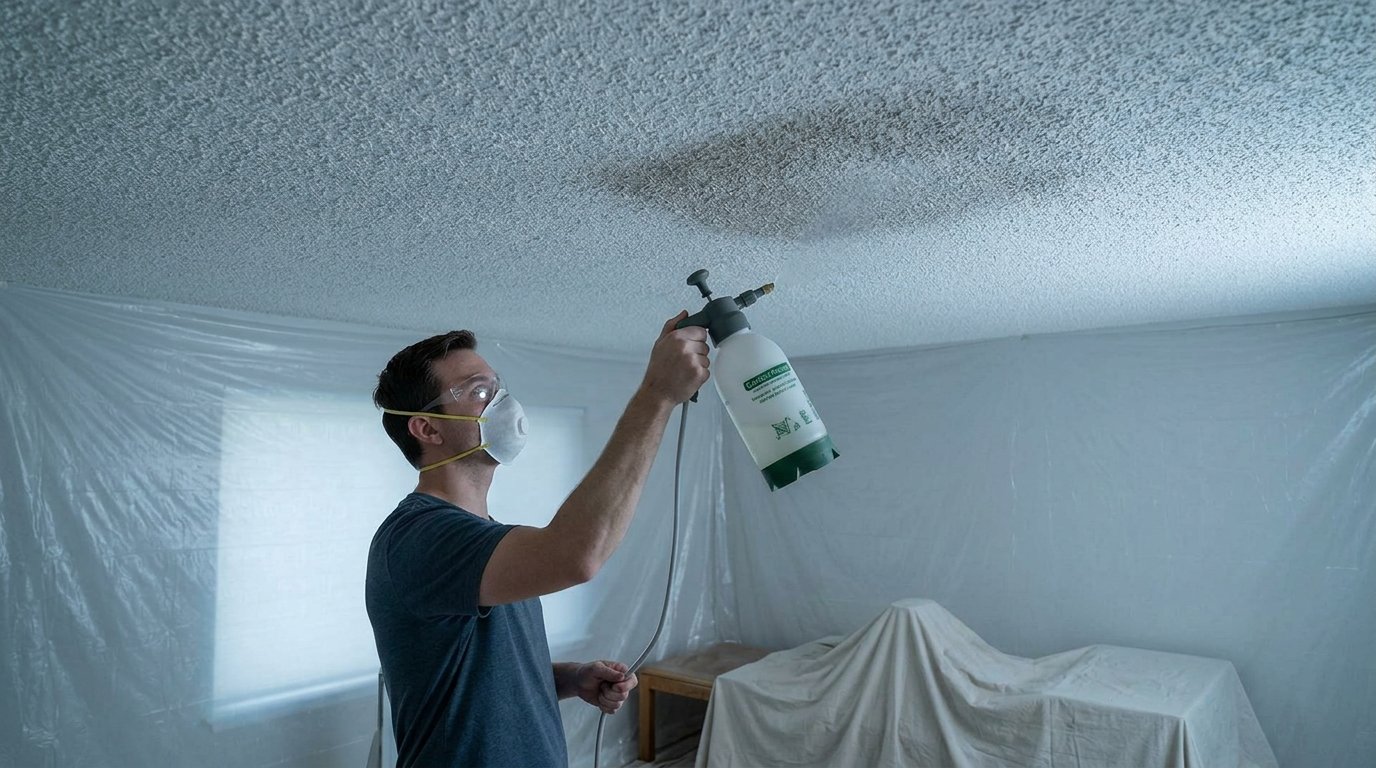
You see videos online of people scraping popcorn ceilings. Wearing masks. Using water. Making a mess. Don’t copy that.
If your ceiling has asbestos and you start scraping it, you’re exposing yourself and everyone in your house. That’s not worth it.
The Testing Process – What Actually Happens
You Need a Sample
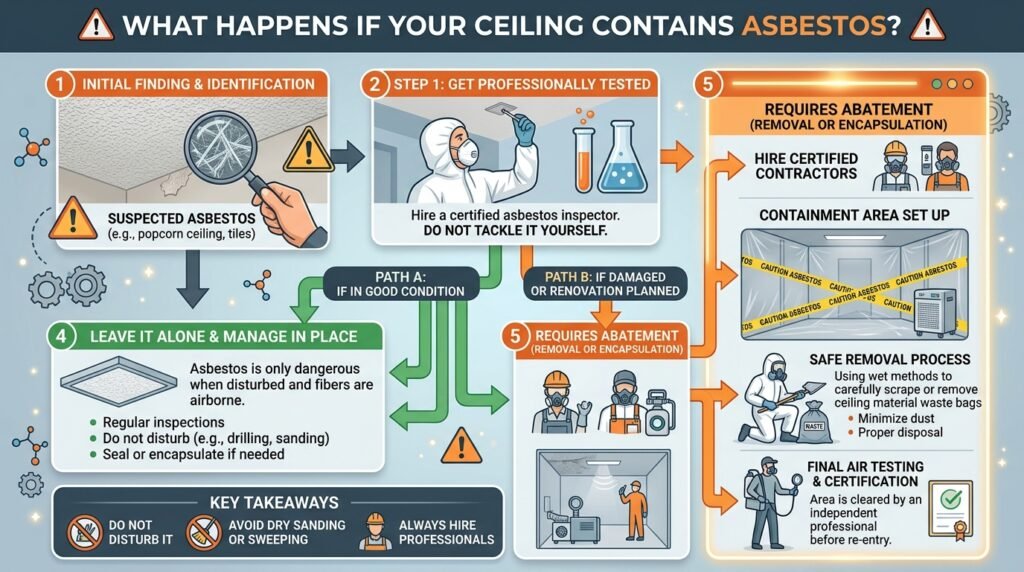
First step. Get a sample. This means someone needs to collect a small piece of your ceiling.
Ideally, a licensed asbestos professional does this. They know how to collect samples without creating a bunch of dust. They use proper procedures.
You could collect a sample yourself in a pinch. But pros are better. They know how to do it safely.
It Goes to a Laboratory
Your ceiling-texture sample goes to a lab. They do laboratory analysis. Test it for asbestos fibers. Takes a few days usually.
You get results back. Either it has asbestos or it doesn’t. Pretty straightforward.
What The Results Actually Mean
Negative result? No asbestos. Once the ceiling has been professionally confirmed safe, you can learn how to remove a popcorn ceiling without unnecessarily damaging the drywall underneath.
Positive result? It has asbestos. Now you need to decide. Leave it alone or get it professionally removed. But you don’t mess with it yourself.
What To Do With Positive Results
Encapsulation Is One Option
Ceiling encapsulation means sealing it. You cover it or treat it so the asbestos stays contained. It’s still there but it’s sealed in. Not breaking apart. Not creating dust.
This is cheaper than removal but it’s a containment strategy.
Professional Removal Is The Other Option
Get a licensed asbestos professional to remove it properly. They have equipment, procedures, safety protocols. They remove it safely.
This costs more than encapsulation but gets it out of your house.
We Can’t Do This Part
Just be clear. Patch Pros doesn’t do asbestos testing or removal. We’re not licensed for that. That’s professional abatement work.
But once your ceiling is professionally cleared and you have the all-clear from a licensed professional, our drywall repair services can address damaged drywall, install a new ceiling surface, and prepare it for finishing.
Older Homes Get More Attention
Older homes Are Higher Risk
If your McKinney house was built in the 60s, 70s, 80s? Your popcorn ceiling is more likely to have asbestos.
Newer homes? Still could but less likely.
Know Your House
Do you know when your ceiling was installed? Is it original to the house? Did someone add it later?
If you don’t know, testing is smart. Costs a couple hundred bucks to be sure.
If you know it was done recently, you’re probably fine.
Frequently Asked Questions About Asbestos in Popcorn Ceilings
Do all popcorn ceilings have asbestos?
No. Some do, some don’t. Age matters but isn’t definitive. Only way to know is testing. A sample goes to a lab for analysis. You can’t tell by looking or touching. If your ceiling was installed after 1989 you’re probably safe, but testing older ceilings is the only way to be sure.
Is my popcorn ceiling dangerous if it has asbestos?
Not unless you disturb it. Undisturbed asbestos sitting up there isn’t actively harming you. The danger is when you scrape it, sand it, or damage it and release fibers into the air. If your ceiling is intact and not damaged, it’s generally safe to leave alone.
Can I scrape my popcorn ceiling myself?
Only if you’re 100% certain it doesn’t have asbestos. If there’s any doubt, don’t do it. Scraping creates dust and releases fibers if asbestos is present. This is serious health risk stuff. Get it tested first. If results are negative, then you can scrape it yourself.
What should I do if my ceiling tests positive?
You have options. Leave it alone if it’s undisturbed. Have it professionally encapsulated. Or hire a licensed asbestos professional to remove it safely. Don’t try to remove it yourself. This requires proper procedures and equipment.
When was asbestos in popcorn ceilings banned?
There wasn’t one ban date. It was phased out gradually through the 1980s. EPA regulations tightened. Manufacturers changed formulas. By 1989 it was mostly gone but the transition took several years. Ceilings from before 1978 are highest risk.
Can I cover my popcorn ceiling instead of removing it?
Yes. You can install a new ceiling over it. You can encapsulate it. You can cover it with new drywall. As long as it stays undisturbed and contained, it’s generally safe. The goal is keeping those fibers from becoming airborne.