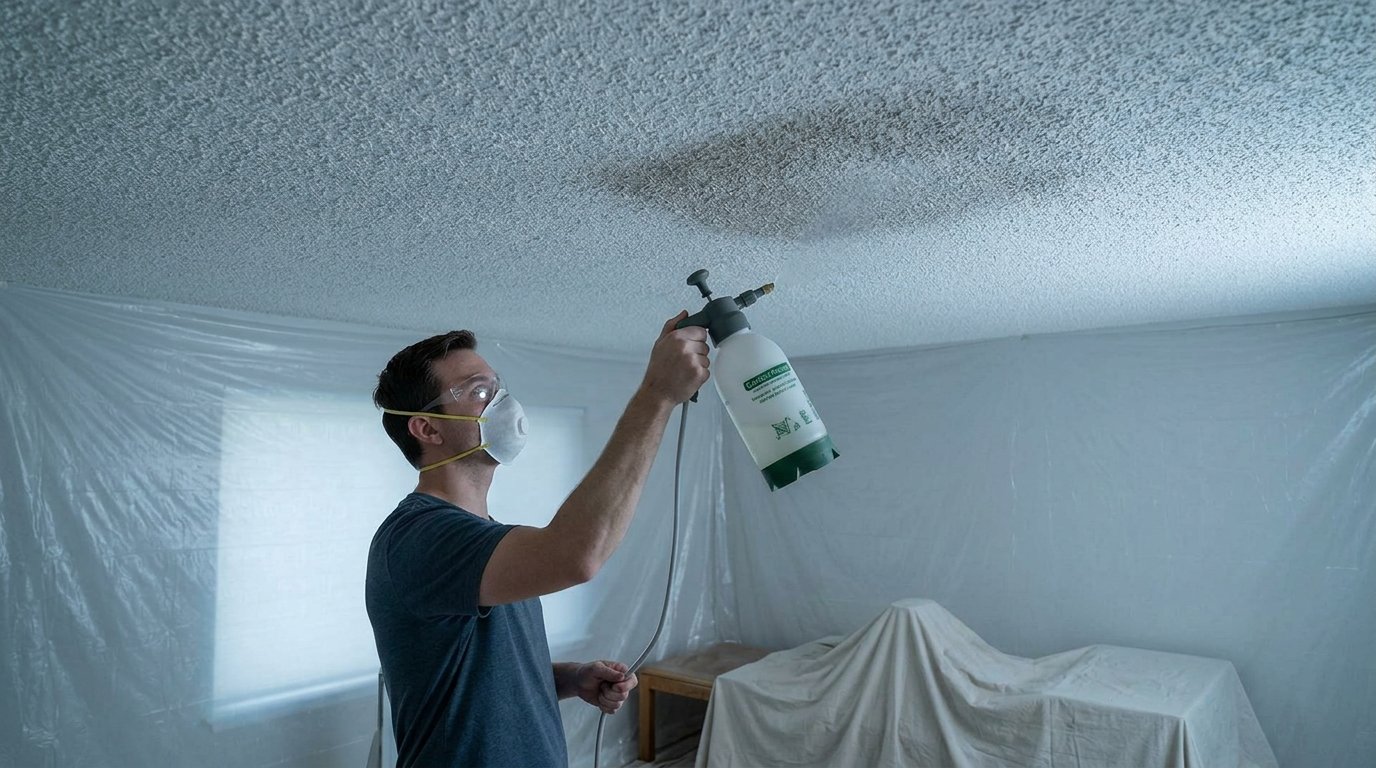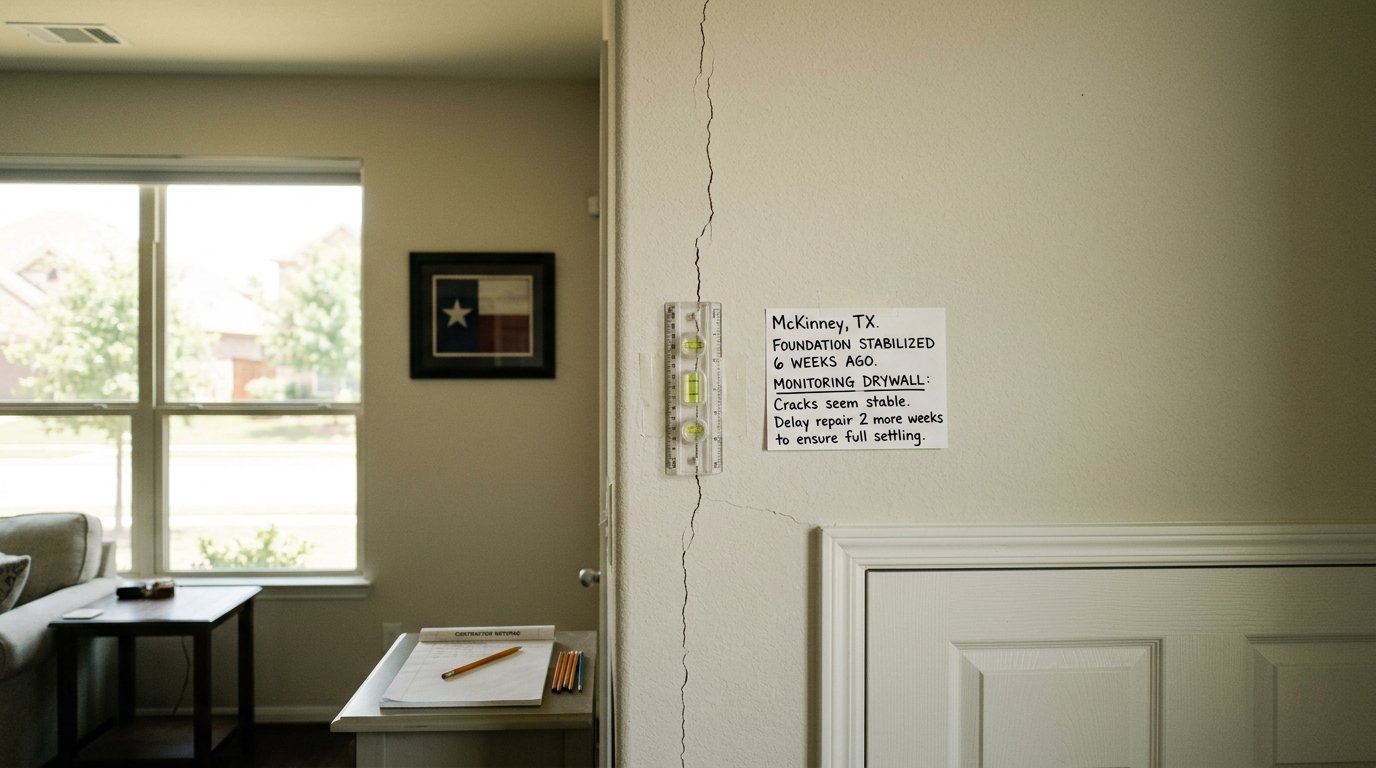
You’re walking through your house and notice a bump on the wall. Small bulge. Or your ceiling’s got this weird spot where it looks like something’s poking through. That’s a nail pop. Looks weird. Feels weird when you run your hand over it.
This guide is straight about how to fix nail pops. What they are. Why they happen. Whether you should stress about them. How to actually fix one so it stays fixed. And why most people mess this up the first time.
Nail pops are way more common than people think. Especially in Texas. Especially in newer homes. You’re not alone in dealing with this. Nail pops are only one of several issues covered in our guide to professional drywall repair in McKinney, including holes, cracks, water damage, and ceiling repairs.
What’s Actually Happening With a Nail Pop
It’s Literally Just a Nail Popping Out
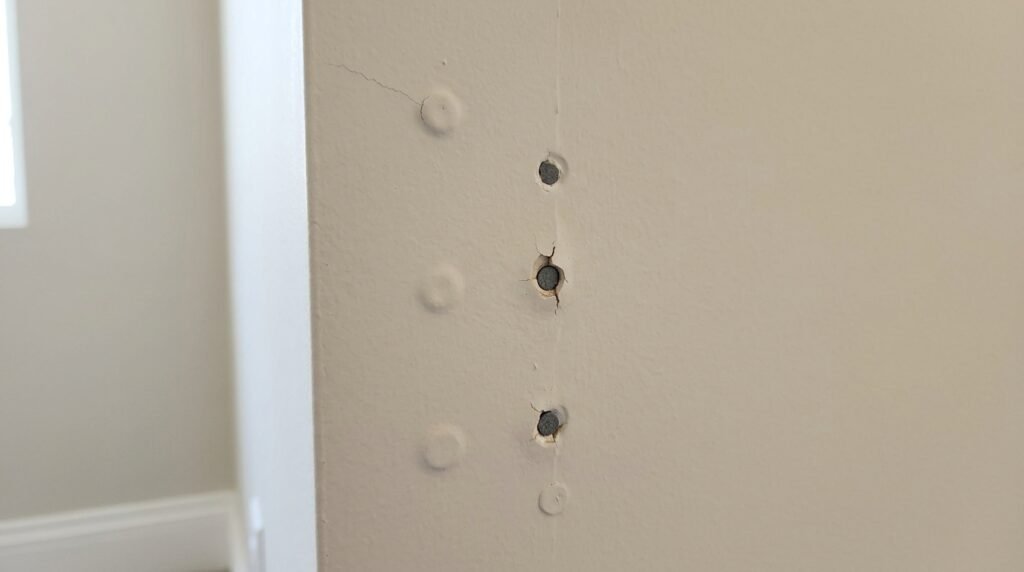
The drywall is attached to the studs with drywall fasteners. Nails. Screws. That kind of thing. Sometimes the fastener comes loose. Pops out just a tiny bit. Creates that bump you’re seeing.
Why? Could be the stud shifted. Could be the nail didn’t seat right in the first place. Could be moisture messing with things. Could be settling. Could be a bunch of reasons.
But basically – the nail’s coming loose. It’s poking the drywall out. That’s the bump.
This Happens Everywhere in Houses
Your walls. Your ceiling. Your closets. Wherever there’s drywall on studs, you can get nail pops in ceiling or walls. Nothing you did wrong. Nothing that means your house is falling apart. It just happens.
Especially in newer homes. Lumber isn’t fully dried sometimes. Framing movement happens. Houses settle. Wood moves around.
Why This Happens – It’s Not What You Think
Seasonal Wood Movement Is the Biggest Culprit
Wood moves when it’s hot and when it’s cold. Humid and dry. Expands and contracts. That movement? It can work a loose drywall nail back out.
McKinney goes from hot summers to cooler winters. That constant movement stresses everything. Your framing’s constantly moving a little bit. The nail can’t move with it perfectly. Pop – suddenly it’s sticking out.
Truss Uplift in Your Attic
This is a real thing. Your ceiling framing has trusses. In cold weather, the roof gets cold but the living space below stays warm. The bottom of the truss warms up but the top doesn’t. That temperature difference makes the truss bow up slightly.
Truss uplift is usually temporary but it can pop nails. Especially if you’ve got walls connecting to the trusses. The movement’s enough to pop fasteners.
Come spring and things settle back. But the nail’s already loose.
Nails Versus Screws
Here’s something – old houses used drywall fasteners (nails). Newer construction uses screws. Screws are better because they hold tighter. But nails? They can work loose easier.
If your house was built a certain way, with drywall screws instead of nails, you’re less likely to get nail pops. But it can still happen.
Moisture Getting Into Walls
Water problems cause wood to swell. Drywall fasteners can’t hold properly when the wood’s swollen. Fasteners pop out. And then when it dries, gap stays there.
This is why nail pops from moisture are different. They come back. The damage is ongoing.
Are Nail Pops Dangerous? Actually No (Usually)
They’re Not Structural
A nail pop isn’t your house falling down. It’s not a structural warning sign. It’s just a fastener that came loose. Annoying. Ugly. But not dangerous.
Most nail pops are cosmetic. That’s it. You see the bump. You don’t like looking at it. That’s the actual problem.
When They Actually Mean Something
Okay, so most are fine. But if you’re getting recurring nail pops in the same spot? Especially if they keep coming back after you fix them? That’s different.
That means something’s still moving. Could be framing movement that’s ongoing. Could be moisture. Could be something structural shifting around.
One or two nail pops? Normal. Half your ceiling is popping? Time to figure out what’s actually happening.
The Right Way to Fix One
Why People Mess This Up
Most people see the pop and think “I’ll just spackle over it.” They put some joint compound on the nail head and call it done.
Nope. That fails every single time. You’ve gotta actually fix the nail first. Then cover it.
Step One – Find Out What’s There
First thing – is it a nail or a screw? You can usually tell by looking. Nail’s got a point. Screw’s got grooves. Knowing which one helps you understand what you’re dealing with.
See the screw-head bulge or nail poking through? Yeah, that’s what we’re fixing.
Step Two – Actually Fix the Fastener
Here’s the real work. You’ve gotta either:
Push the nail back in. But here’s the thing – it probably won’t stay. It came out for a reason. Usually doesn’t work long term.
Or – and this is better – install a new fastener next to it. A screw usually. Screws hold better. You drive that screw in right next to the original loose one. Takes the load off the bad fastener.
The old nail can stay in there or you can try pulling it. Honestly? Sometimes leaving it is fine.
Step Three – Cover It Properly
Once the fastener’s actually fixed, then you cover it. Spackling compound. Maybe two coats depending on how deep the hole is.
Sanding and priming comes next. Gotta sand it smooth. Prime it so the paint sticks right. Then paint it to match.
Why How to Fix Nail Pops Matters
Do this right and it stays fixed. Do it wrong and you’re looking at that pop again in a month.
Most people just spackle. Spackling doesn’t hold if the nail’s still loose. The bump comes back. It’s frustrating.
Fix the fastener. Then cover it. That’s the process.
What If This Keeps Happening?
Recurring Nail Pops Mean Something’s Wrong
One nail pop – fix it and move on. Two or three? Still probably fine. But if you’re constantly dealing with them, especially in the same area?
Something’s moving. Could be truss uplift if it’s in the ceiling. Could be framing movement from settling. Could be moisture if it’s on a wall. The same movement can also loosen drywall seams, causing bubbles or peeling that may require sheetrock tape repair.
Get someone to look at it. Could be nothing. Could be something. But patterns matter.
Moisture Problems Are Different
If the nails are popping and you’re noticing dampness, water stains, or soft drywall nearby? That’s moisture causing this. Fix the water problem first or they keep coming back.
Loose drywall nail problems from moisture are different than normal nail pops. You gotta address the root cause.
When To Actually Call Someone
One pop you can probably handle yourself if you’re handy. Multiple pops happening, especially repeatedly? Consider professional drywall repair, Especially if you’re not sure why they’re happening.
Could be truss issues. Could be settling. Could be something else. A pro figures out the actual cause.
Frequently Asked Questions About How to Fix Nail Pops
What exactly is a nail pop anyway?
A nail pop is when a drywall fastener (usually a nail) comes loose and pops out slightly, creating a bulge in the drywall. Looks like a small bump. Happens because the nail didn’t seat properly or framing moved. It’s annoying more than dangerous.
Why do nail pops in ceiling happen more than walls?
Ceilings deal with more movement from truss uplift and temperature changes. Your ceiling framing expands and contracts with seasons. Walls move less. Plus ceilings are harder to finish perfectly so loose fasteners are more obvious up there.
Can I just cover a nail pop with spackling?
You can but it’ll come back. The nail’s still loose underneath. Spackling alone doesn’t fix the problem. You gotta fix the fastener first – either drive it back in or install a new screw next to it. Then cover it. That stays fixed.
Are nail pops a structural warning sign?
Usually no. One or two nail pops are normal and cosmetic. But if you’re getting recurring nail pops in multiple spots, especially if they keep coming back, yeah something’s moving around. Could be settling, could be truss uplift, could be framing issues. Get it checked.
How do drywall screws prevent nail pops better than nails?
Drywall screws grip better than nails. They don’t work loose as easily when wood moves. Newer homes built with screws have fewer nail pops than older homes with nails. If you’re retrofitting, using screws is smarter than nails.
What’s truss uplift and does it cause nail pops?
Truss uplift is when your ceiling framing bows up slightly from temperature differences between your attic and living space. Cold roof, warm ceiling = trusses bow up. That movement can pop fasteners loose. It’s usually temporary but it causes real problems.