You’re renovating your bathroom in your Dallas home. Your contractor says you need “moisture-resistant drywall.” Or you’re building a commercial space and someone mentions “Type X fire-rated panels”. You nod like you know what that means. But do you?
Here’s the thing: picking the wrong drywall type doesn’t cause immediate disaster. Your walls won’t collapse. But you might fail an inspection. Or you’ll discover mold behind your bathroom walls in two years. Or you’ll spend way more than necessary on upgrades you didn’t need.
This guide walks through what actually matters for residential vs commercial projects, which upgrades are required by code, and which ones are optional. By the end, you’ll know what questions to ask your contractor and why the answers matter.
The Simple Version (What You Actually Need to Know)
For a home:
- Standard drywall for bedrooms, living rooms, hallways
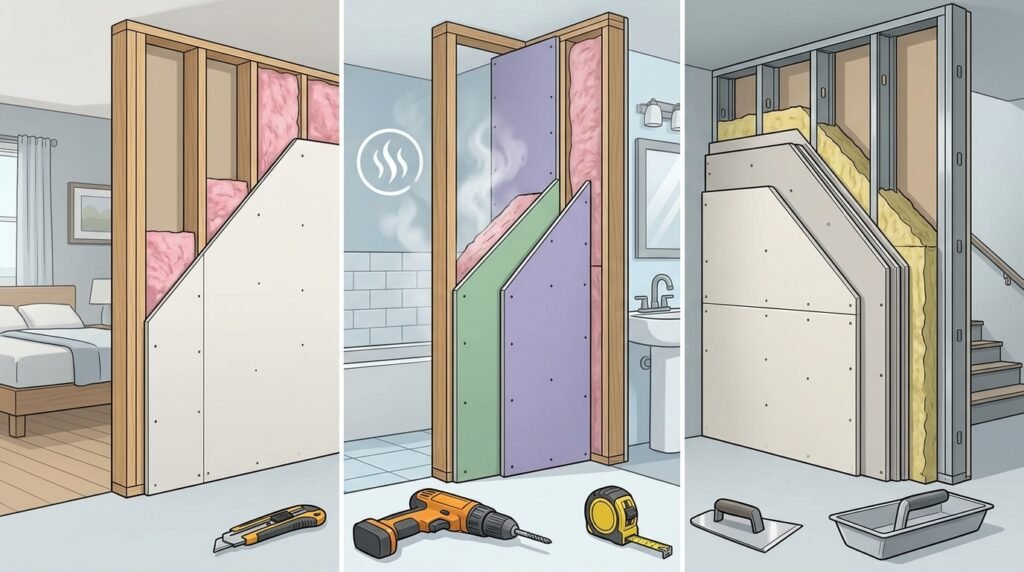
- Moisture-resistant (greenboard or purple board) for bathrooms, kitchens, laundry rooms
- Fire-rated (Type X) if your garage or mechanical room shares a wall with living spaces (probably required by code)
- Thicker panels (five-eighths inch instead of half-inch) for better sound control or in high-traffic areas
For commercial:
- Check with the building department. Code requirements change based on what the space is.
- Fire-rated Type X is probably required in stairwells, mechanical rooms, and walls between units
- Moisture-resistant in kitchens, bathrooms, and cleaning areas
- Acoustic panels if people work in the space and need to concentrate
- Thicker panels for durability in high-traffic areas
The real key: Talk to your contractor and the building department before ordering anything. Ten minutes of conversation saves thousands in mistakes. Everything else in this guide is just understanding why these choices matter.
Residential Drywall: What Actually Goes in Homes
Most bedrooms, living rooms, hallways? Standard half-inch drywall. It meets code. It paints fine. It works. That’s honestly all you need to know for most of your home.
The exceptions:
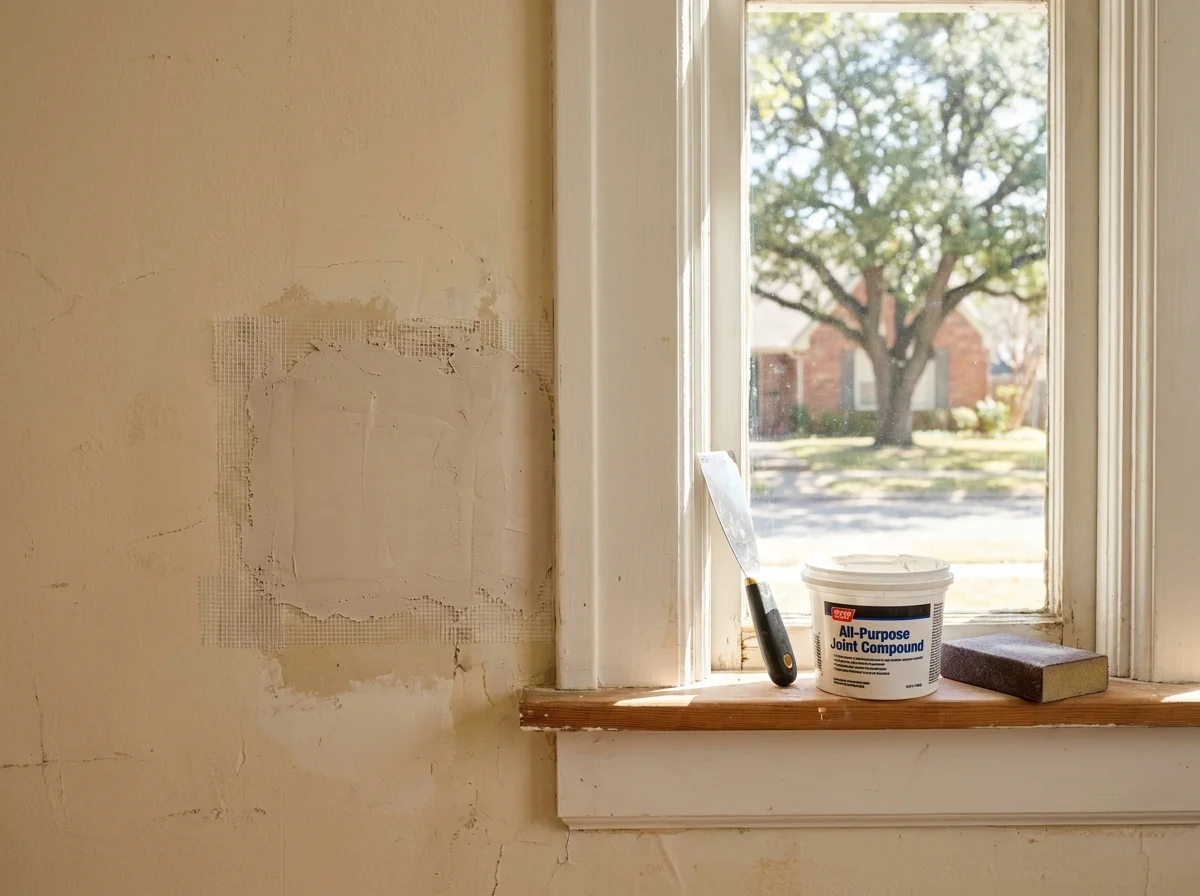
Bathrooms, kitchens, laundry rooms: Need moisture-resistant drywall. Standard drywall absorbs water, swells, crumbles, and grows mold. You won’t notice for a year. Then you find black mold inside the wall and a contractor tells you the whole section needs replacement.
Moisture-resistant drywall (greenboard or purple board) costs a bit more per panel. Worth every penny.
Garages, mechanical rooms, walls near furnaces: Your code probably requires fire-rated drywall here. Fire-rated panels have additives that slow fire spread. Takes longer for fire to get through. Building codes require it in specific spots because it saves lives.
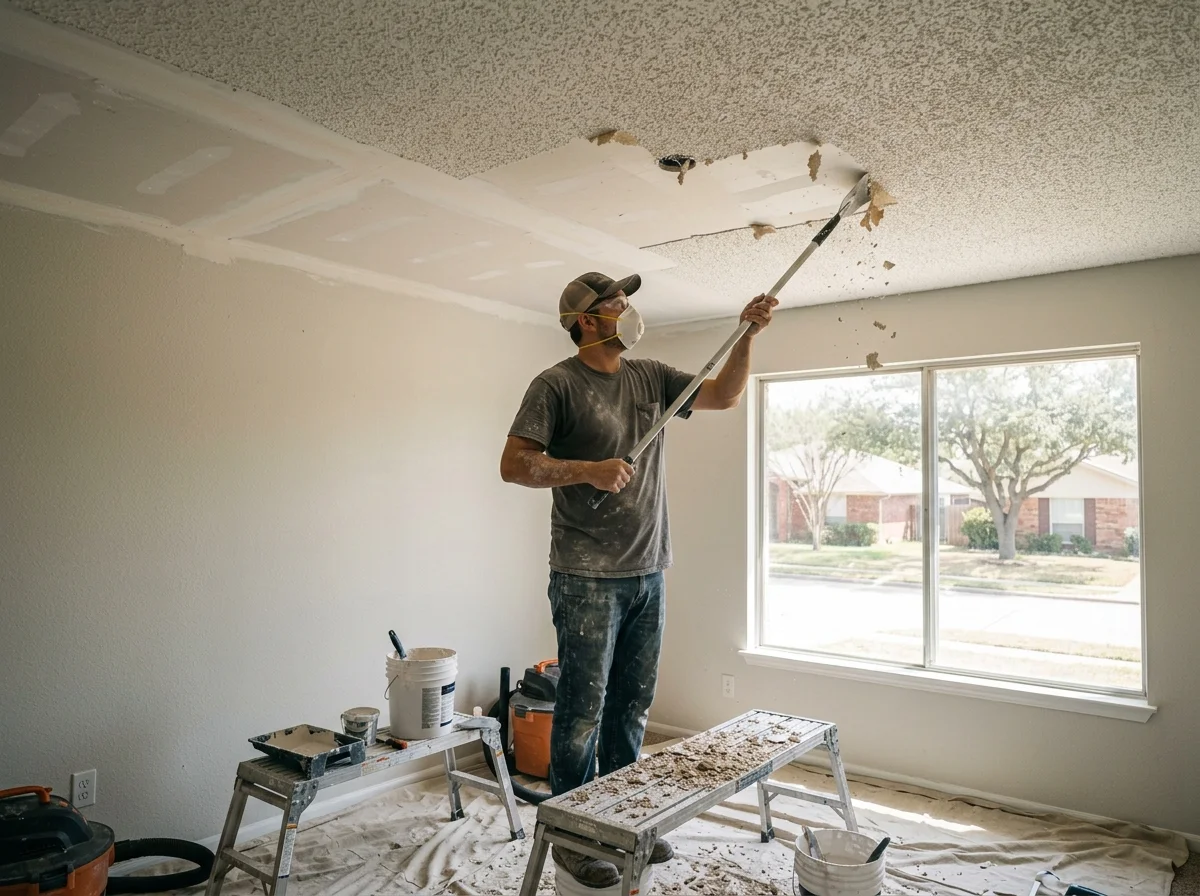
High-traffic areas: If you’ve got kids, pets, or you just bang things around, five-eighths-inch drywall instead of half-inch holds up better. Still cheap compared to repeated patch jobs.
Sound-sensitive spaces: Home office, media room, bedroom next to a loud street? Thicker drywall with good insulation behind it cuts noise. Acoustic drywall exists but isn’t necessary in most homes.
Here’s the honest truth: For most homeowners in McKinney, Frisco, and across Collin County, standard half-inch drywall works great. Upgrade to moisture-resistant in wet areas and fire-rated where code requires it. Everything else is optional.
Commercial Drywall: Where Code Gets Serious
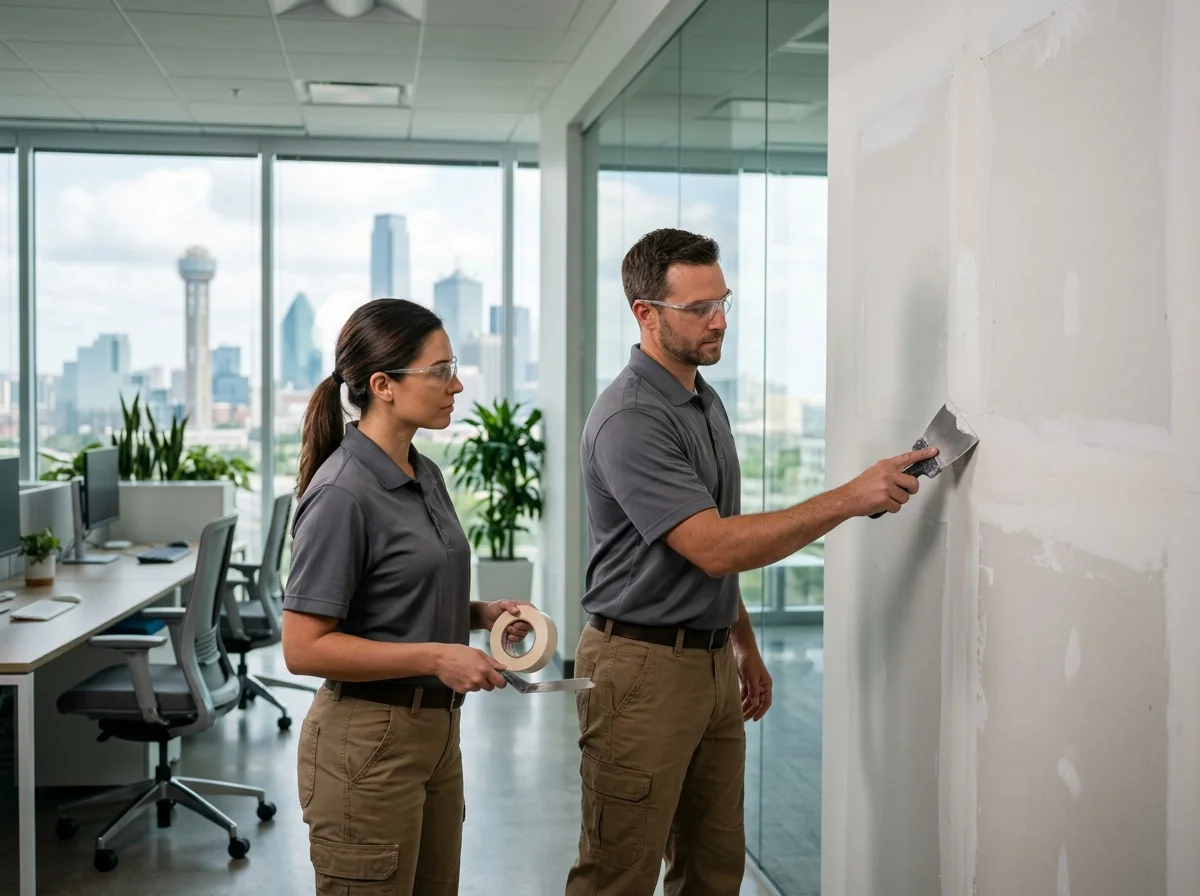
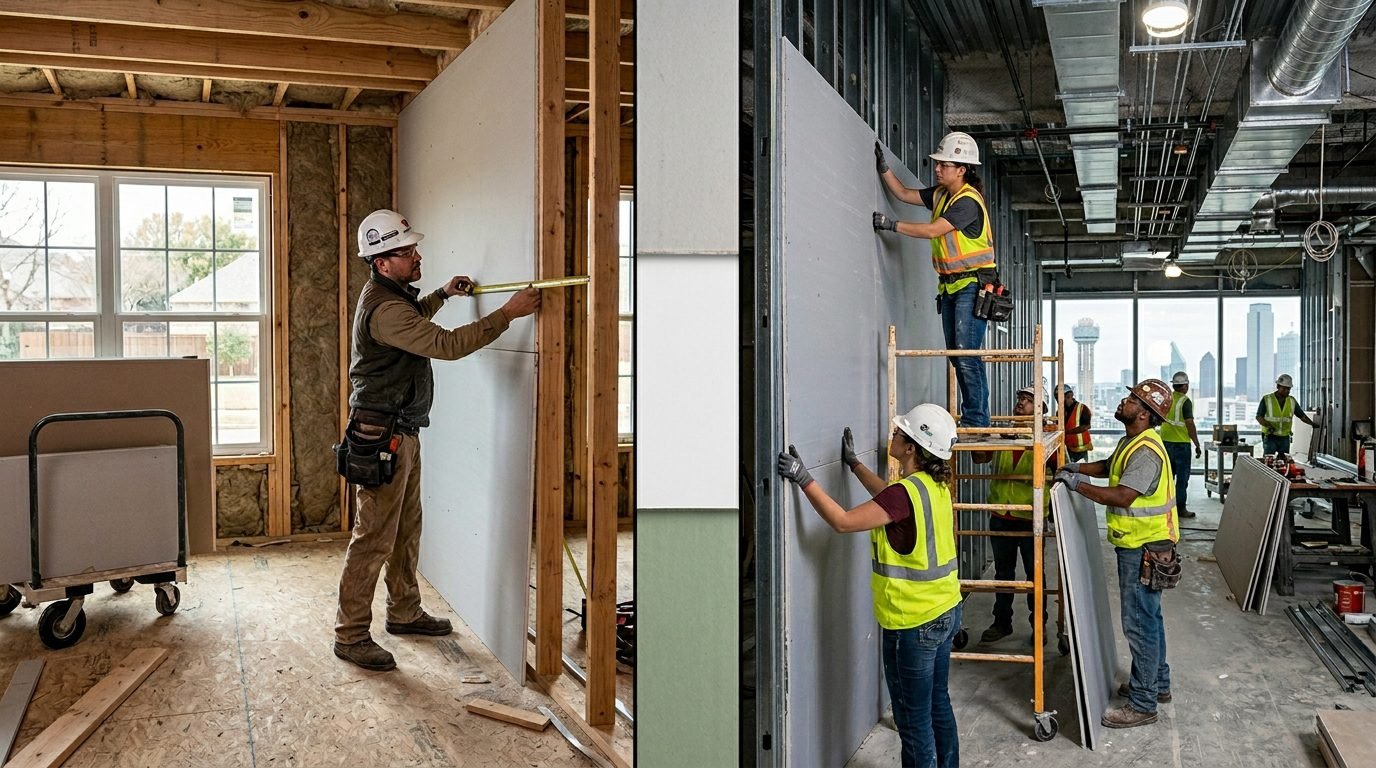
Commercial buildings have stricter requirements. Offices, retail spaces, warehouses, apartment buildings they all fall under commercial codes.
The reason? More people. More traffic. More risk. Higher liability. For code-compliant planning and installation, explore our commercial drywall services.
Fire-rated drywall (Type X) shows up everywhere in commercial builds. Around stairwells. Between apartment units. Near mechanical rooms. In hallways. Type X panels have additives in the gypsum core that resist fire longer than standard panels.
Code specifies exactly where it’s required. Your contractor needs to pull the code and confirm before ordering material. Getting this wrong means failing inspection and ripping out drywall to redo it.
Moisture-resistant panels go in commercial bathrooms, break rooms, food service areas, healthcare facilities. Anywhere water or humidity is regular.
Sound-rated drywall is standard in office buildings. People working in open offices with standard drywall can hear conversations through every wall. Productivity tanks. Sound-rated panels paired with insulation fix this.
Thicker panels are common in commercial work. Five-eighths or three-quarter inch instead of half-inch. Holds up better to bumps, moves, modifications over time.
The key difference from residential: Commercial contractors don’t guess at code requirements. They confirm them with the building department before work starts. Failed inspections are expensive. Compliance upfront is cheaper.
Building Codes: Why They Matter
Building codes set minimum standards for safety and performance. They’re not suggestions. They’re requirements. Violating them can mean:
- Failed inspections
- Forced rework (expensive)
- Insurance issues
- Liability if something goes wrong
For residential: Most common code triggers are:
- Garage walls adjacent to living space (usually need fire-rated)
- Mechanical/furnace rooms (usually need fire-rated)
- Stairwells in multi-story homes (check your local code)
- Walls between a finished basement and living areas (check your local code)
These vary by location. The Collin County Building Department can tell you exactly what applies to your project. Worth a quick call before starting work.
For commercial: The requirements are more complex and vary by building type:
- Multi-family buildings need fire-rated between units
- Stairwells need fire-rated
- Mechanical rooms need specific ratings
- Healthcare facilities have infection control requirements
Your contractor should handle this. If they don’t mention code requirements before starting, that’s a red flag.
Fire-Rated Drywall: What You Actually Need to Know
Fire ratings measure how long a wall resists fire under test conditions. Type X drywall gives you a one-hour rating. Type C gives you up to three hours.
The actual rating depends on:
- Drywall type
- Panel thickness
- How the wall is framed
- What insulation is behind it
- How seams are sealed
Most homes don’t need fire-rated drywall everywhere. Just the specific areas code requires. Guessing wrong costs you. Skipping it where required costs you worse.
Commercial buildings need it in more places. Two-hour ratings are common. Some areas need four-hour assemblies. The required rating depends on occupancy type and the specific wall assembly.
The real rule: Don’t guess. Ask your contractor what code requires. Ask the building department if you’re unsure. Compliance before work beats repairs after inspection failure.
Moisture-Resistant Drywall: The Cheap Insurance Policy
In homes, the rule is simple: anywhere water, steam, or high humidity is regular, you need moisture-resistant drywall.
Bathrooms. Showers create steam. Standard drywall absorbs it. Mold grows behind the wall before you see it on the surface.
Kitchens. Cooking creates moisture. Dishwashers create moisture. Standard drywall softens over time.
Laundry rooms. Clothes dryers pump out moisture. Standard drywall fails.
Basements with moisture issues. If your basement gets damp or wet, standard drywall is a mistake.
The cost difference between standard and moisture-resistant is minimal. Ten bucks per panel maybe. The cost of fixing mold damage is thousands.
In commercial: Restaurant kitchens, healthcare facilities, food service areas, anywhere with regular cleaning and humidity. Moisture-resistant saves money by reducing replacement frequency.
Use it where water or humidity is regular. Skip it where it’s not. That’s the whole decision.
Sound Control: When It Matters
Standard drywall doesn’t block much sound. In a home, who cares?
Well. If you’ve got a home office and you’re on conference calls, you care. If you’ve got a media room next to a bedroom, you care. If you’re next to a loud street, you care.
Acoustic drywall (thicker, denser, sometimes with felt backing) paired with insulation cuts noise significantly.
In commercial: Open offices are the worst. People hearing every conversation through walls kills focus and privacy. Sound-rated drywall in office buildings is practical, not luxury.
Honest assessment: Most homes don’t need acoustic drywall. Most homeowners don’t spend the money unless they have a specific noise problem. For homes that do have one, it’s worth it.
Impact Resistance: Who Needs It?
Standard drywall dents and cracks easily. Kids running through hallways? Furniture getting moved? Heavy equipment in warehouses?
For homes: High-traffic areas benefit from thicker (five-eighths inch) drywall. Kids’ rooms, hallways, stairwells. Reduces how often you patch holes.
Specialty impact-resistant panels exist but usually aren’t necessary in homes. Regular thick drywall is enough.
For commercial: High-traffic areas take punishment. Carts bump walls. Equipment shifts. Furniture gets moved constantly. Impact-resistant panels or thicker panels make sense. Reduces maintenance costs over the building’s life.
Specialty Applications: When You Need Expert Help
Some projects go beyond standard selections.
Residential:
- Home theaters need acoustic panels and careful sealing
- Wine cellars need panels that handle temperature and humidity swings
- Finished basements on old foundations might need extra moisture protection
Commercial:
- Healthcare facilities have infection control requirements
- Commercial kitchens need fire-rated, moisture-resistant, and cleanable surfaces
- Industrial facilities need heavy-duty assemblies
If your project falls into these categories, work with a contractor who’s done that specific type of work before. Not just general experience. Actual experience with your specific application.
Cost Reality: What Actually Costs Money
Standard residential drywall is cheap. Maybe $15 per panel.
Moisture-resistant greenboard: Add a couple bucks per panel.
Fire-rated Type X: Add more.
Acoustic panels: Higher price.
For a home bathroom renovation, the difference between standard and moisture-resistant for a few panels is negligible. Maybe $30 to $50 total. The cost of mold remediation is $3,000+.
For a commercial project, using the required fire-rated panels upfront is cheaper than failing inspection and replacing walls after the fact.
The real calculation: Does the upgrade prevent a problem or meet code? Worth doing. Is it optional and expensive? Maybe skip it. Talk it through with your contractor and see where the balance is.
How to Work With Your Contractor (So You Get It Right)
Tell your contractor everything about each space.
- Bathroom? Say it. They’ll spec moisture-resistant.
- High-traffic hallway? Say it. They might recommend thicker panels.
- Garage adjoining living space? Say it. They’ll handle fire-rated requirements.
- Home office? Say it. They can talk sound control.
The more details you give upfront, the better material list they create.
Ask for written specs. Every drywall type should be listed for each area of the project. Check that specs align with local code. If something looks wrong standard drywall listed for a bathroom ask why.
For commercial: Ask your contractor to confirm code requirements with the building department before ordering material. This is non-negotiable. Getting confirmation upfront prevents inspection failures.
Frequently Asked Questions
Do homes actually need fire-rated drywall?
More often than homeowners realize. Building code typically requires fire-rated drywall in garages that share a wall with living spaces, near mechanical rooms, and in stairwells. Exact requirements vary by location. The Collin County Building Department can confirm what applies to your specific project. Your contractor should already know the typical requirements for your area. Ask them directly.
Is greenboard good enough for bathrooms or should I upgrade to purple board?
Greenboard works fine in standard home bathrooms. Normal humidity and splash exposure aren’t a problem. Purple board offers higher moisture and mold resistance, which makes sense in high-humidity spaces like steam showers, heavily-used master baths, or bathrooms with a moisture history. Describe your bathroom conditions to your contractor. They’ll point you to the right option.
Is installation different for commercial drywall?
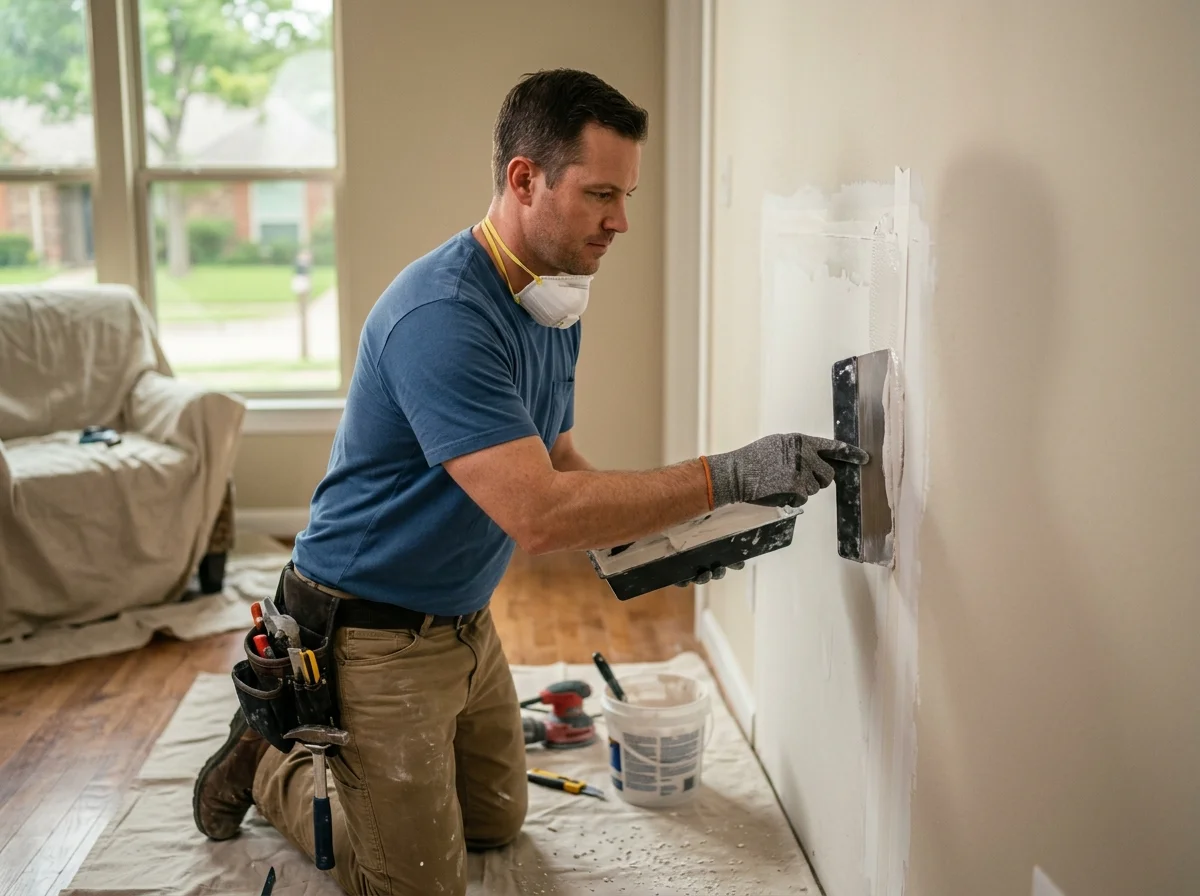
The physical process is the same: panels get fastened, seams get taped, compound gets applied and sanded. What differs is material specs, finishing standards, and code compliance documentation. Commercial projects require higher finish levels and stricter inspections. The job site process is more involved. But the actual techniques are identical.
Can I use commercial-grade drywall in my home?
You can. Nothing wrong with it. Whether it’s worth the extra cost depends on the space. In a garage, stairwell, or home theater, probably yes. In a standard bedroom, probably no. Talk through cost versus benefit with your contractor for each area. Sometimes you spec up in a few spots and keep standard drywall everywhere else.
Does every commercial space require Type X fire-rated drywall?
No. Code specifies exactly where Type X is required based on occupancy type, building layout, and specific wall assemblies. Stairwells, mechanical rooms, and unit separations in multi-family buildings are common trigger points. Open office areas and retail floors might not need it at all. Your contractor needs to review applicable code for your building type and confirm which areas need fire-rated panels before ordering.
How do I find out exactly what drywall my project requires?
Start by asking your contractor. Experienced contractors in the Dallas and Collin County area know typical code requirements for residential and commercial projects. For anything unusual mixed-use buildings, healthcare facilities, commercial kitchens go directly to the local building department. They’ll tell you what’s required for your occupancy type and building design. Get this confirmed before work starts. It costs nothing. Guessing wrong and having to redo walls after inspection failure costs thousands.