You’ve got an older home in McKinney or Frisco. The walls are plaster. Rock solid. But expensive to repair. You’re thinking about renovation. Everyone says drywall’s cheaper and easier. But you’re worried you’ll lose something by ripping out original walls.
Here’s the thing: both materials work. They just work completely differently. And which one’s “better” depends entirely on what you actually care about. Cost? Durability? Ease of repair? Historic authenticity? This guide breaks down what you’re actually choosing between. Not just facts. But what that choice means for your home, your wallet, and how much work you’ll deal with over the years.
The Basic Difference: How They’re Actually Built
Plaster and drywall do the same job. They cover your framing and create smooth walls. But how they get there is completely different.
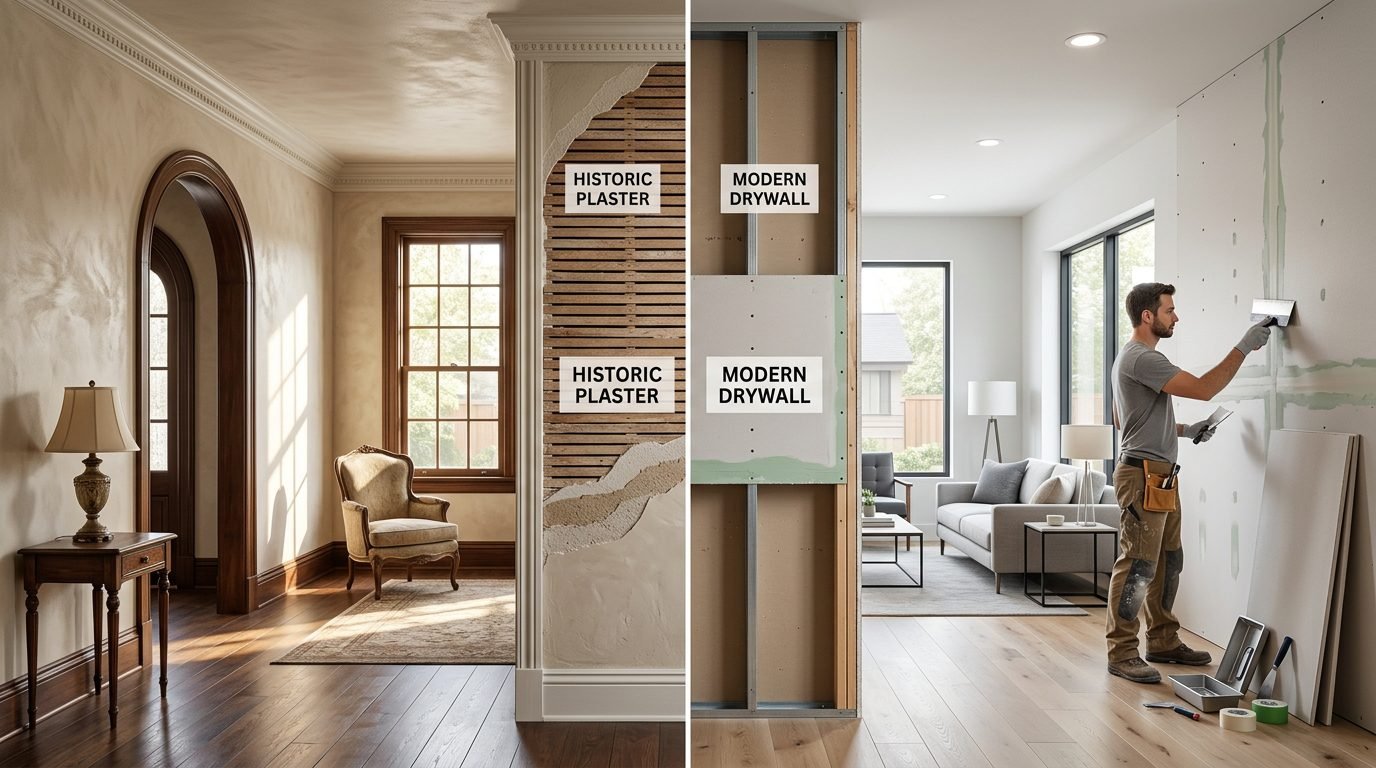
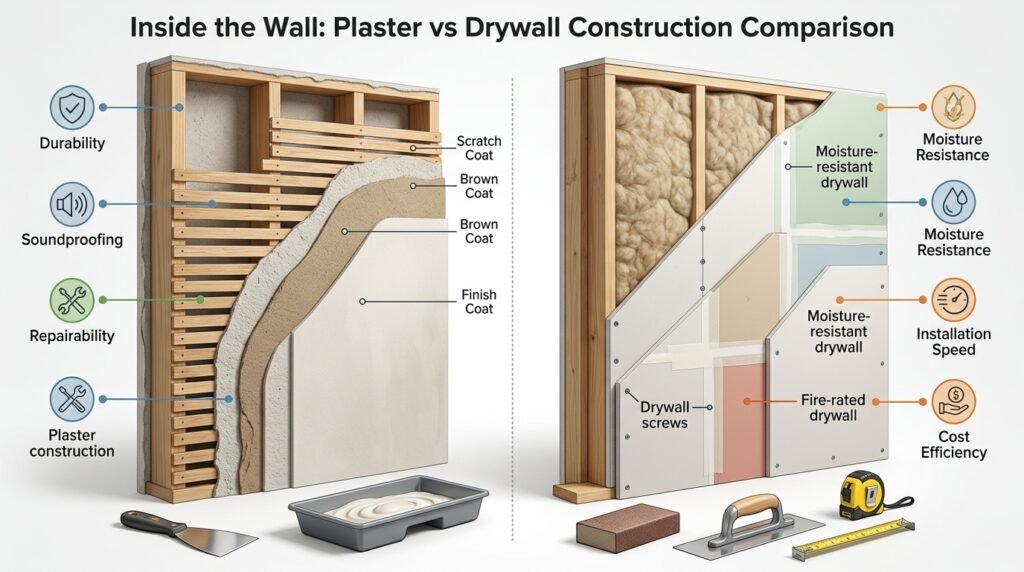
Plaster is old-school. A contractor mixes gypsum, lime, sand, and water into a paste. Then hand-applies it in three separate coats. First coat gets scored so the next one sticks. Second coat levels things out. Third coat creates the smooth finish you see.
Each layer takes days to dry. The whole process? Three to four weeks. It’s skilled work. Getting the thickness and finish right takes experience.
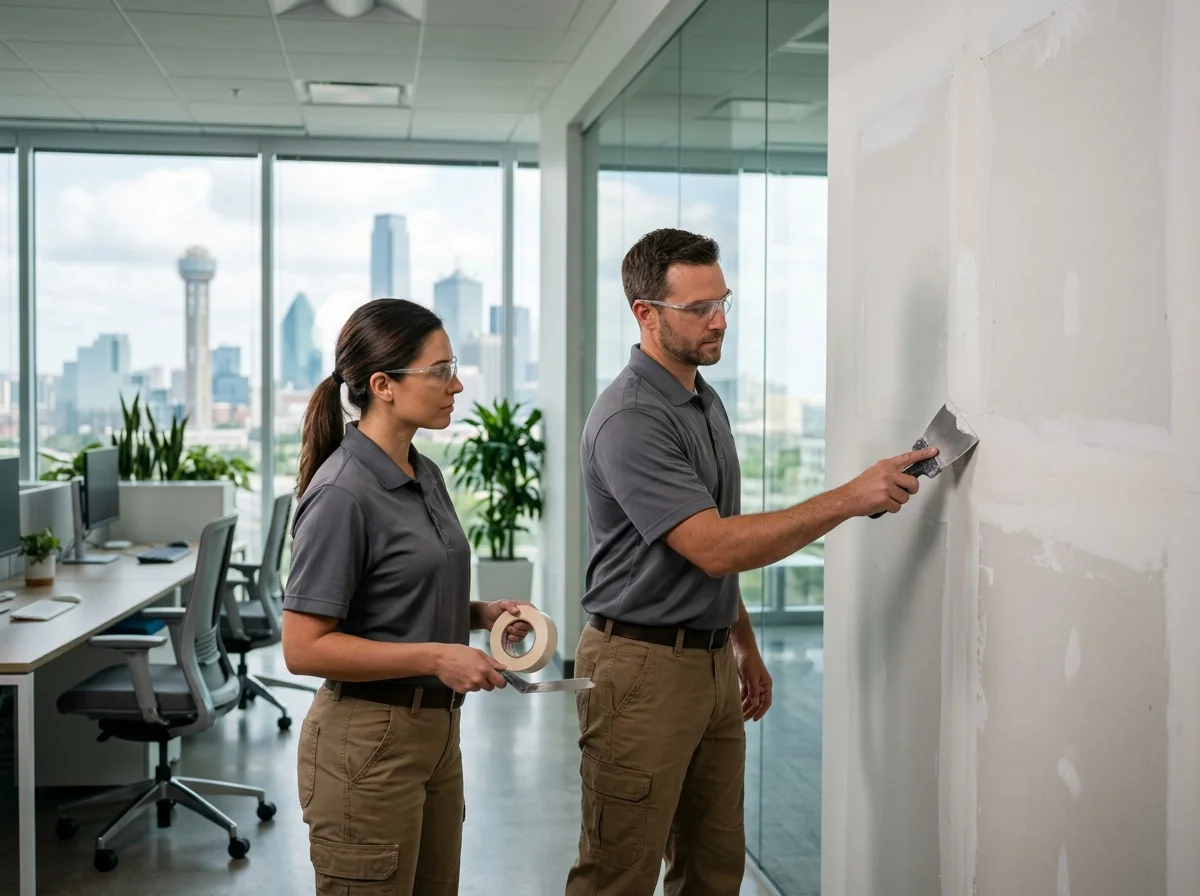
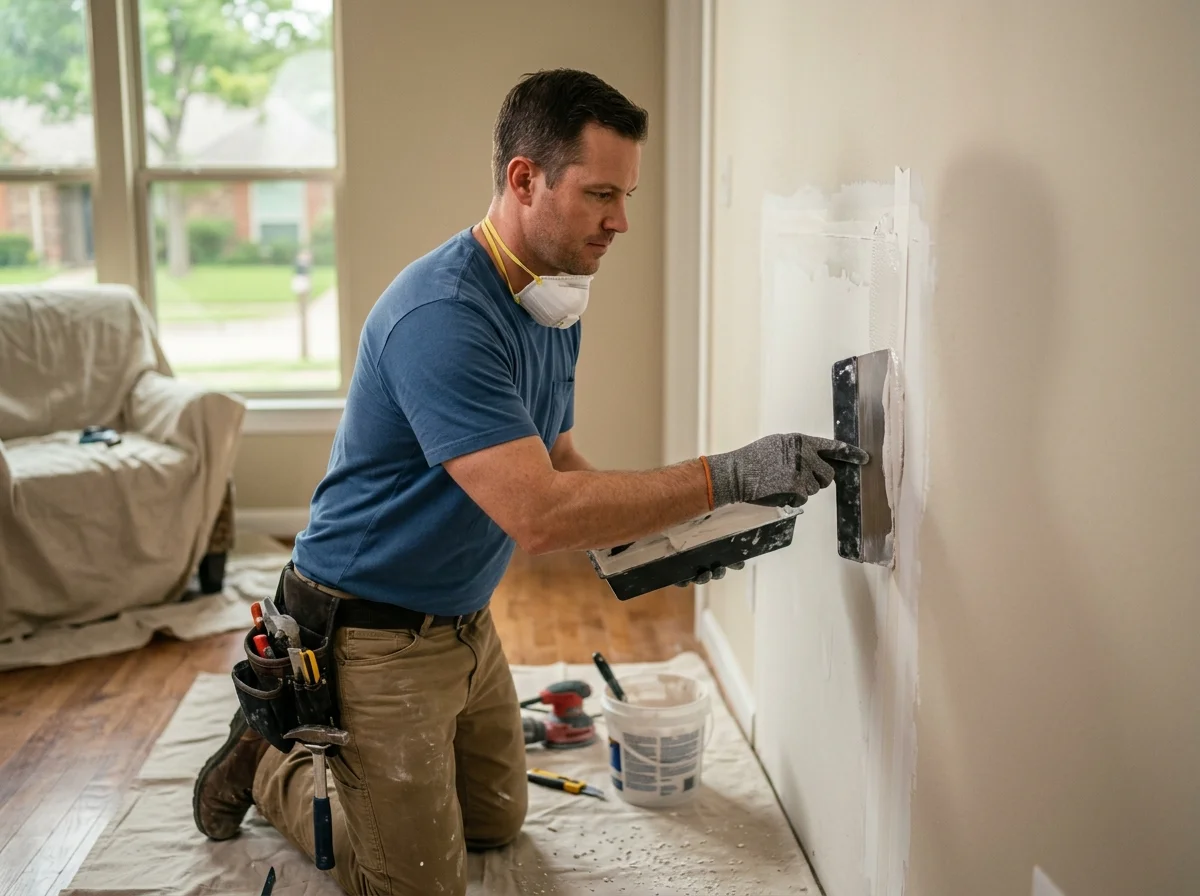
Drywall is the modern way. Factory-made sheets (basically cardboard stuffed with gypsum) get screwed to the framing. Then someone tapes the seams, applies joint compound in thin coats, sands it smooth. Done in about a week.
Which one’s in your home? If it’s pre-1960s, probably plaster. If it’s newer, definitely drywall.
The real question isn’t which is “better.” It’s which makes sense for what you’re actually trying to do.
The Actual Installation Timeline (And Why It Matters)
Plaster takes forever. Not exaggerating.
You’re looking at three to four weeks from bare framing to finished walls. That’s because each coat needs time to fully cure before the next one goes on. In a Dallas summer when humidity’s up? Drying takes even longer.
If you’re renovating and want to be back in your home quickly? That timeline’s brutal. Three weeks of no kitchen. Three weeks of plastic sheets everywhere. Dust everywhere.
Drywall? Five to seven days. Hanging panels takes a day or two. Mudding and sanding? A few more days. You’re moving your furniture back in within a week instead of a month.
This is why most homeowners doing renovations in Collin County go drywall. Not because plaster’s bad. Because they want their lives back.
Cost Difference: How Much Are You Actually Spending?
This is where people really notice the gap.
Plaster costs way more. Both materials and labor. A skilled plaster contractor charges premium rates. More coats. More drying time. More expertise. More hours on the job.
For a 500-square-foot room? Plaster runs $3,000 to $5,000. Same room in drywall? $1,200 to $2,000.
That’s roughly two to three times higher for plaster.
Why? Because plaster contractors are harder to find. Takes years to learn the skill. There’s less demand now, so the ones doing it charge accordingly.
Drywall keeps costs down. Labor hours are fewer. Materials cost less. The process is faster. You get a finished wall for a fraction of the plaster price.
If you’re doing a full renovation of an older home, the difference between plaster and drywall can be tens of thousands of dollars. That matters. A lot.
How Long They Actually Last (The Durability Question)
Here’s where plaster wins.
A well-applied plaster wall lasts 50 to 100 years. Maybe longer. The material actually gets harder as it ages. Dents? They don’t happen easily. Impact resistance is genuinely strong.
Walk through an older Dallas home from the 1930s or 1940s with original plaster walls still standing? Those walls are tougher than anything built in the last 30 years.
Drywall is durable too. Just not in the same league. Standard drywall lasts around 30 to 40 years. Dents and holes happen easily. Especially in houses with kids. Or pets. Or any actual use.
But here’s the catch: drywall damage is cheap and fast to fix. A dent gets spackled. A hole gets patched. Cost? $50 to $150 and maybe an afternoon of your time.
So which lasts longer? Plaster, easy. But drywall’s durability gap matters less when repairs are simple and affordable.
Water and Moisture: The Real Problem
Plaster handles surface moisture okay. Dense material. Doesn’t absorb water easily.
The problem? What’s behind it.
Plaster sits on wood lath. If moisture gets in there and stays? The wood rots. You’ve got structural failure hidden inside the wall. This is why bathrooms and kitchens in older homes often show plaster damage. The material wasn’t designed for modern humidity levels.
Drywall is worse with moisture. Regular drywall absorbs water like a sponge. Gets wet and it falls apart.
But modern moisture-resistant options (greenboard, purple board) fix this. They’ve got treated paper and antimicrobial additives that resist mold.
For bathrooms, kitchens, anywhere wet? Moisture-resistant drywall is the right answer. It outperforms both regular drywall and traditional plaster in those spaces.
This is a big deal if you’ve got water issues. Original plaster in a wet bathroom? That’s a problem waiting to happen.
Soundproofing: Which Walls Are Actually Quieter?
Plaster wins here too.
Thick, dense layers absorb sound. Slow sound waves down. If you’ve ever been in an older home and noticed how quiet it is between rooms? Plaster’s doing that.
Drywall lets sound through more easily. Thinner. Less dense. Sound travels easier.
But it’s not actually a problem anymore. Modern acoustic drywall with proper insulation matches (or beats) what plaster provides. You pair acoustic panels with insulation in the wall cavity and you get serious soundproofing.
For a new renovation? Acoustic drywall is the smart choice. You get the soundproofing you want without paying for traditional plaster.
Fire Safety: Modern Codes vs Old Materials
Plaster has natural fire resistance. Gypsum holds water in its structure. When heat hits, water releases and cools the material down. Slows fire from spreading.
Built-in safety feature. Older homes still benefit from it.
The downside? The wood lath underneath. Once fire reaches the lath, the whole wall assembly can fail.
Modern Type X drywall is specifically engineered for fire resistance. Contains additives that resist flames for up to two hours. Building codes in the Dallas area require it in commercial spaces, multi-family buildings, and certain residential areas.
For safety-critical applications? Fire-rated drywall meets current codes. Plaster doesn’t.
This matters if you’re doing new construction or major renovations. Codes require Type X in specific areas of your home.
Repair Costs: The Hidden Expense Over Time
This is where the real difference shows up.
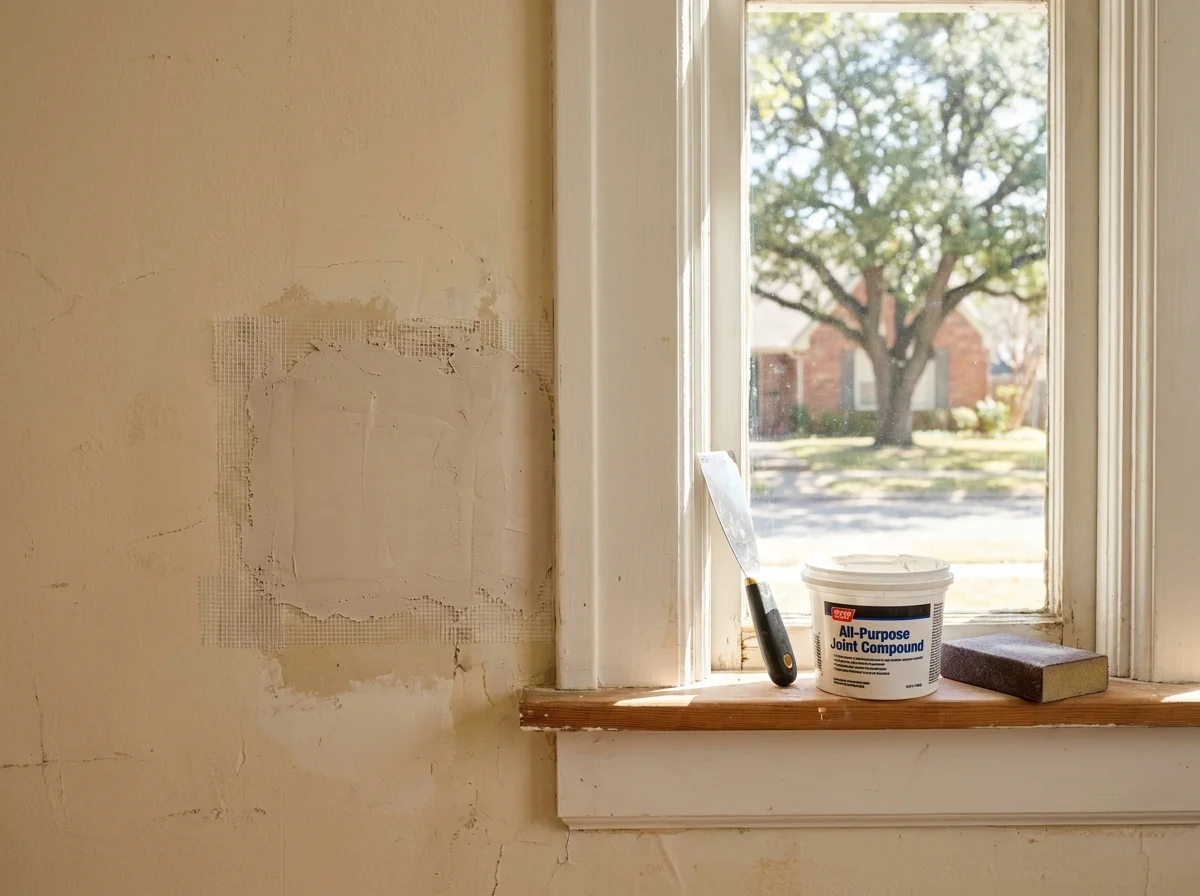
Plaster repair is expensive. Matching texture and finish takes genuine skill. Fewer contractors know how to do it properly. A small hole? $150 to $400. Multiple damaged spots? Bills add up fast.
In a house with kids, pets, or heavy use, ongoing plaster repairs become a real cost over time.
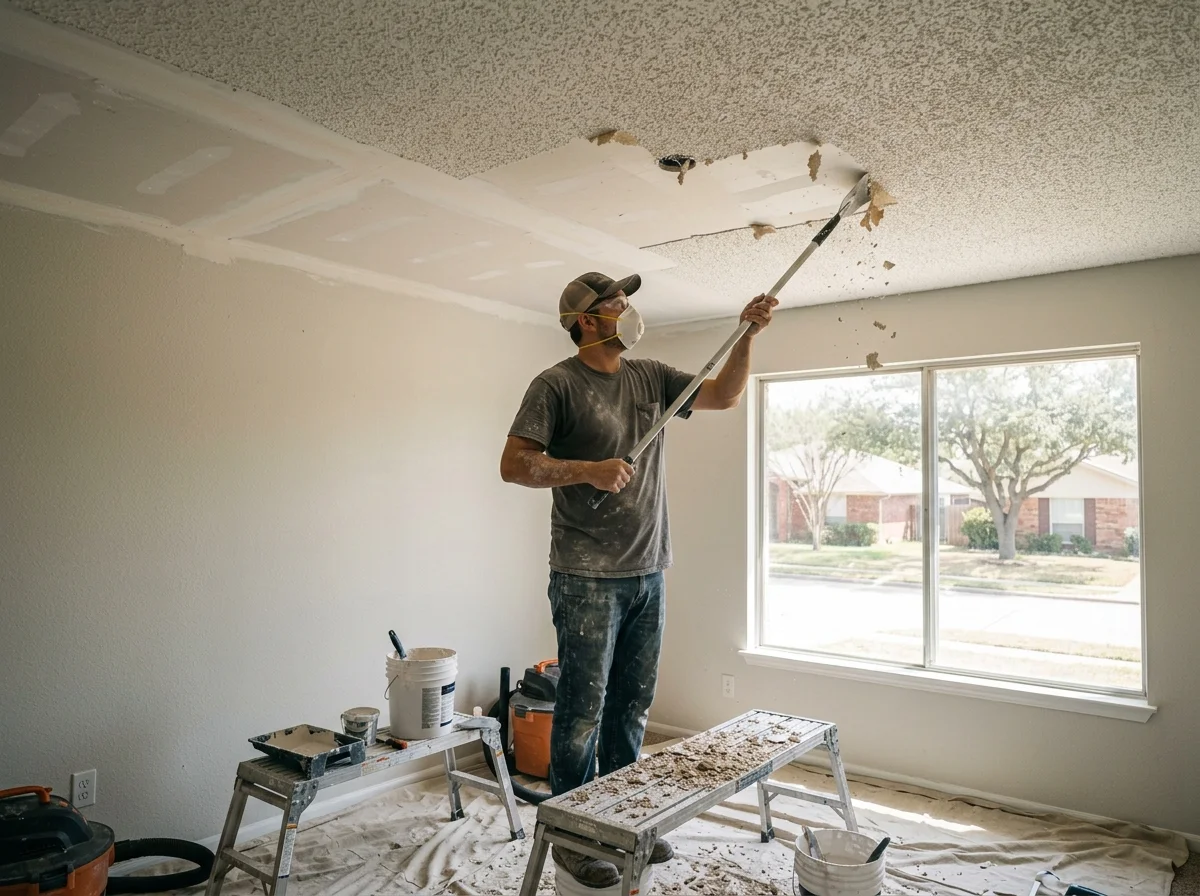
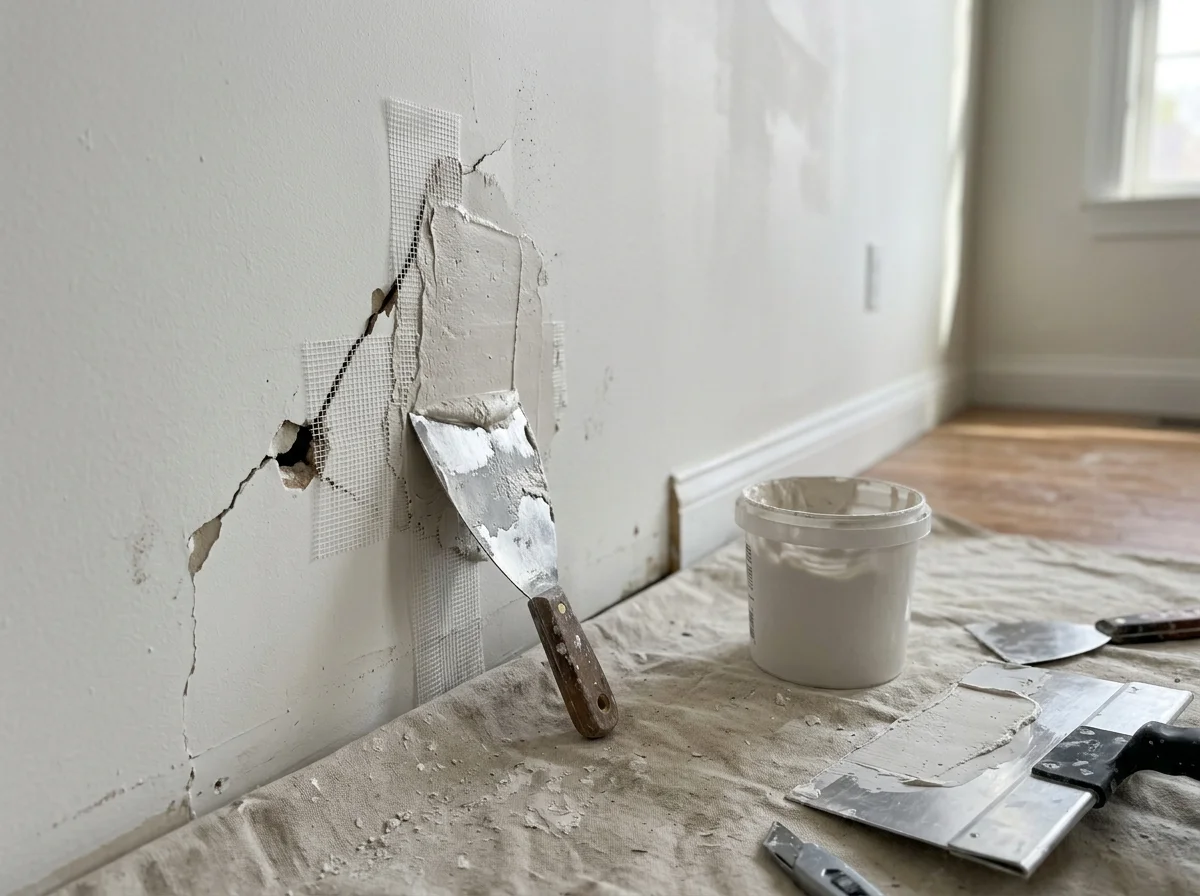
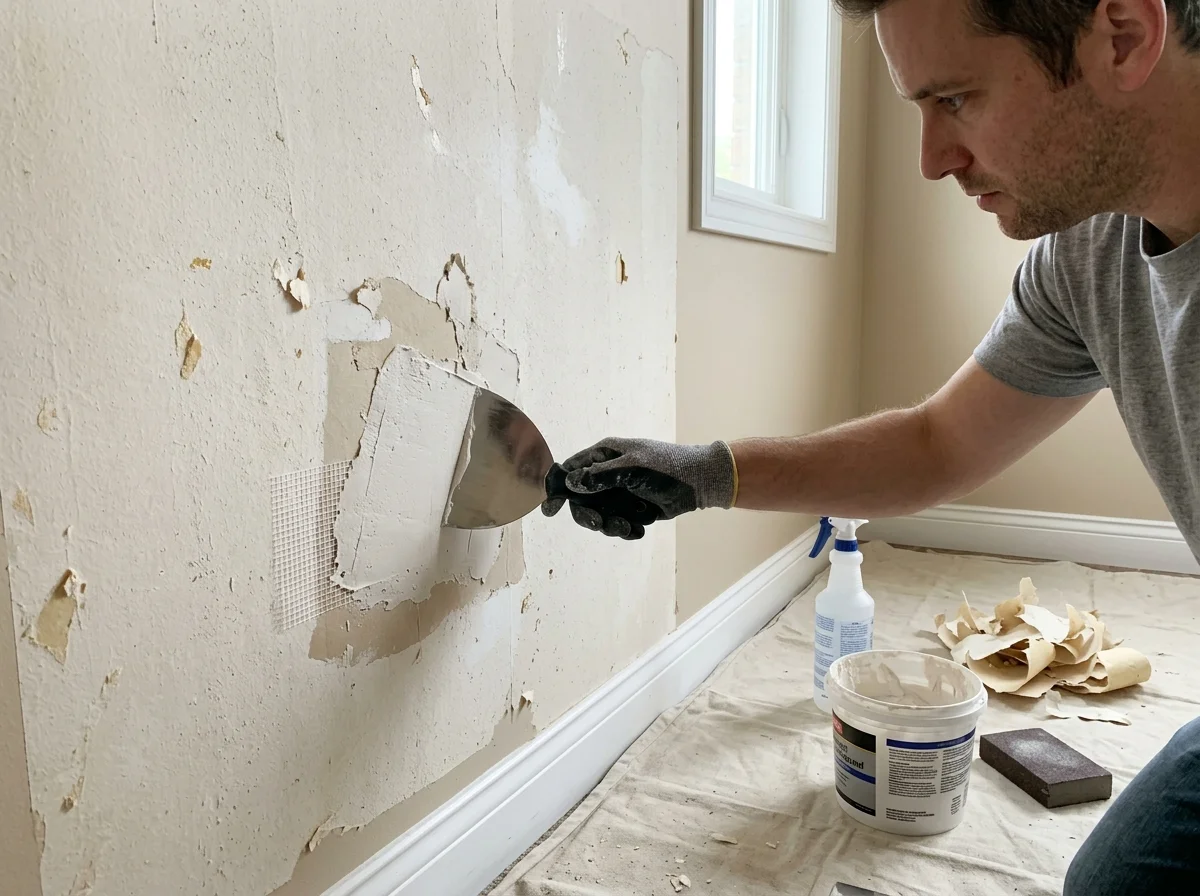
Drywall repair is simple and cheap. Small dent gets spackled and sanded. Bigger hole gets cut out, patched, mudded, sanded. Cost? $50 to $150. Many homeowners handle small repairs themselves with basic tools.
If your walls take regular abuse, drywall’s repairability is honestly one of its best features.
Think about this: you’ve got a 50-year-old plaster wall that gets dinged. That ding costs $200 to fix. Your neighbor’s 20-year-old drywall wall gets dinged. That ding costs $75 to fix.
Over time, those repair costs really matter.
Which Material for Different Rooms?
Bedrooms, living rooms, general living spaces? Drywall. It’s cost-effective. Fast to install. Easy to repair. Standard choice.
Plaster still works great. But for most everyday rooms, drywall’s the practical winner.
Bathrooms and kitchens? Moisture-resistant drywall (greenboard or purple board). Not standard plaster. Not regular drywall.
Moisture-resistant is the right answer wherever water and humidity are a factor.
Commercial buildings? Always drywall. Easy to repair. Meets fire codes. Holds up to modifications over time. Plaster just doesn’t make sense commercially anymore.
Historic Home Restoration: When Plaster Makes Sense
You own an older home in McKinney or Frisco. Original plaster is solid. Still looking good.
Preserving it can add real value. Buyers who care about historical authenticity notice. Skilled restoration specialists can patch, repair, and refinish original walls.
But if the plaster’s shot? Crumbling. Water-damaged. Pulling away from the lath. Replacing it makes sense.
Here’s the middle ground: modern drywall with a veneer plaster finish. Products like blueboard with skim coat plaster replicate the look and feel of original walls. Not exactly the same. But close enough for most restorations.
A restoration specialist can walk you through options. Help you decide what makes sense for your home and budget.
The Real Decision: What Actually Matters to You?
Here’s the honest breakdown:
Pick plaster if:
- You own a historic home and want to preserve authenticity
- You prioritize durability above all else
- Noise control is critical
- You’re okay with higher costs and repair expenses
Pick drywall if:
- You’re doing renovation and want it done quickly
- Budget matters (it usually does)
- You want cheap, easy repairs
- You plan to be in the home 30+ years but care about low maintenance
- You’re dealing with bathrooms, kitchens, or wet areas
The truth? For most people, drywall is the smarter choice. Better cost. Faster installation. Easier repairs. It’s not as romantic as original plaster. But it’s practical.
For historic preservation? That’s a different story. Plaster might be the right call if you’re genuinely committed to keeping your home historically accurate.
Either way, the decision should be based on what you actually need, not on what sounds better in theory.
Frequently Asked Questions
Should I keep original plaster walls in my older home?
If the plaster’s in solid condition, preserving it makes sense, especially in a historic home where authenticity matters. Buyers notice. But if large sections are crumbling, water-damaged, or pulling away from the lath, replacement with drywall is the practical move. A contractor experienced with older homes in Collin County can assess your walls and give you a straight recommendation based on what’s actually there, not what looks nice.
Can I install drywall over existing plaster?
Yes, as long as the plaster is stable and not crumbling. Drywall gets fastened through the plaster into the studs, not just into the plaster itself. Gives you a fresh surface without the mess of full removal. It’s popular with Dallas homeowners who want updated walls without a complete gut job. Just know it adds thickness to walls, which affects window and door trim.
What’s the best way to fix water-damaged plaster?
For significant water damage, removal and replacement with moisture-resistant drywall is usually right. The problem with patching water-damaged plaster is the wood lath behind it is often rotted or weakened. Patching just the surface without fixing the structure rarely holds. Contractors in the area typically recommend full removal and proper drywall installation to make sure the water issue doesn’t come back.
Does plaster need more maintenance than drywall?
Both need repainting and minor repairs over time. But plaster repairs are more involved and expensive than drywall repairs. A drywall patch costs a fraction of what a skilled plaster repair costs. If low-maintenance walls matter to you, drywall’s the better fit. Repairs are simple enough that many homeowners handle small jobs themselves.
Can you paint over plaster walls?
Absolutely. Plaster takes paint well with proper prep. Good-quality primer seals the plaster and helps paint bond. Once primed, it accepts paint the same way drywall does. Plenty of older Dallas homes still have beautifully painted plaster walls that look sharp. The key is using the right primer. Skip that step and paint may peel or absorb unevenly.
Is textured plaster or textured drywall more common today?
Textured drywall is standard in new construction across the Dallas area. Faster to apply. Costs less. Most newer homes use spray or knockdown texture on drywall ceilings and sometimes walls. Textured plaster is still found in older neighborhoods throughout Dallas and McKinney, where it adds character to homes from before the 1960s. If you’re restoring a historic home, matching original plaster texture takes a skilled hand. Worth finding a contractor who specializes.