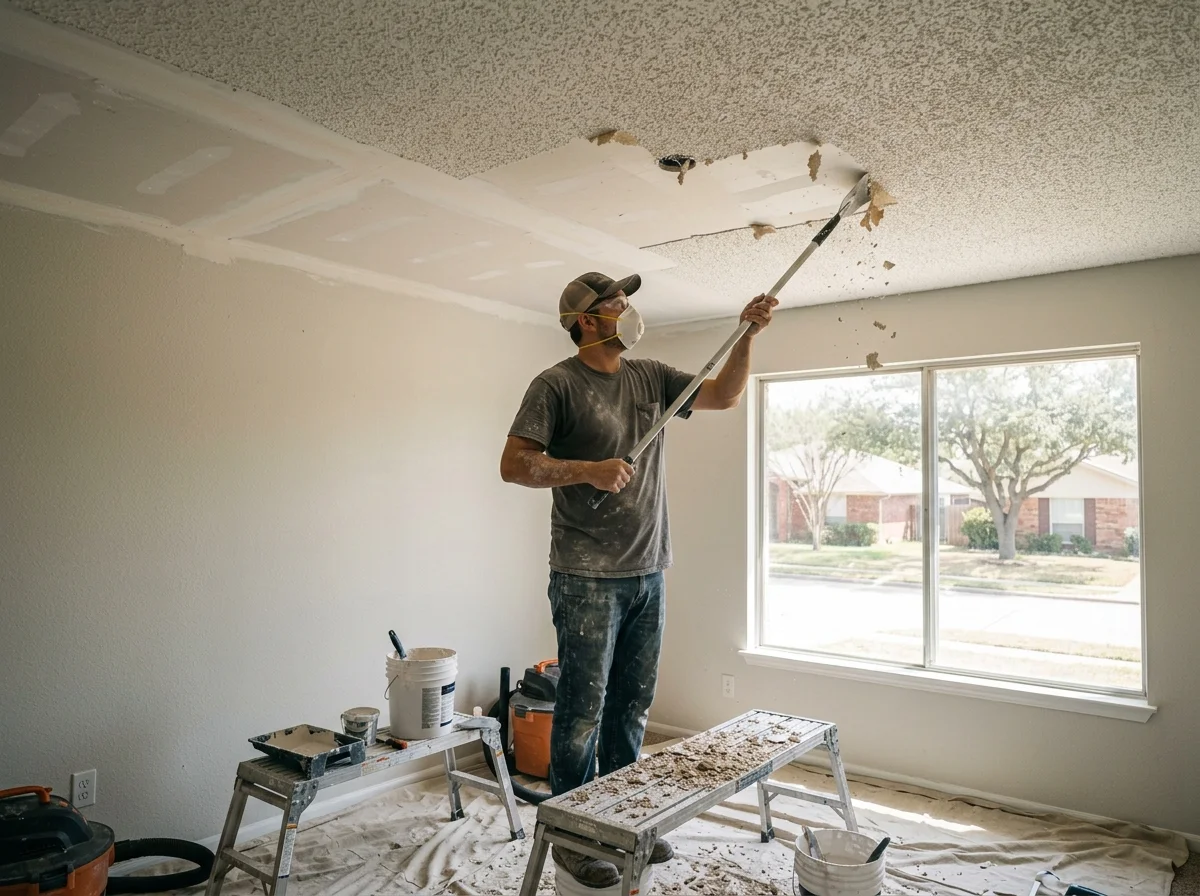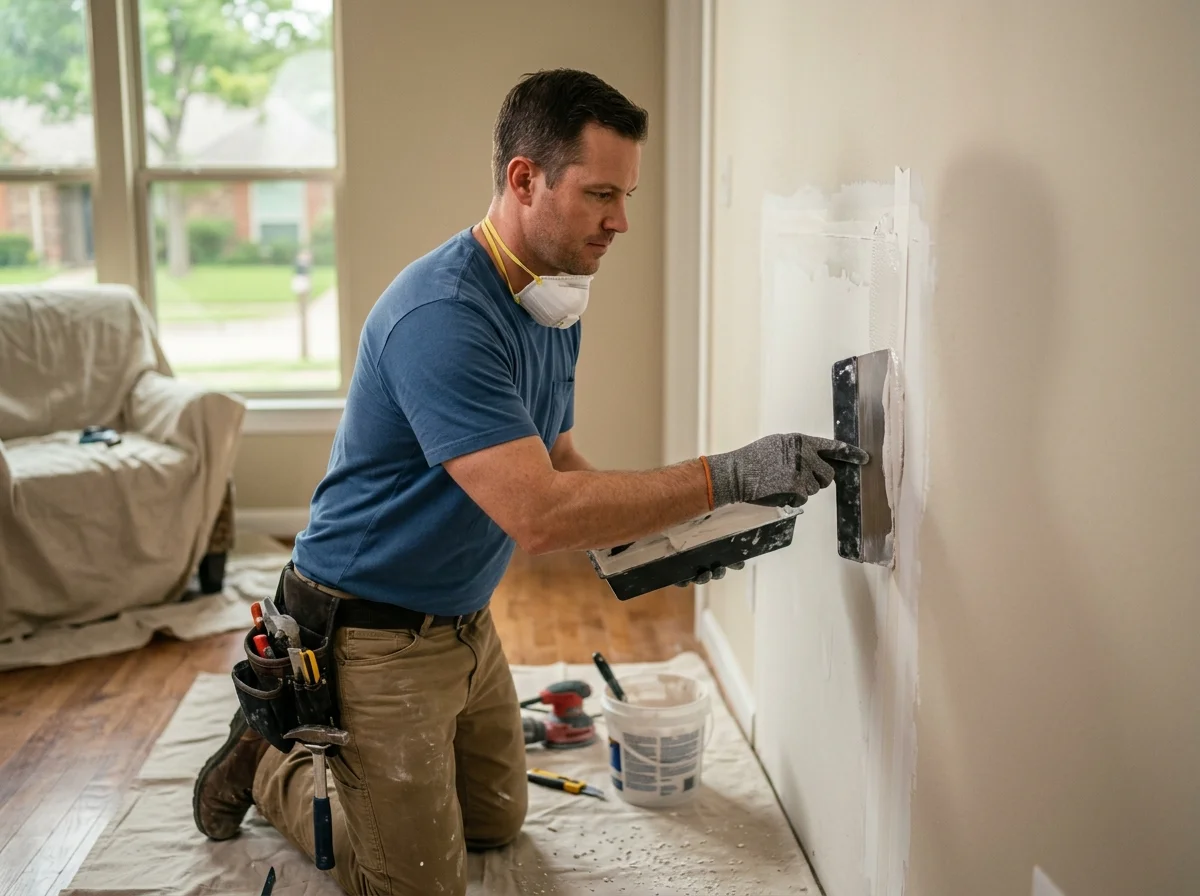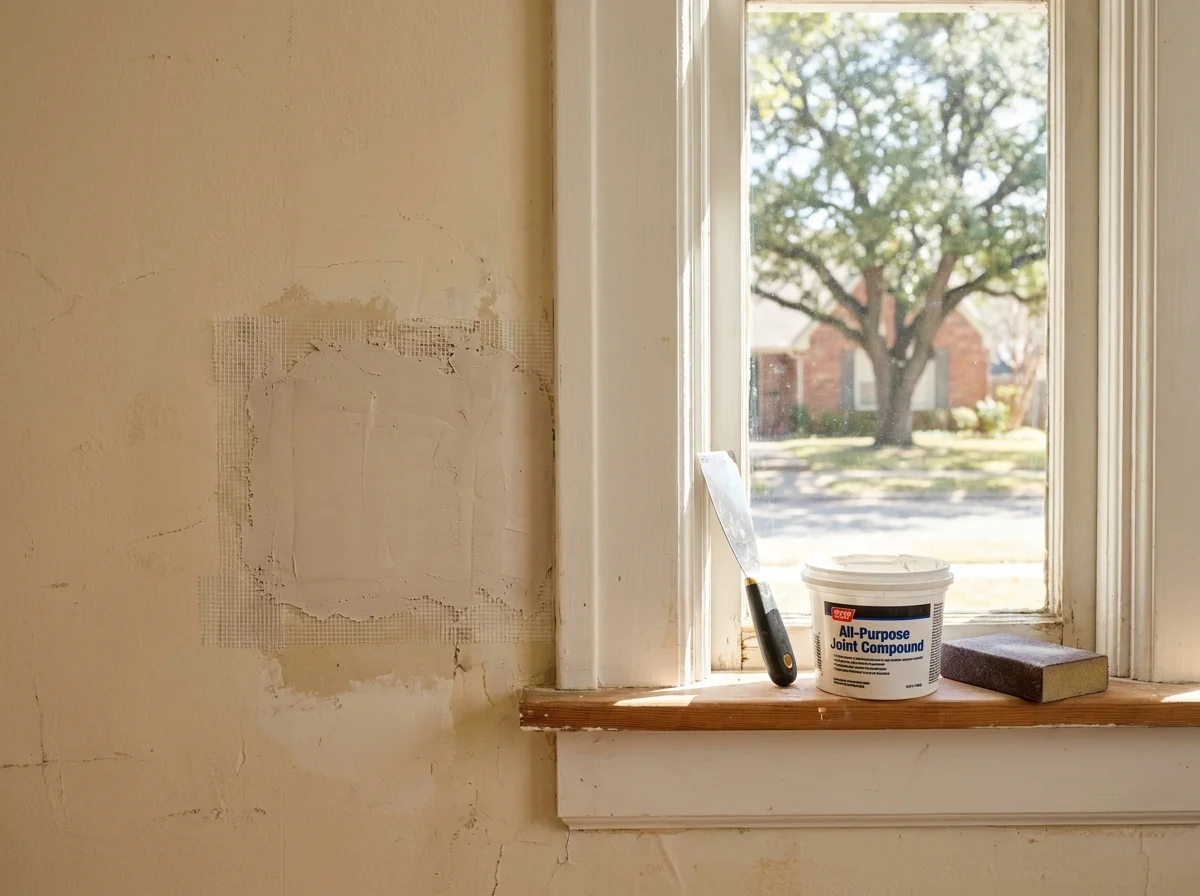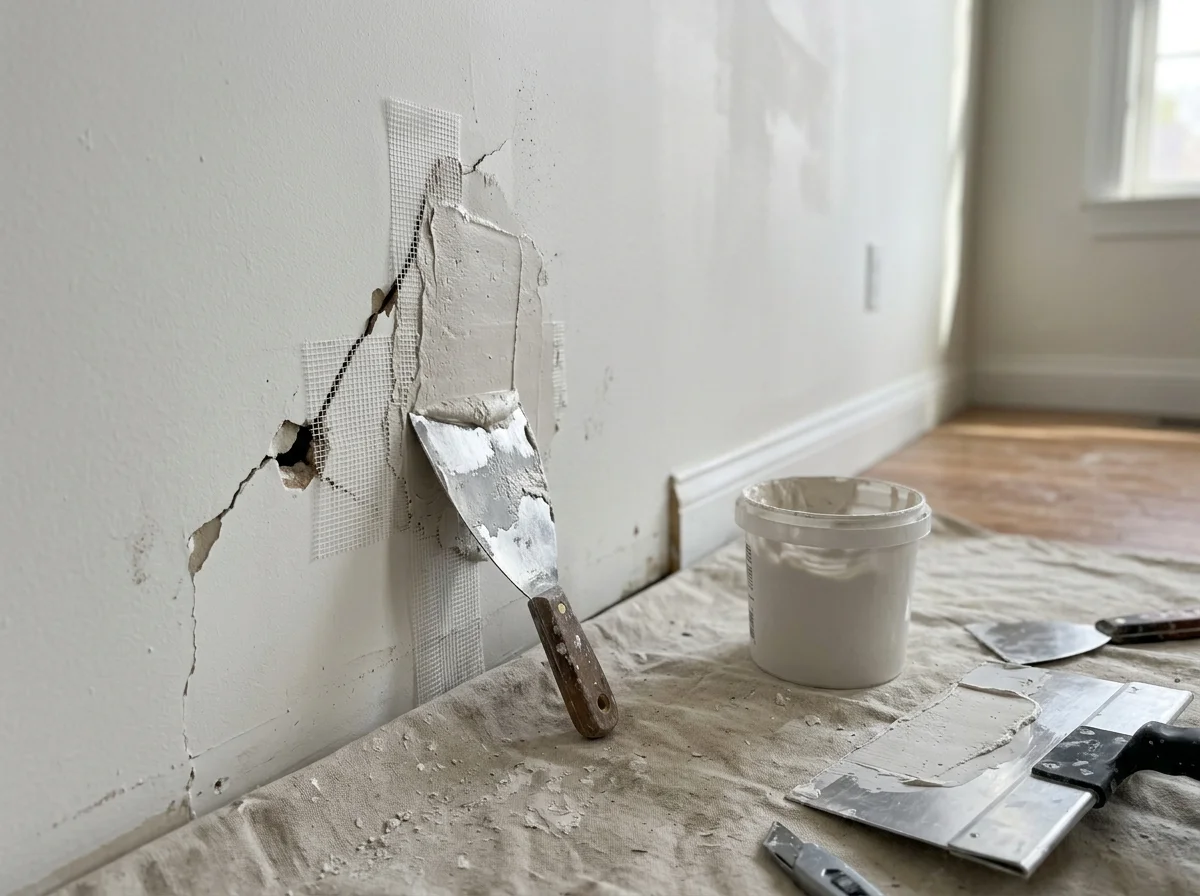
A damaged wall can impact more than the look of a Dallas business. Spaces that look well cared for but have equipment holes, dents made by materials being moved, water stains, cracked seams, or ceiling panel damage can still appear poorly maintained. In other commercial buildings, such as office buildings, retail stores, and warehouses, these issues can also cause tenant improvement or planned renovations to become difficult.
There is a difference between commercial drywall repair and small residential ones. Often, businesses require repairs that can accommodate their employees, customers, tenants, operational time, and larger renovation projects. The aim is to make the damaged areas look better without making any major alterations, with high efficiency and a finish that matches the other walls or ceilings around it.
Where Commercial Drywall Damage Usually Happens
There are various kinds of drywall damage, depending on the business environment. Whenever mounted equipment, partitions, signs, or electrical work is performed in an office, holes can be caused in the space that could lead to impact damage near the doorways or storage areas of a busy retail location.
Common commercial repair locations include:
- Office walls and conference rooms
- Retail store interiors
- Restaurant walls and ceilings
- Warehouse offices and partitions
- Medical and professional facilities
- Multi-family property interiors
- Tenant spaces
- Corporate interiors
- Commercial hallways and common areas
Damage may include just a few small holes or areas of drywall that require total replacement. The amount of damage is important for determining if commercial drywall damage repair is needed or if a bigger restoration is needed.
Repair or Replace? The Condition of the Panel Decides
The first major issue to decide when troubleshooting a commercial wall repair is whether or not current drywall can be remediated. If there are small holes, dents, or localized surface damage, patching and finishing may be the only necessary repairs. If a drywall panel has extensive cracking or has been damaged by impact or exposed to moisture for a long period, then section replacement may be a better option.
| Type of damage | Potential repair approach |
| Small holes | Patch and finish |
| Dents or impact marks | Surface repair and sanding |
| Cracked seams | Tape and joint-compound repair |
| Water-damaged section | Moisture assessment and replacement |
| Large openings | Drywall section or panel replacement |
| Severely deteriorated drywall | Full affected-area replacement |
Only the damaged material needs to be replaced, thus maintaining sound portions of the existing wall. But first, the cause of damage should be determined, especially if moisture is the issue.
Water Damage Needs Attention Before Cosmetic Repairs
In commercial buildings, water-damaged drywall is a frequent occurrence, with plumbing, HVAC systems, roofs, and other building parts being able to leak. One of the first indicators is water stains, but the affected drywall can be more extensive than you see.
A professional evaluation can be conducted to decide if repairs are possible or if you need to have it removed and replaced. Drywall installation over the source of the moisture can just be a new problem that will need to be solved later.
Dallas businesses are concerned with this if a leak is in an occupied office, retail space, restaurant, or tenant space. The objective with water-damaged drywall repair is to repair the compromised wall following a resolution of the moisture problem.
What Professional Commercial Drywall Work Involves
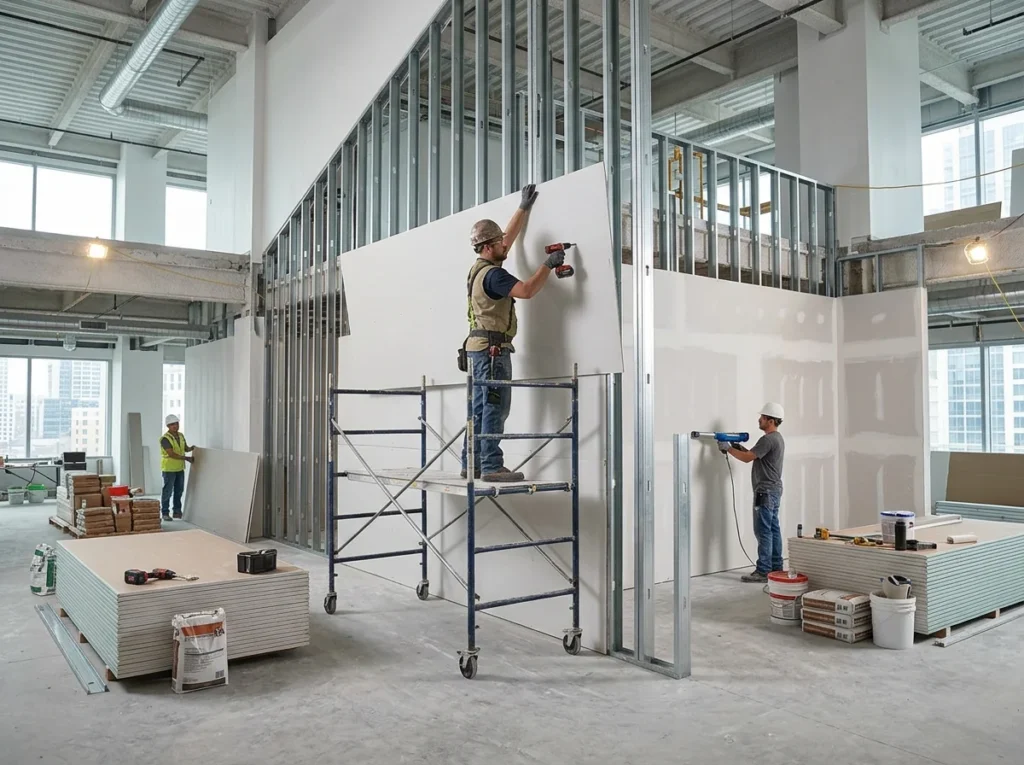
Commercial drywall repair is more than just filling a hole with compound. The surface must be prepared around the hole to make the repaired surface match the rest of the wall.
Depending on the damage, the work may include:
- Damage assessment: Identify the area of damage and the repair method.
- Surface preparation: Strip away loose, damaged, or unstable material at the repair site.
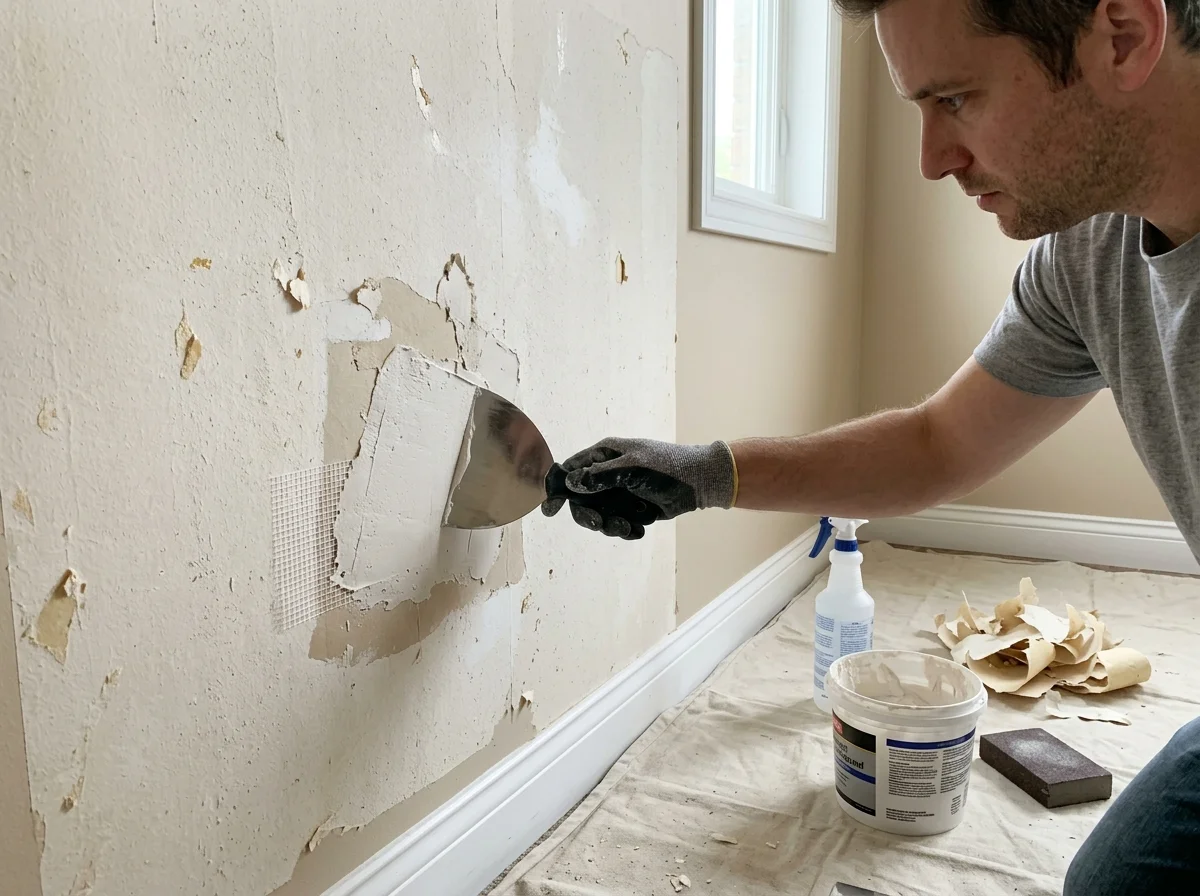
- Drywall patching: If the area is damaged, drywall patchwork can be used to restore the affected section before taping, finishing, and texture matching.
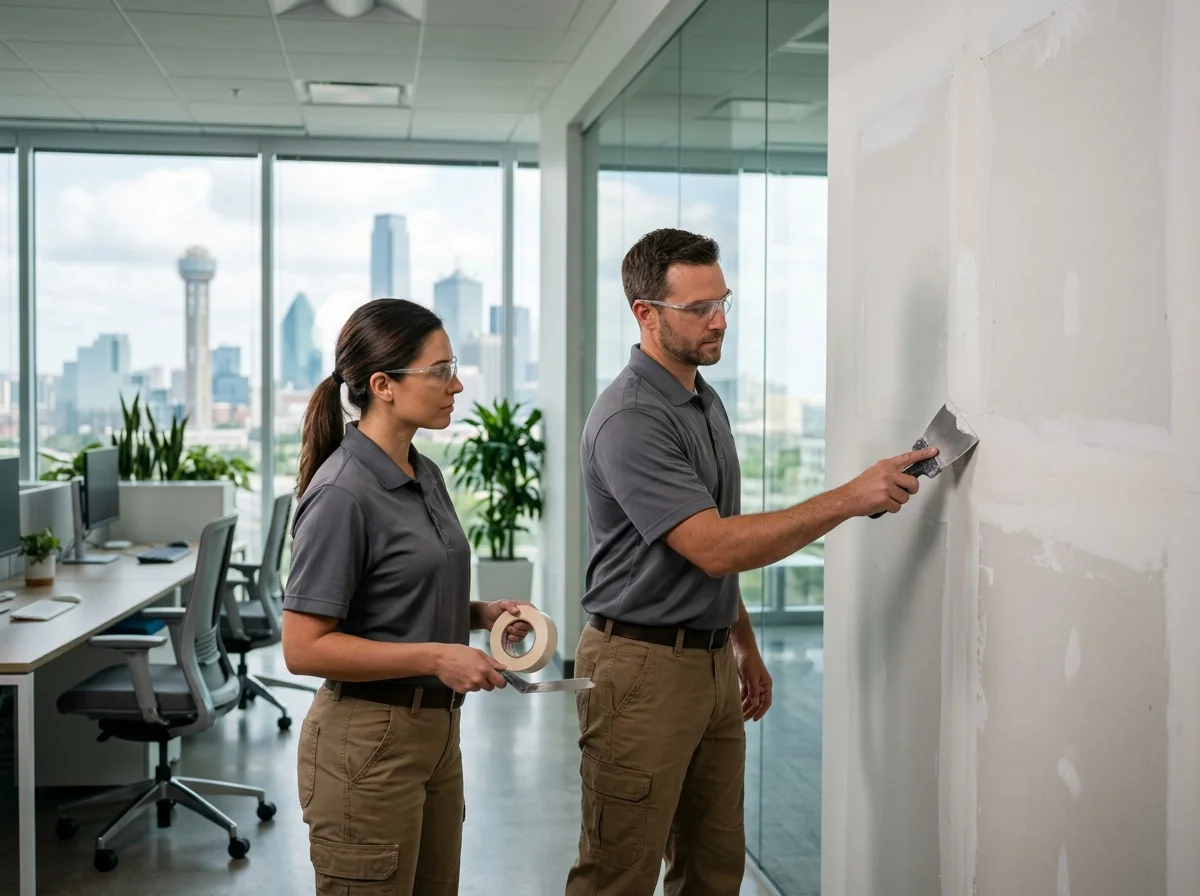
- Joint treatment: Apply drywall tape and joint compound to reinforce seams.
- Sanding and leveling: Buff and smooth the area that was repaired so that it blends in with the surrounding surface.
- Final preparation: This refers to preparing the wall for a primer, paint, or an existing texture.
The length of time it will take to dry out will depend on repair materials, area of the damage, and site conditions. If the transition between the stages is rushed, the surface may have ridges, depressions, or other surface flaws visible.
Blending the Repair Seamlessly With the Existing Finish
A repair that is structurally stable but doesn’t match the rest of the wall could still appear obvious. The surfaces of commercial properties can be smooth drywall, orange-peel, knockdown finish, or treated in other ways. Drywall texture matching services are available to match a repaired wall to the original style.
Especially in spaces that are visible, like reception areas, walls facing customers, hallways, conference rooms, and retail interiors. The repaired area becomes less noticeable if a texture blend is applied, sanded, or professionally refinished.
If your business is getting ready to paint a space, commercial drywall finishing is also crucial. An appropriately finished wall will have a cleaner surface for the subsequent phase of the renovation.
Repairs Can Fit Into Larger Business Projects
Commercial drywall work often happens alongside other property improvements. A business may need wall repairs after removing partitions, relocating equipment, updating electrical systems, replacing fixtures, or changing a tenant’s interior layout.
That makes drywall repair relevant to:
- Tenant improvement projects
- Commercial remodeling
- Office renovations
- Retail buildouts
- Interior reconfigurations
- Property maintenance
- Pre-lease repairs
- Post-tenant restoration
Integrating drywall installation with the rest of the project can minimize waste of time. A commercial drywall contractor can also be able to speak with a general contractor or other trades if there are various parts of the project that overlap.
Why Professional Repair Matters for Active Businesses
When repairing a property, it is not always possible to shut down the entire building. Work may need to happen around employees, customers, tenants, inventory, equipment, or scheduled operations.
Professional business drywall repair in Dallas, TX, doesn’t just work on the drywall. The repair plan should consider the type of business, size of affected area, accessibility, finishing requirements, and the availability of the business.
Professional drywall repair also involves identifying when the issue with the wall structure could be more complicated and needs extra investigation. If the cracks are recurring, there is extensive deterioration, or there is moisture damage, it shouldn’t be just patched up with another cosmetic fix.
How Dallas Businesses Can Avoid Repeat Wall Damage
Once you’ve finished repairs, stop future headaches by getting to the root of what caused the wall damage in the first place. It helps if property managers check spots around plumbing, HVAC units, doors, storage spaces, and busy hallways. Staff should call out new dents, leaks, cracks, or loose drywall right away; catching these early saves everyone from bigger bills down the line.
Tracking past repairs pays off, especially for properties that always need a little maintenance. You can see which areas keep getting hit and plan your next remodel or restoration more effectively.
Frequently Asked Questions
What does commercial drywall repair include?
Commercial drywall repair usually means checking the damage, patching holes, swapping out sections, fixing tape, applying joint compound, sanding, finishing, and matching texture. The actual steps depend on whether there are small holes, impact marks, cracks, water stains, or bigger sections that are falling apart.
When should a company replace drywall instead of repairing it?
Replacement may be appropriate when drywall has extensive water damage, severe impact damage, widespread deterioration, or structural weakness within the panel. Smaller localized problems can often be patched. A professional assessment helps determine how much material actually needs replacement.
Can drywall contractors match existing wall textures?
Yes. Contractors have all kinds of tricks for recreating existing textures. The match depends on the original finish, nearby surfaces, paint quality, and the technician’s skill at blending new work into what’s already there.
How long does commercial drywall repair take?
Timing depends on how many spots need work, the size of the repairs, how much finishing is required, drying times, and whether full replacement is needed. Small patches are quick; bigger jobs with lots of rooms take much longer.
Final Thoughts: Maintaining Professional Commercial Interiors
Tackling wall damage early keeps things simple and stops minor issues from spiraling into major restoration jobs. The right materials, careful patching, sharp finishing, and well-matched textures help keep your interior clean and in good shape.
For Dallas businesses planning repairs, renovations, or tenant improvements, Patch Pros of North Dallas can provide the drywall repair and restoration work needed to bring damaged commercial walls and ceilings back into usable condition.