Foundation work can change the cracks inside a home. An old crack may become smaller. Another may open a little more. You may even notice a line that was hard to see before the foundation work began. This can leave homeowners unsure about when to repair the walls.
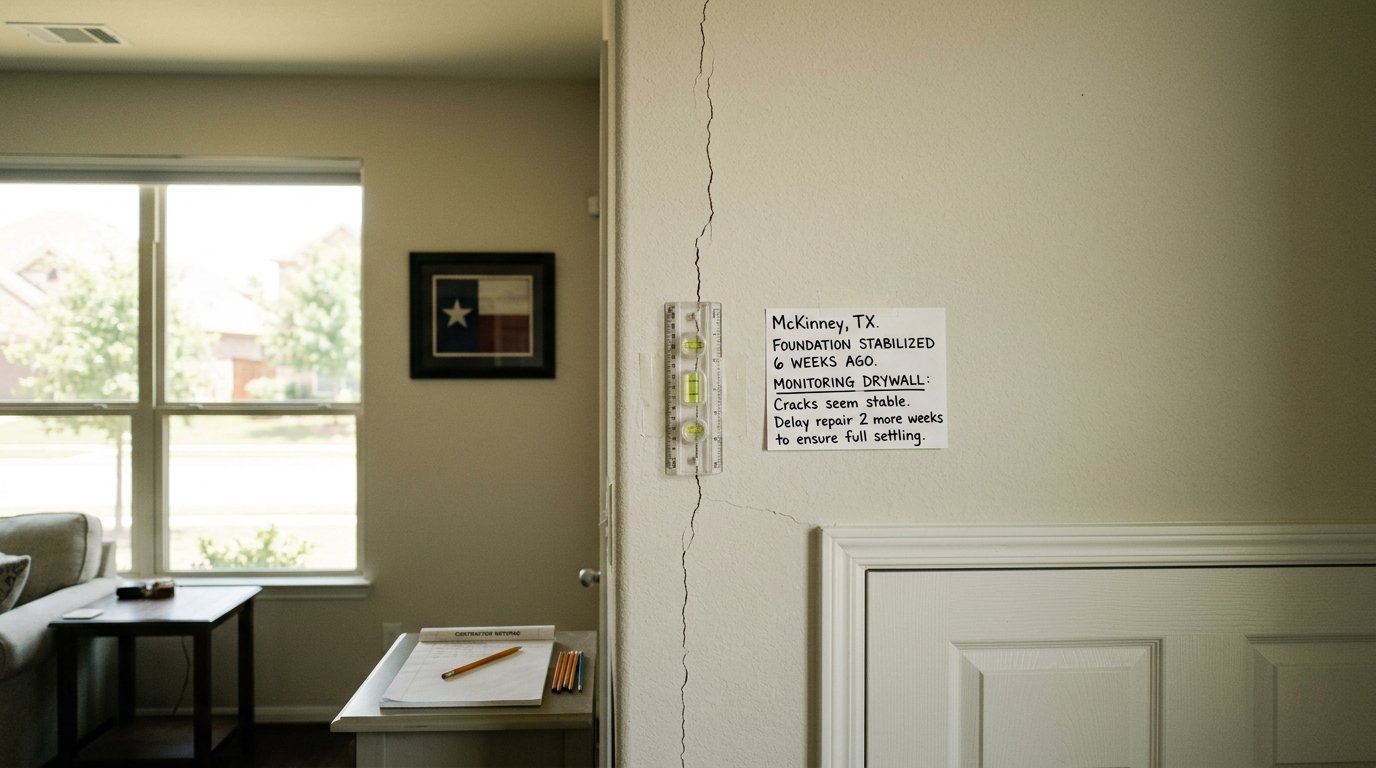
For drywall repair after foundation repair McKinney, the safest approach is not to rush into patching the same day. First, make sure the foundation contractor has completed the work and does not need more access or adjustment. Then check the cracks again before the final drywall repair begins.
There is no single waiting period that fits every house. The type of foundation work, amount of movement, and condition of the walls all matter. This guide explains what to watch and how to know when your drywall is ready for repair.
Why Can Drywall Cracks Change During Foundation Repair?
Foundation repair may involve lifting, leveling, or supporting part of a home. When the structure moves, even slightly, the framing and drywall above it can move too.
The Foundation Performance Association notes that foundation lifting should be done in a way that limits damage to the building. Its guidance also recognizes that lifting may change existing masonry and drywall cracks.
A crack that existed before the work may partly close as the structure moves. Another seam may open because stress has shifted to a different point in the wall.
This does not mean every new line shows that the foundation repair failed. The whole pattern needs to be considered.
Should You Repair Drywall Cracks Right After Foundation Work?
Usually, it makes sense to confirm that the foundation work is complete before doing the final wall repair.
There is no universal rule that says every homeowner must wait an exact number of days. Published foundation contractors give different waiting periods. Some suggest about four weeks, while others may advise a longer period based on the project.
That difference is important. Your foundation contractor knows what work was done to your home. Ask when they consider the structure ready for interior finish repairs.
Once the foundation work is complete and the crack pattern is stable, the drywall contractor can repair the damaged seams and finish the wall.
Why Are There Still Cracks After Foundation Repair?
Drywall cracks after foundation repair do not disappear on their own. Even when the foundation work corrects movement below the house, the drywall above may still have torn tape, cracked joint compound, or damaged seams.
A foundation repair can change the position of the wall, but it does not rebuild the drywall finish.
For example, a diagonal crack above a door may become narrower after foundation work. The old drywall tape and compound are still damaged. They usually need to be removed or repaired before the wall can look smooth again.
This is where foundation work ends and drywall repair begins.
Can Foundation Repair Cause New Drywall Cracks?
It can cause old cracks to change or make other weak spots easier to see. The home may move during lifting or leveling, and that movement can place stress on drywall seams.
The Foundation Performance Association specifically addresses limiting building damage during foundation lifting and notes that doors, windows, masonry cracks, and drywall cracks can respond as the structure moves.
A small new drywall crack after the work is therefore not enough by itself to show there is a new foundation problem.
Watch the crack instead. If it keeps growing or appears with new door, window, or floor problems, contact the foundation contractor before covering it.
What Should You Check Before Repairing the Drywall?
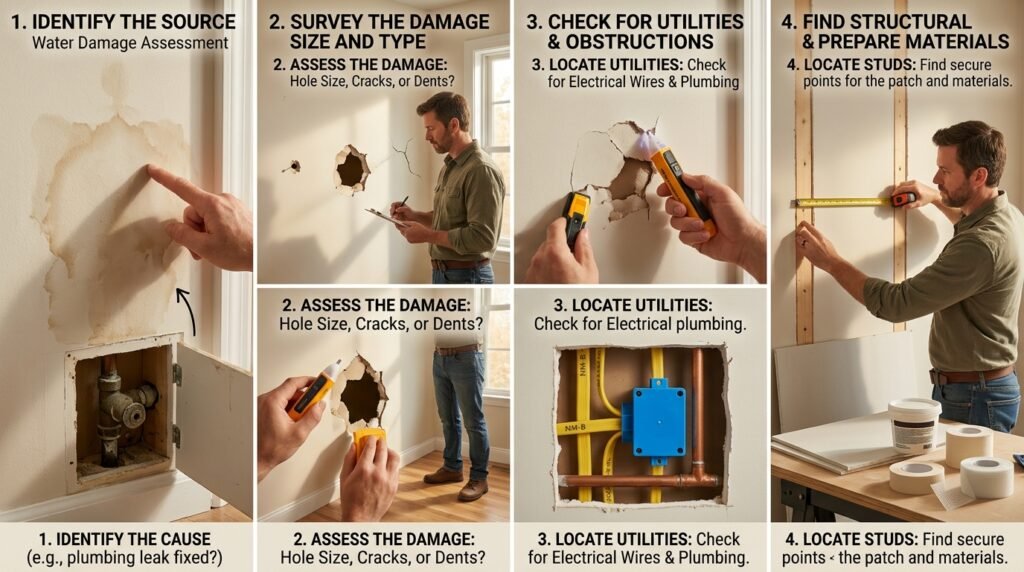
Start by walking through the home and looking at the walls, ceilings, doors, and windows. You are trying to see if the cracks are stable or if other changes are still taking place.
Look for:
- Cracks getting longer or wider
- A repaired-looking crack opening again
- Several new cracks in one area
- Doors that still rub or stick
- Windows that have become hard to open
- New gaps near trim or corners
- Ceiling cracks that are still changing
- Drywall seams pulling apart
One small stable crack may only need drywall work. Several changing signs may be a reason to call the foundation contractor again before finishing the walls.
What Do House Settling Cracks Look Like?
House settling cracks often appear near drywall seams, doors, windows, and corners. They may be thin and may follow weak points in the wall finish.
Settlement does not always mean major foundation trouble. Buildings and framing can move for several reasons, and the drywall surface often shows that movement first.
Pay more attention to change than to the crack alone. A thin crack that stays the same is different from a diagonal line that keeps growing.
If you are not sure whether the crack is only cosmetic, avoid hiding it right away. Watching it for change can give you useful information before the final repair.
Why Do Cracks Often Appear Around Doors and Windows?
Doors and windows create openings in a wall. These openings are common places for stress to show.
A crack may begin at the upper corner of a door and move upward at an angle. The same pattern can appear near windows. When the framing shifts, these corners can become weak points in the drywall finish.
After foundation work, the crack may become smaller, larger, or change shape.
The drywall contractor should check the full area around the opening. Loose tape or damaged compound may need to be removed before the crack is rebuilt.
If several doors or windows are still changing after foundation work, speak with the foundation contractor before finishing the walls.
What About Ceiling Cracks After Foundation Work?
Ceiling cracks McKinney homeowners see after foundation work can follow seams, corners, or places where a ceiling meets a wall.
Some may be linked to movement that took place before or during the foundation work. Others may come from loose drywall tape or normal framing movement.
A ceiling crack should be checked for its shape and location. A straight crack along a seam may be a drywall joint problem. A crack that keeps spreading into nearby walls may deserve another look before patching.
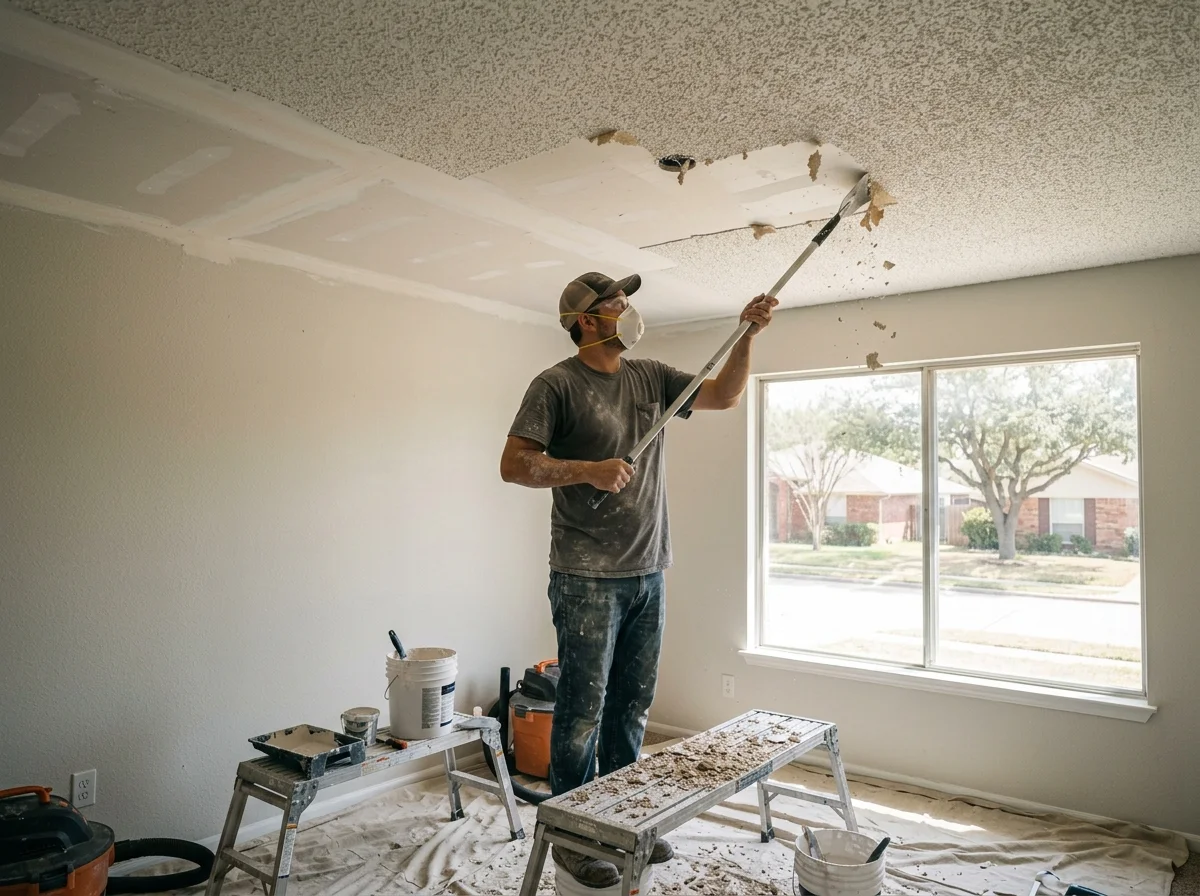
Once the structure is ready for finish work, damaged ceiling seams can be taped, finished, and matched to the surrounding texture.
Why Do Some Cracks Keep Coming Back?
A recurring crack usually means something below the surface has not been dealt with.
Sometimes the wall is still moving. In other cases, the foundation is stable but the old drywall seam was repaired poorly. Spreading joint compound over a damaged seam may hide the line for a short time, but it may crack again if loose tape is still underneath.
A proper repair often means opening the weak area and rebuilding it.
Our drywall crack repair guide explains how damaged seams and cracks are prepared before new finishing work begins. The existing Patch Pros guide covers taping, joint compound, sanding, priming, and painting for wall and ceiling cracks.
How Does Soil Movement Relate to Wall Cracks?
Soil can move as its moisture level changes. Expansive soil can swell when it gains moisture and shrink when it dries. That movement can affect the support below a structure.
However, soil conditions can vary from one property to another. It would be a mistake to assume every McKinney crack comes from the same type of soil or from a foundation problem.
The USDA Web Soil Survey provides official soil data, but it also says on-site investigation may be needed for engineering uses.
For a homeowner, the useful lesson is simple: drywall shows movement, but drywall alone cannot tell you exactly what caused that movement.
When Should You Call the Foundation Contractor Again?
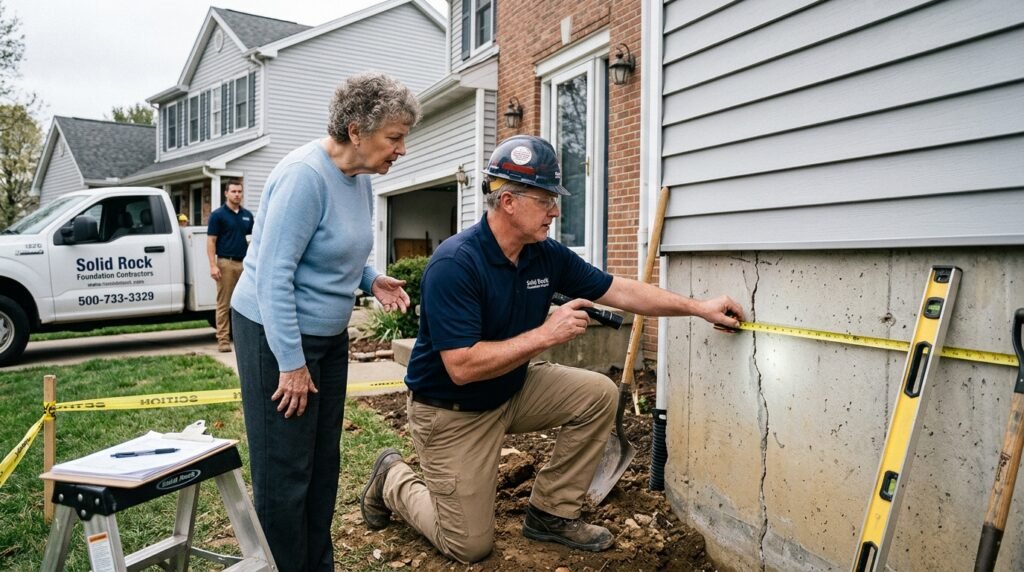
Call the foundation company before drywall repair if the home still seems to be changing.
For example, contact them if cracks continue to open, several new cracks appear, or doors and windows become harder to use after the foundation work.
It is better to ask before the drywall is patched and painted. Once cracks are hidden, some useful signs may be harder to see.
If the foundation contractor confirms the repair is complete and the home is ready for interior work, you can move ahead with drywall repair.
For more complex concerns, the foundation contractor may also suggest an engineer or another qualified professional.
When Might a Structural Engineer Be Needed?
A drywall contractor repairs walls and ceilings. A structural engineer looks at the building itself.
You may want a structural opinion when there are large or changing cracks, clear movement in several parts of the home, or questions that the drywall contractor cannot answer.
University of Alaska Fairbanks Extension notes that larger foundation retrofit work requires professional evaluation of structural and ground conditions.
This does not mean every drywall crack needs an engineer. Most small finish cracks do not.
The point is to use the right professional for the right problem. Once structural questions are settled, the drywall contractor can focus on restoring the walls.
How Is Drywall Repaired After Foundation Work?
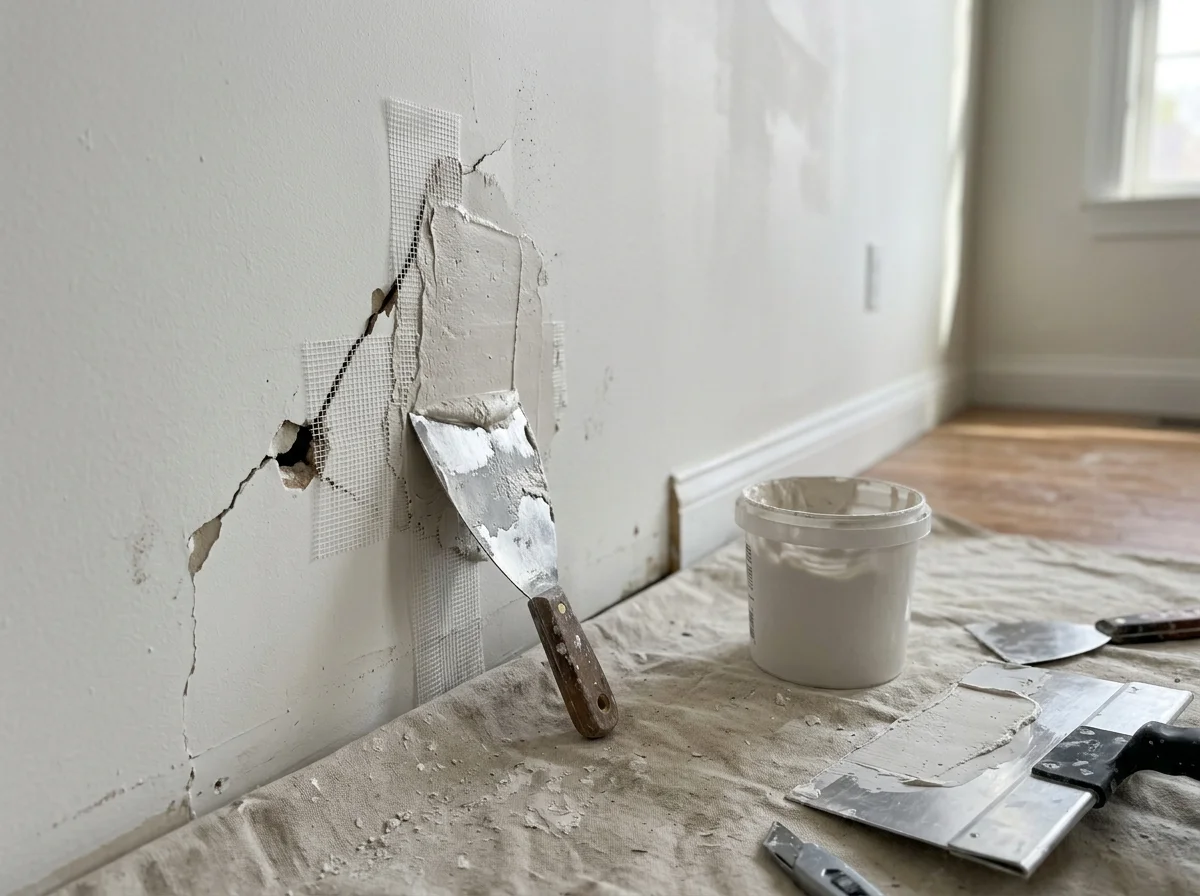
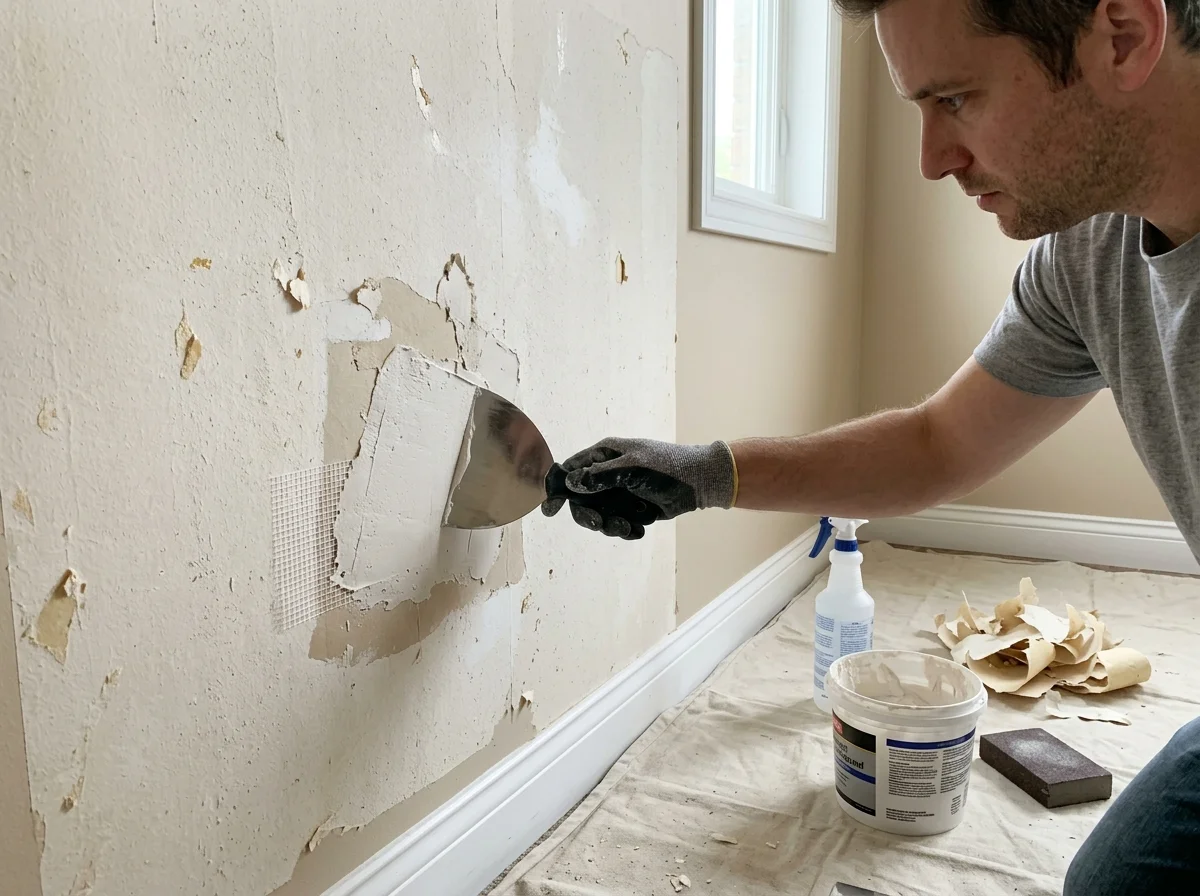
The repair begins by checking the crack and removing weak material. Loose joint compound or failed tape may need to come out.
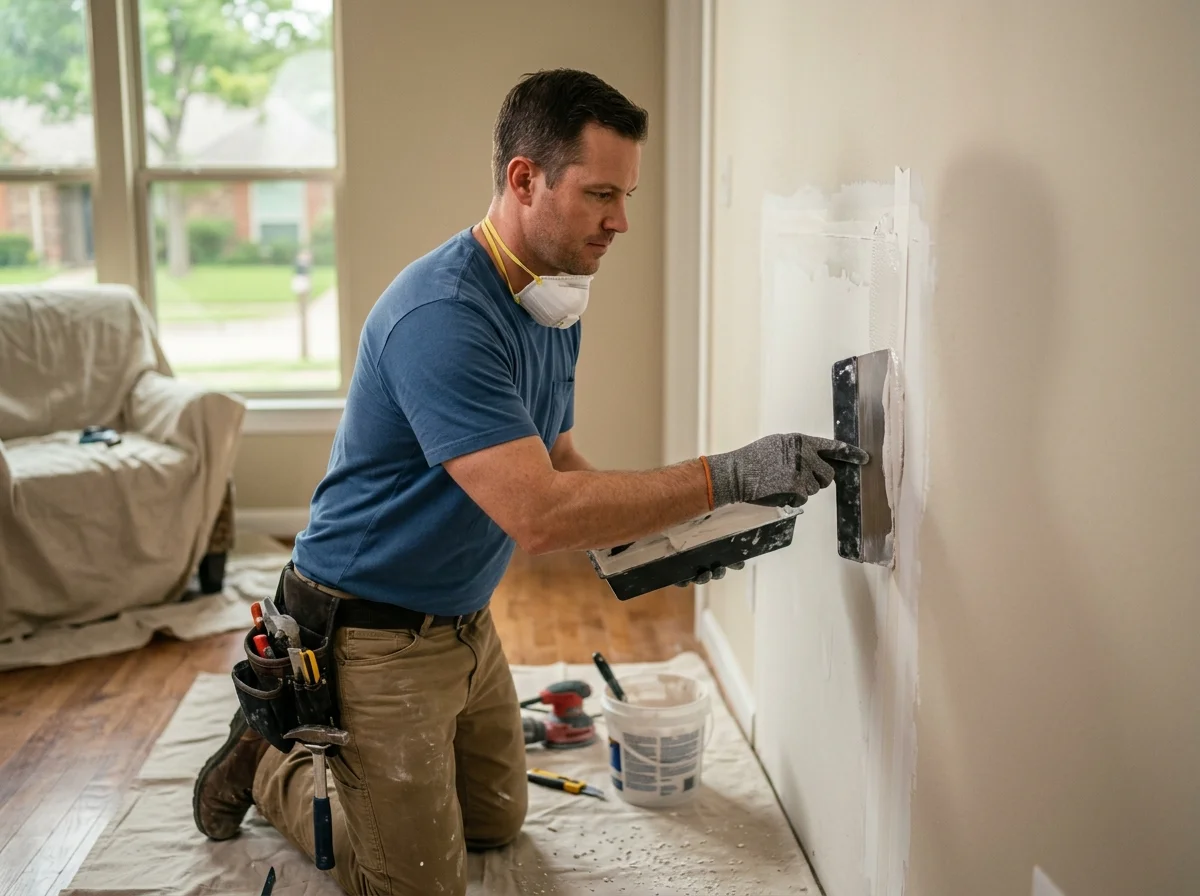
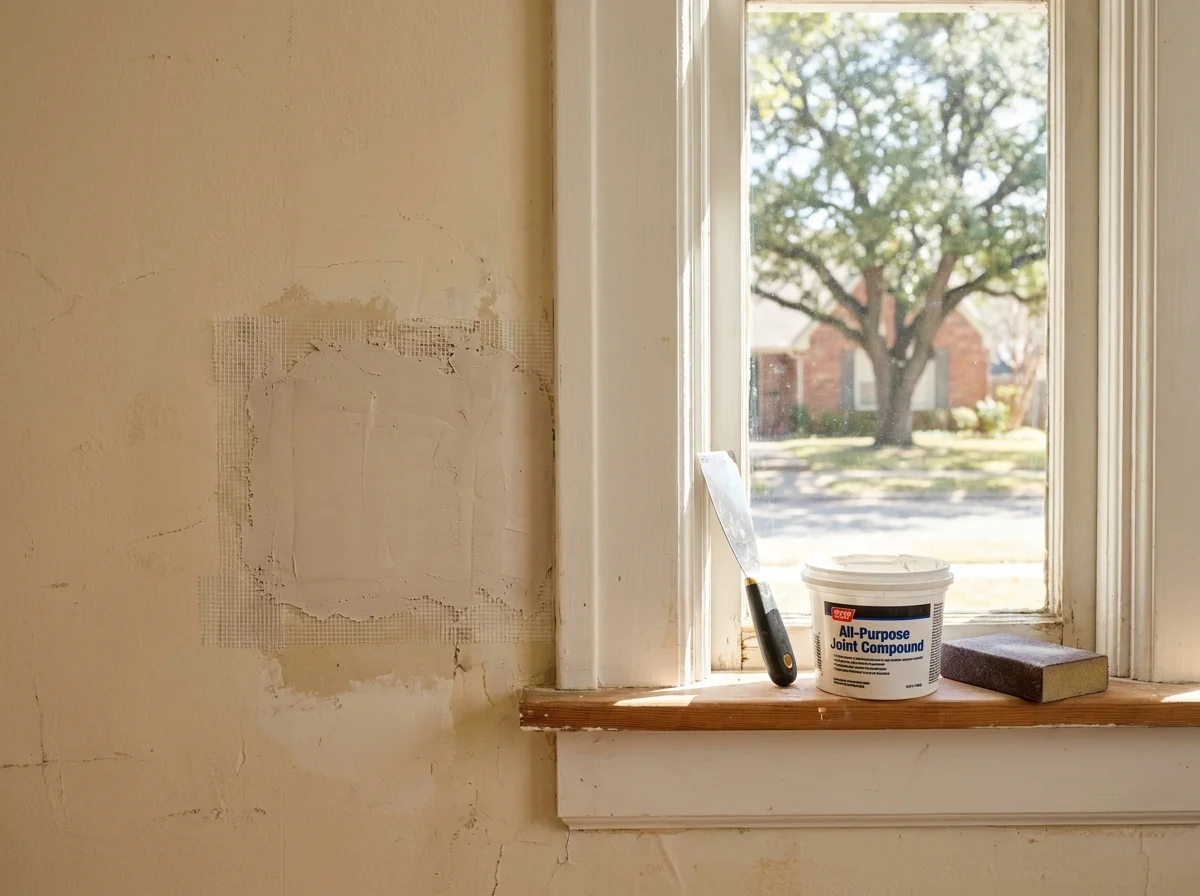
A drywall seam that has opened often needs new tape. Joint compound is then placed over the repair in thin coats and spread beyond the crack so the finished area can blend into the wall.
After the surface is smooth, texture may need to be matched. The wall can then be prepared for primer and paint.
Patch Pros offers drywall patchwork for cracks and other damaged areas, including texture blending and finish work.
Does Every Crack Need Drywall Tape?
No. The repair method depends on the crack.
A tiny stable surface crack may need only limited prep and compound. A cracked seam or failed joint often needs tape because the joint beneath the surface needs support.
Using filler alone on a moving or damaged seam can lead to another visible crack.
The drywall contractor should check whether the line follows a joint, runs through a corner, or starts near a door or window. That tells them more about how the wall should be repaired.
The goal is not to use the same repair on every crack. It is to rebuild the damaged area based on what failed.
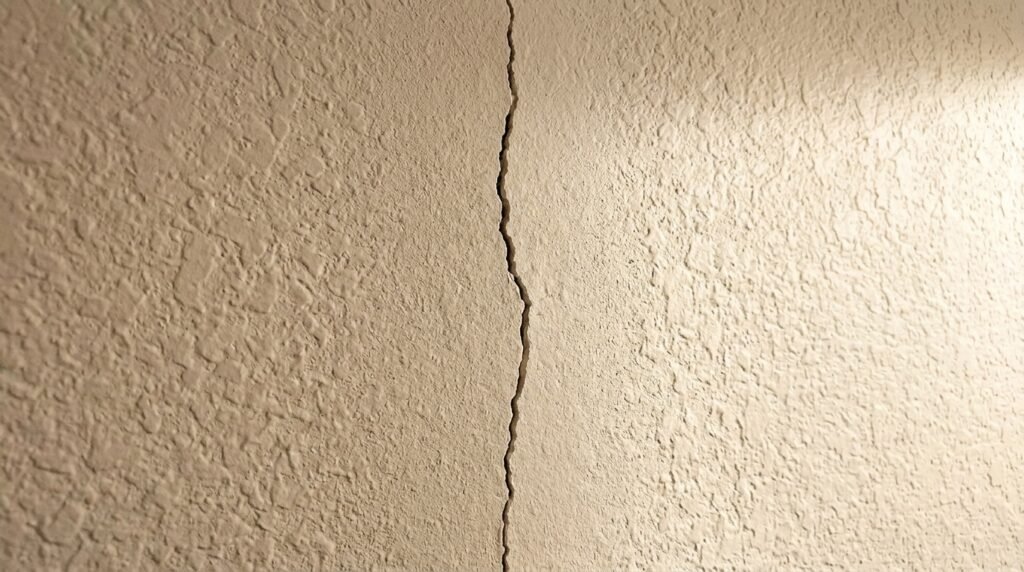
Can Wall Texture Be Matched After Crack Repair?
Yes. Texture matching is often part of making a drywall repair disappear into the surrounding wall.
The repair area may be wider than the crack because joint compound has to be feathered across the surface. Once the wall is smooth, the existing texture can be recreated over the repaired area.
Patch Pros lists texture blending as part of its McKinney drywall services, along with drywall repair and patchwork.
Paint may still need to cover a wider section, especially if the old wall color has faded. Good texture and paint blending help keep the repaired area from standing out.
Should You Repair Every Crack at the Same Time?
Usually, it makes sense to show the contractor all the wall and ceiling damage during the same estimate.
Foundation movement may leave cracks in several rooms. One wall may have a door-corner crack while another has an open seam or ceiling line.
Repairing several stable cracks during the same project can also make texture and paint planning easier.
Before work begins, separate the cracks that are stable from any areas that may still need to be checked by the foundation company. That way, the drywall contractor is not covering signs that still need attention.
What Should You Tell the Drywall Contractor?
Tell the drywall contractor that foundation work was recently completed. Explain where the foundation work took place and whether the foundation company has cleared the home for interior repairs.
Show them every crack, including small lines that may not seem important. Mention which cracks were present before the foundation work and which ones changed afterward.
Photos taken before foundation repair can be very helpful if you have them.
Also tell the contractor what finish you expect. Matching texture, primer, and paint prep can change the amount of work needed after the crack itself is fixed.
Frequently Asked Questions
How long should I wait to repair drywall after foundation work?
There is no single waiting period for every home. Some foundation contractors recommend about a month, while others may advise longer based on the work performed. Ask the company that repaired your foundation when the home is ready for interior finish work.
Is it normal to still have drywall cracks after foundation repair?
Yes. Foundation work does not repair torn drywall tape or cracked joint compound. Existing cracks may still need drywall repair after the foundation work is complete.
Can new drywall cracks appear after foundation repair?
They can. Movement during lifting or leveling may change stress in the framing and drywall. A small crack alone does not prove that the foundation repair failed.
Why did my wall crack get smaller after foundation work?
Foundation movement may change the position of the framing and cause an existing crack to partly close. The damaged drywall seam still needs to be repaired if you want a finished wall.
Should I patch drywall if the crack is still moving?
It is better to find out why the crack is changing first. If foundation movement is still being checked, wait before hiding the crack with finish work.
Do ceiling cracks need repair after foundation work?
They may. Once the structure is ready, loose tape, cracked seams, and other ceiling damage can be repaired and matched to the existing finish.
Can drywall cracks return after they are repaired?
Yes, especially if movement is still active or the weak seam was only covered instead of rebuilt. A stable structure and proper seam repair give the finish a better chance to hold.
Who should repair the walls after foundation work?
A drywall contractor can repair cracks, seams, holes, texture, and other finish damage. A foundation contractor or engineer should handle any questions about active structural movement.
Get Drywall Repair After Foundation Work in McKinney
Drywall cracks after foundation repair are common finish problems, but the timing of the repair matters. Make sure the foundation work is complete and ask the foundation contractor if the home is ready for interior repairs.
Once the walls and ceilings are stable, Patch Pros of North Dallas can repair damaged seams, cracks, texture, and other drywall issues. The company provides repair, patchwork, and texture blending for homes in McKinney.
If you need foundation movement drywall repair or help restoring cracks after foundation work, you can request an estimate and share photos of the damaged walls or ceilings.