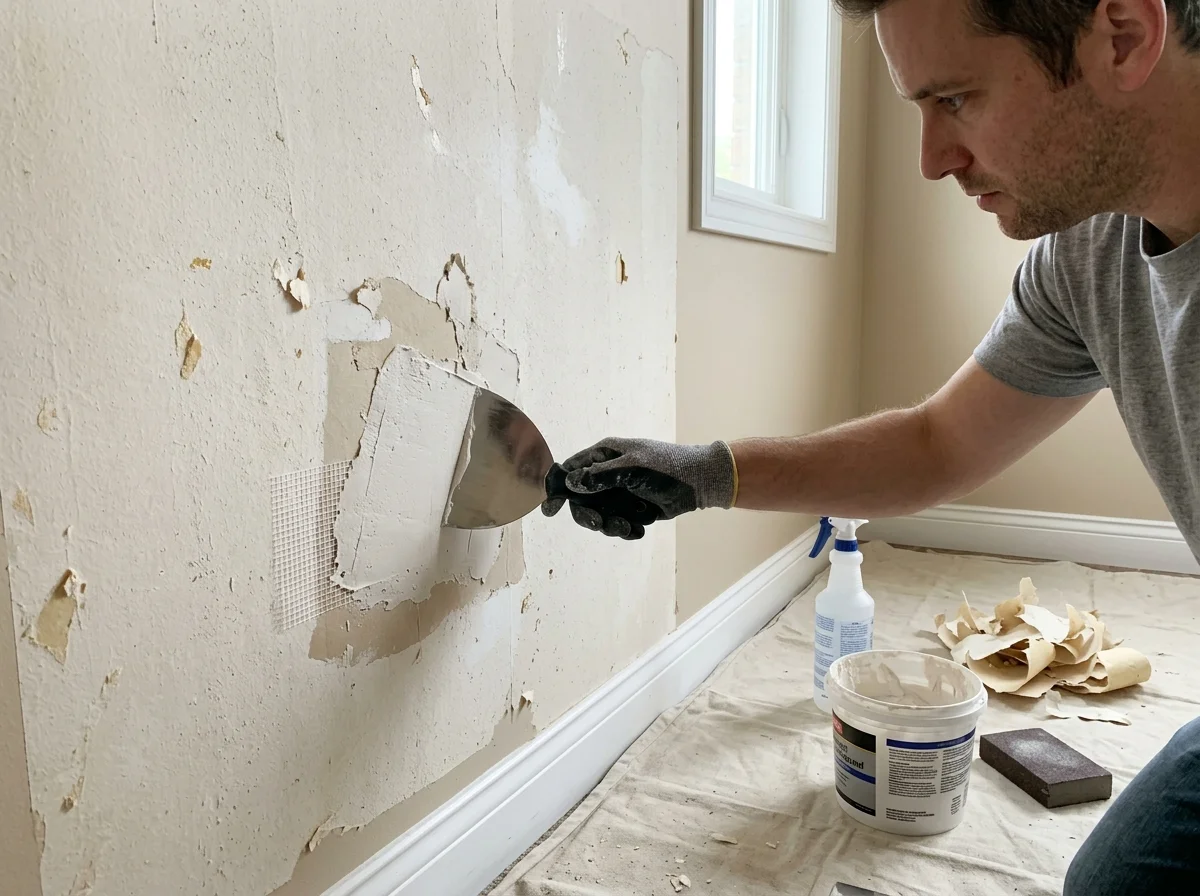
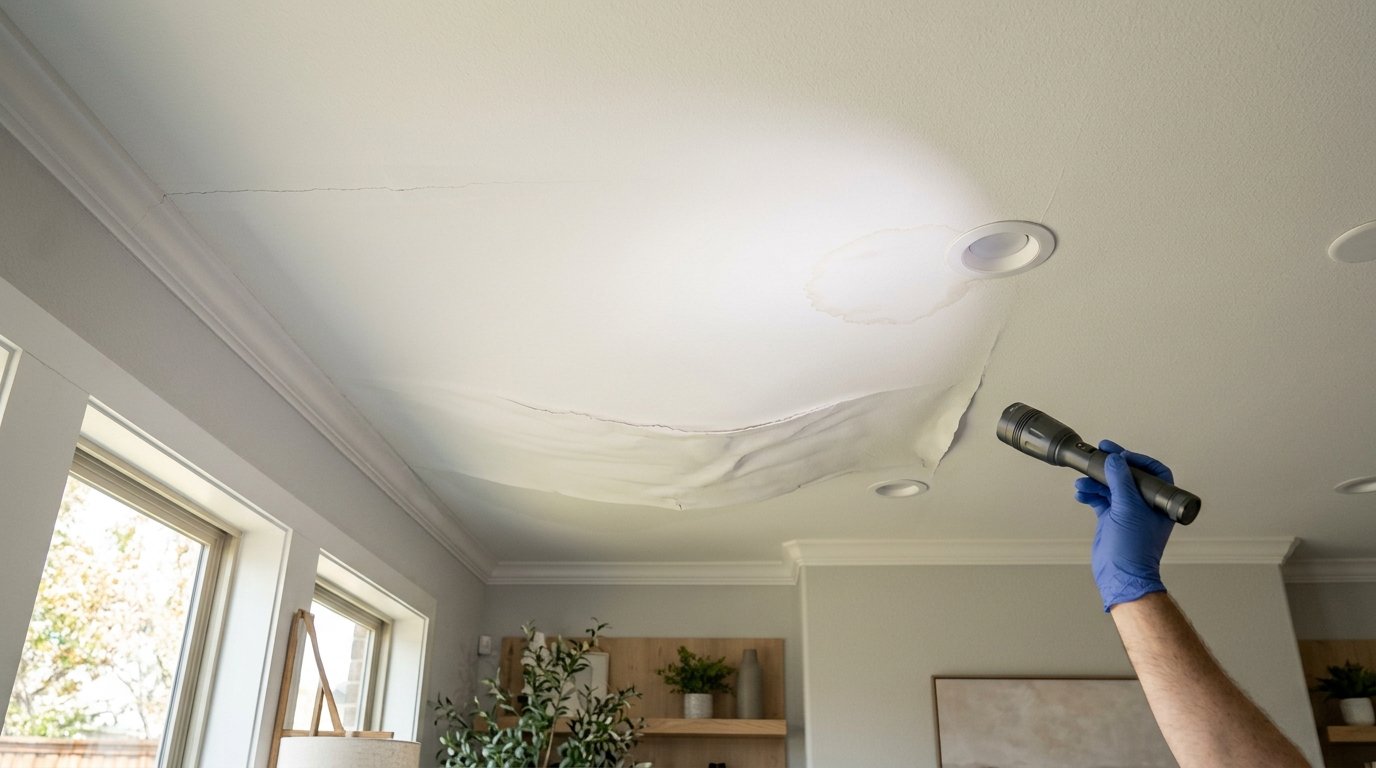
A crack across the ceiling can be easy to ignore. A brown stain may seem like a small paint problem. Even a slight sag can look harmless from the floor. But each sign can point to a different type of ceiling damage.
Homeowners looking for ceiling repair Frisco TX should first find out what caused the problem. A loose drywall seam needs a different repair than a ceiling damaged by a plumbing leak. Sagging drywall may also need more than a simple patch if the board has become weak.
This guide explains the most common ceiling problems, what you should check first, and when a patch may work. It also covers signs that may call for a roofer, plumber, or another professional before drywall repair begins.
What Should You Check First When a Ceiling Looks Damaged?
Start with the type of damage you can see. Look for cracks, stains, soft areas, loose tape, holes, or parts of the ceiling that sit lower than the rest.
Next, think about what happened before the damage appeared. A stain after heavy rain may point to the roof. A wet spot below a bathroom may come from plumbing. A long crack along a drywall seam may be caused by movement or failed joint tape.
Do not begin with paint or filler. The cause should be checked first. Once the ceiling is dry and stable, the drywall can be repaired.
For local help with walls and ceilings, see our Frisco drywall services.
Why Do Ceiling Cracks Appear?
Ceiling cracks can form for many reasons. Some come from normal movement in wood framing. Others follow drywall seams where tape or joint compound has failed.
A small crack does not always mean there is a serious problem. The location and shape matter. A thin line along one seam may be a drywall issue. Several cracks that grow over time may need a closer look.
Cracks can also form where the ceiling meets a wall. This area can move as framing changes with temperature and moisture. The drywall finish may split even when the ceiling board itself is still in good shape.
What Types of Ceiling Cracks Need More Attention?
Not all cracks should be treated the same way. A contractor will often look at the direction, length, width, and location before choosing a repair.
Hairline Cracks
Hairline cracks are thin and may follow a drywall seam. They can form when joint compound dries, tape becomes loose, or the framing moves a little.
If the crack stays small and does not return after repair, the issue may only be cosmetic. If it opens again in the same place, the seam below may need to be rebuilt instead of filled again.
Long Straight Cracks
A long, straight line often follows the joint between two drywall sheets. The tape may have come loose, or the joint may have moved.
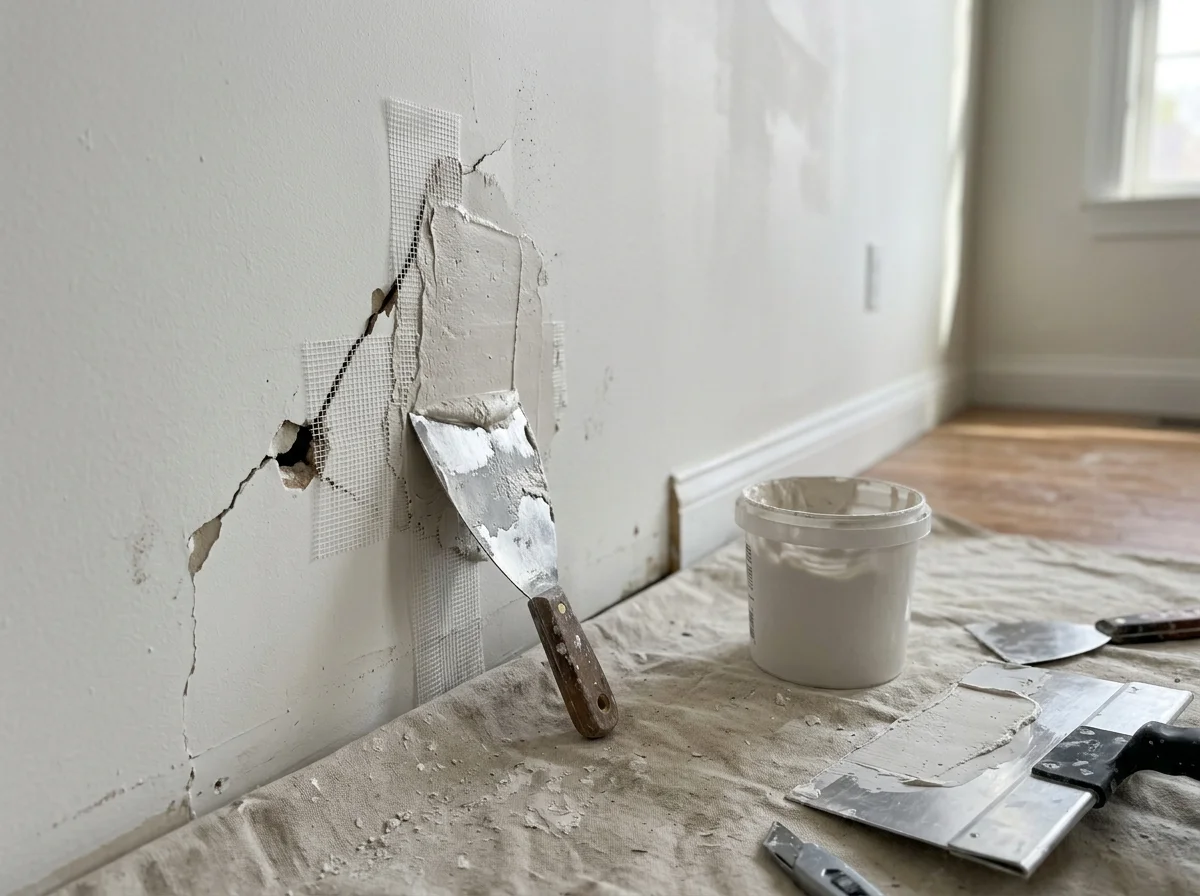
For ceiling crack repair Frisco, the old loose tape may need to be removed. New tape and compound can then be used to rebuild the seam. Covering the line with another thin layer of mud may not last if the joint underneath is still weak.
Cracks Near Walls or Corners
Cracks where the ceiling meets an interior wall can sometimes be linked to roof framing movement. Roof trusses and wall framing may move in slightly different ways during the year.
The crack may appear in one season and become less clear later. This does not prove there is a major structural problem, but it can change how the drywall should be repaired.
Why Is My Ceiling Drywall Sagging?
Sagging ceiling drywall should be checked before any patching starts. Drywall can sag if it becomes wet, loses support, or is not held well to the framing above.
Water is a common cause. Wet gypsum board can become heavy and weak. The board may begin to bow between ceiling joists or pull away from fasteners.
Sagging can also happen when drywall screws or nails loosen. In other cases, the ceiling board may have been installed with too much space between supports.
A small low spot and a large sagging section are not the same problem. If the ceiling feels soft or the sag is getting worse, avoid pressing on it and have the area checked.
Can Sagging Ceiling Drywall Be Repaired?
Sometimes. If the drywall is dry, firm, and still in good shape, the repair may involve adding proper support and fixing loose fasteners.
If the board is soft, wet, broken, or badly bowed, replacement may be the better option. Joint compound cannot restore strength to damaged gypsum board.
The contractor may need to cut out the weak section and install new ceiling drywall. The seams are then taped, finished, sanded, and matched to the existing texture.
The right choice depends on why the ceiling sagged in the first place. Fixing the cause is more important than hiding the low area.
What Do Brown Water Stains on a Ceiling Mean?
A brown or yellow stain usually means water has reached the ceiling at some point. The leak may still be active, or the stain may be left from an older problem.
Common sources include roof leaks, plumbing lines, bathrooms above the ceiling, HVAC drain problems, and water around roof vents or flashing.
For a water damaged ceiling Frisco homeowners should find and fix the source before repairing the drywall. New paint will not stop an active leak.
If the ceiling is still wet, drying comes first. If the board is soft, swollen, or sagging, part of it may need to be removed.
Our water damage guide explains how wet drywall is checked before patching or replacement.
Can You Paint Over a Ceiling Water Stain?
You can paint the stain only after the leak is fixed and the ceiling is fully dry. Painting too early can trap moisture or allow the mark to return.
The drywall should also be checked for strength. A stain on firm, dry drywall may need stain-blocking primer and paint. A soft or swollen area needs repair first.
Bubbling or peeling paint can be a sign that moisture has reached the surface. Do not scrape and repaint until you know why the paint failed.
The goal is to fix the cause, dry the area, repair damaged material, and then finish the surface.
Does Water-Damaged Ceiling Drywall Always Need Replacement?
No. Some ceiling drywall can dry and remain strong if the water exposure was limited.
Replacement becomes more likely when the drywall is soft, swollen, badly sagging, falling apart, or damaged across a wide area. The condition above the ceiling also matters. Wet insulation can hold moisture and slow the drying process.
A contractor may remove only the damaged section instead of replacing the whole ceiling. The repair can then be blended with the surrounding drywall.
This is why the visible stain does not always show the true size of the repair. Water may spread above the ceiling before it becomes visible below.
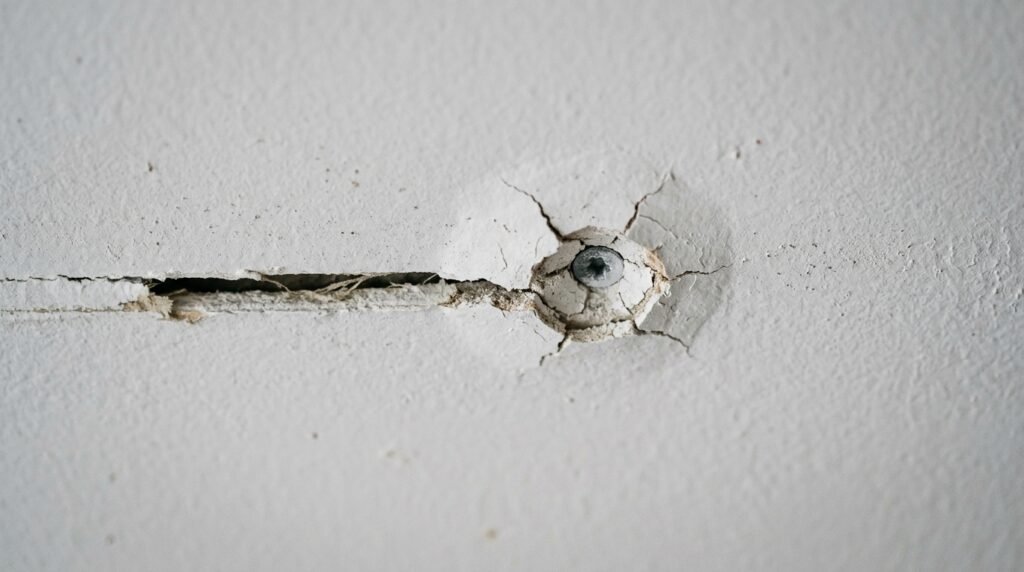
What Causes Ceiling Drywall to Pull Away or Pop?
Fastener pops can appear when screws or nails move slightly in the drywall. They often look like small round bumps or cracks.
A few pops may be a simple finish problem. Many loose areas can point to a larger support issue. The contractor may need to add new screws into solid framing before covering the old fastener spots.
Ceiling drywall can also pull away if it becomes wet or if the original fasteners do not hold well.
The repair should secure the board first. Joint compound and paint come after the drywall is firmly attached.
Can a Hole in a Drywall Ceiling Be Patched?
Yes. Many ceiling holes can be patched if the drywall around the opening is firm and dry.
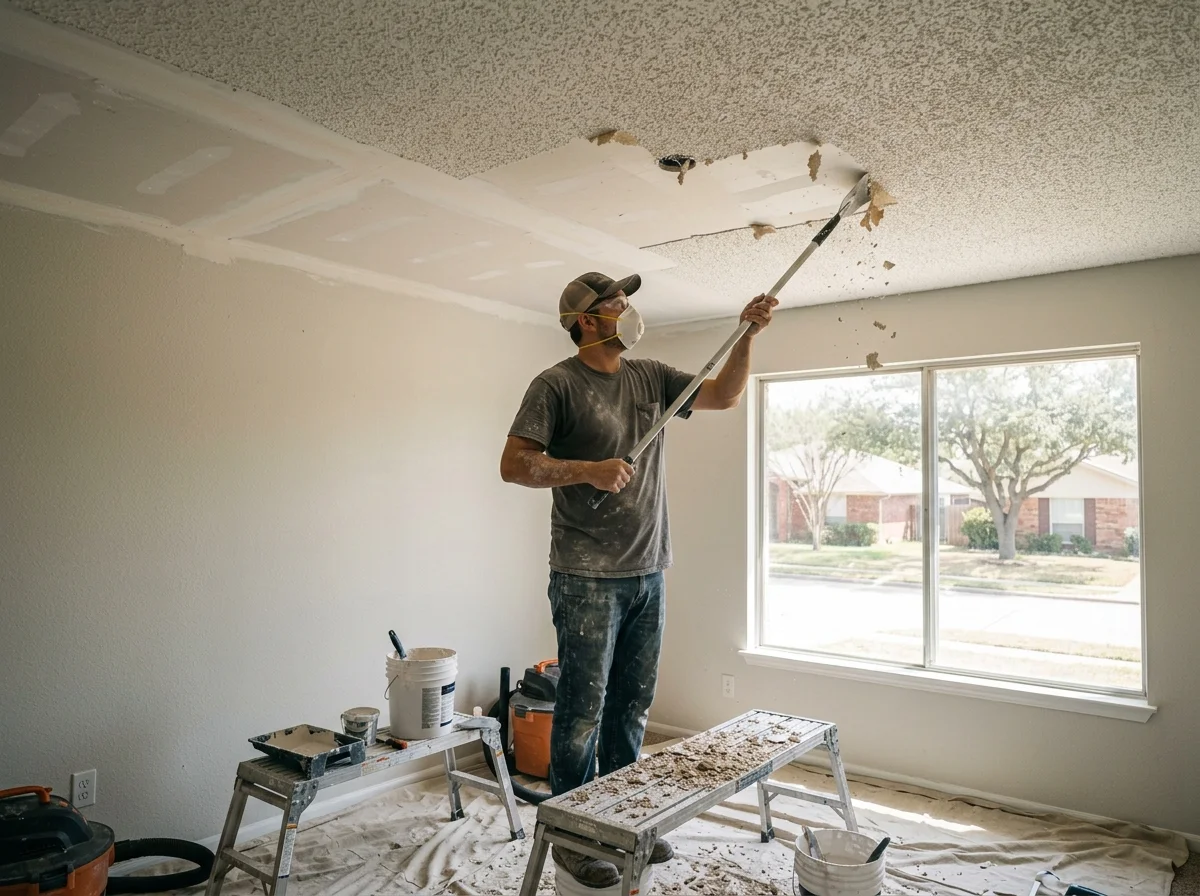
A ceiling patch Frisco project may start by trimming the damaged opening into a clean shape. Support may be added behind the ceiling. A new drywall piece is then fitted and fixed in place.
The seams need tape and joint compound. After sanding, the texture should be matched to the rest of the ceiling. Smooth, knockdown, orange peel, and popcorn finishes can all make the final blend more important.
For more on the patching process, see our drywall patchwork service.
When Should Ceiling Drywall Be Replaced Instead of Patched?
Replacement often makes more sense when the damaged area is too weak to hold a good patch.
Signs that may point to replacement include:
- Large soft areas
- Heavy sagging
- Water-soaked drywall
- Broken or crumbling gypsum
- Wide sections pulling away from framing
- Several damaged seams in one area
- Drywall that keeps failing after past repairs
A small hole does not usually require a whole ceiling replacement. The contractor can often remove only the weak section.
The goal is to leave solid drywall around the repair so the new piece has a strong base.
Why Do Ceiling Seams Keep Cracking?
A ceiling seam can keep cracking when the tape is loose or when movement continues behind the finish. Filling the line alone may not solve the problem.
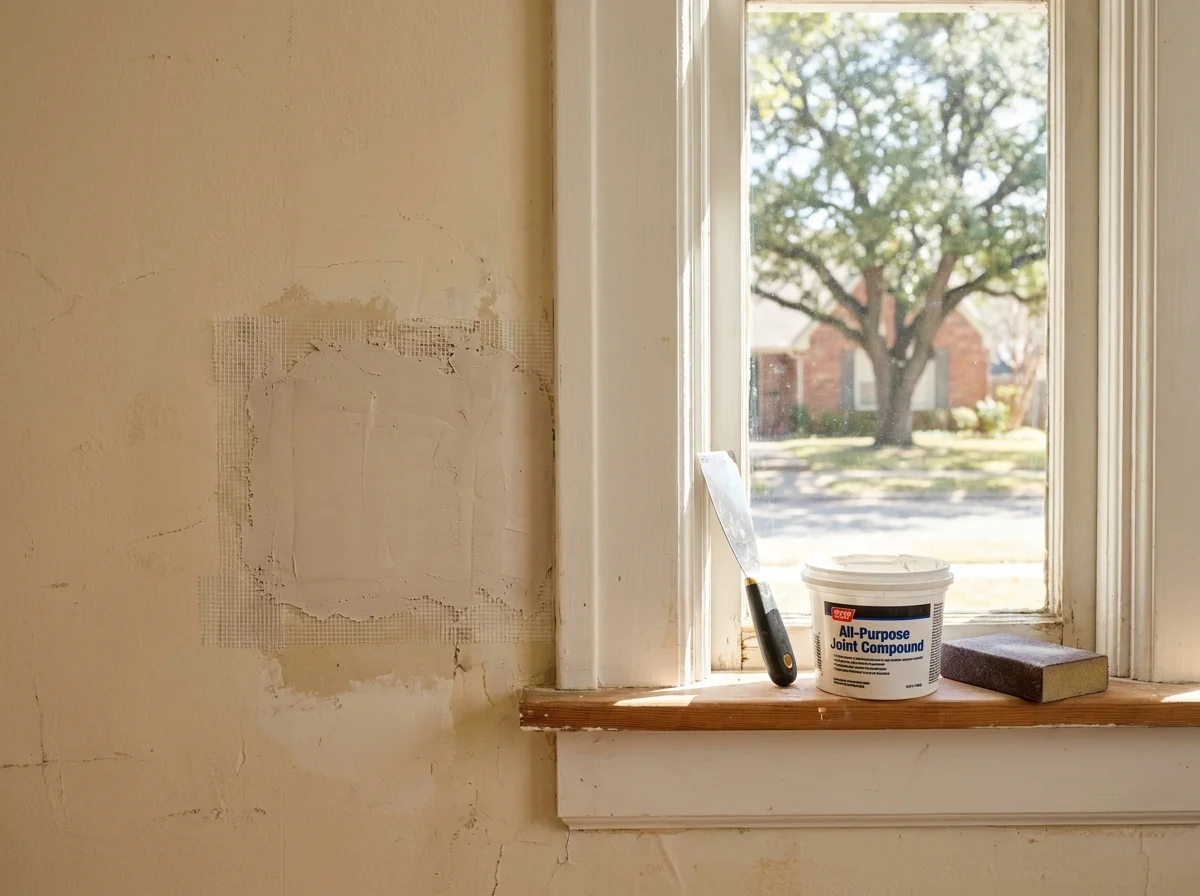
A better ceiling drywall repair Frisco may require removing the old damaged tape. New tape is then placed over the seam and covered with several thin coats of joint compound.
The repair area may need to extend wider than the crack so the finished ceiling stays smooth.
If the crack follows the same seasonal pattern each year, the contractor should know that before work begins. The repair method may need to allow for movement rather than treating it as a simple surface crack.
Could Roof Trusses Cause Ceiling Cracks?
They can. Roof trusses may move slightly as wood moisture levels change. This is often called truss uplift when part of the roof framing rises away from an interior wall.
The drywall at the wall-to-ceiling corner may then crack or pull away. The problem may become more visible during certain times of the year.
Truss movement is different from a plumbing leak or damaged drywall seam. That is why the location and timing of the crack matter.
A drywall contractor can repair the finish, but signs of wider framing or structural movement may need another professional to inspect the home first.

When Should You Call a Roofer, Plumber, or HVAC Technician First?
Call the trade that can fix the source of the damage before the drywall repair begins.
A roofer should check a ceiling stain that appears after rain or storm damage. A plumber may be needed when the wet area is below a bathroom, water line, or pipe. An HVAC technician may be the right first call when moisture is near an air handler, drain line, or vent system.
Once the leak is stopped and the ceiling is dry, the drywall contractor can repair the damaged surface.
This order helps protect the new repair from getting wet again.
When Should Ceiling Damage Be Checked More Closely?
Most drywall problems are not emergencies, but some signs should not be ignored.
Get the area checked when you see:
- A ceiling that is sagging more over time
- A large soft or wet area
- Water that is still dripping
- Several new cracks appearing together
- A crack that becomes wider
- A ceiling section pulling away
- Cracks with other signs of building movement
- A musty smell after a leak
- Repeat damage after past repairs
A drywall contractor can inspect the finish and repair damaged board. If the signs point to framing, roof, plumbing, or structural movement, another trade may need to deal with that cause first.
How Is Ceiling Drywall Repair Done?
The repair starts by finding the cause and checking the damaged area. Loose, wet, or broken drywall may need to be removed.
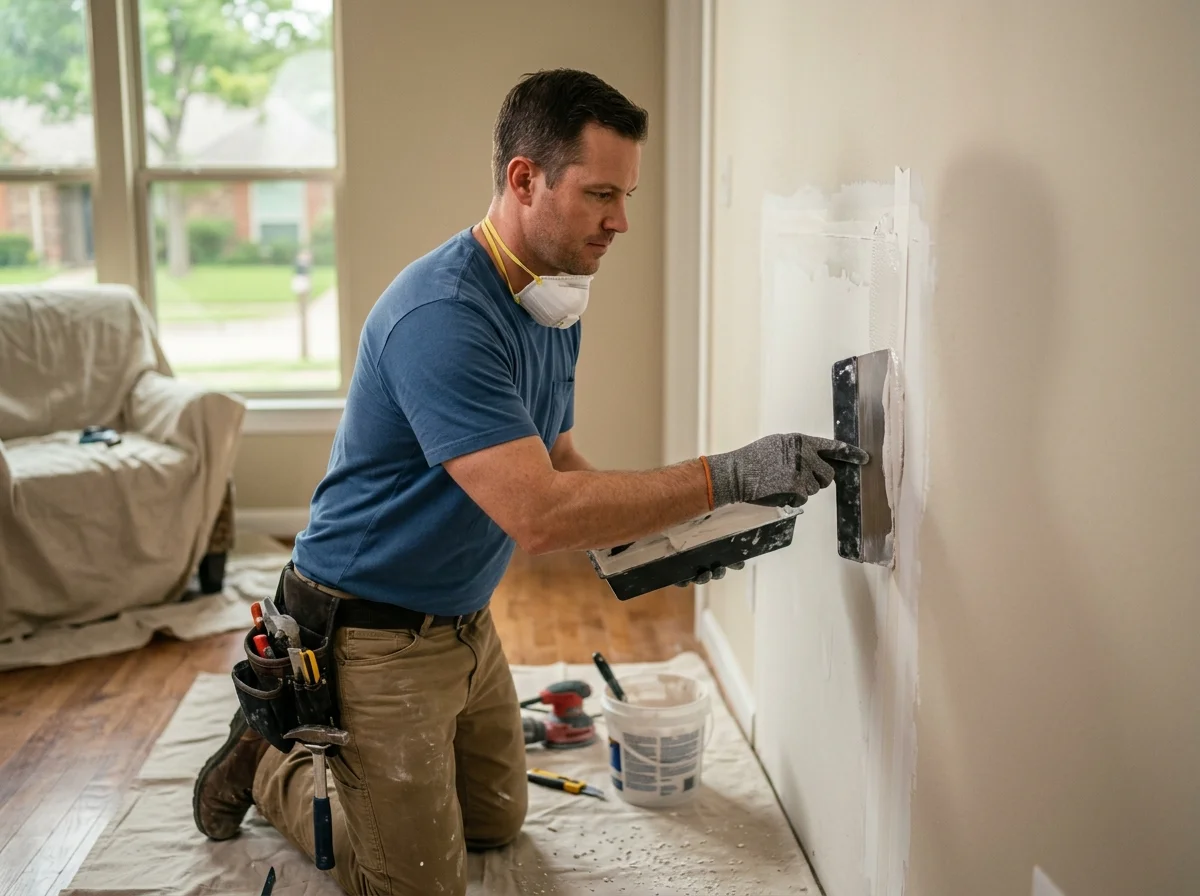
If a patch is needed, new drywall is fitted into the opening. The seams are taped and covered with joint compound. Several coats may be needed to create a smooth transition between the old and new surface.
After sanding, the ceiling texture is matched. The area is then prepared for primer and paint.
Good ceiling work should not leave a clear square around the patch. Texture and finish work are a key part of making the repair blend with the room.
Frequently Asked Questions
Are ceiling cracks always serious?
No. Small cracks can come from drywall seams, loose tape, or normal framing movement. A growing crack or several new cracks may need a closer look.
Can sagging ceiling drywall be fixed without replacement?
Sometimes. Dry, firm drywall may be secured again if the main issue is loose fasteners. Soft, wet, or badly bowed drywall may need replacement.
What causes brown ceiling stains?
Brown or yellow stains often come from water. The source may be a roof leak, plumbing problem, HVAC issue, or water from the room above.
Can I patch a hole in a drywall ceiling?
Yes. A hole can often be patched if the drywall around it is dry and strong. Large openings may need support and a new drywall piece.
Why does my ceiling crack keep coming back?
The seam may still be moving, or the old drywall tape may have failed. The weak joint may need to be opened and rebuilt before finishing.
Should I fix a roof leak before drywall repair?
Yes. The leak should be stopped before new ceiling drywall is installed. Otherwise, the new repair may become damaged again.
Does ceiling texture need to be matched after repair?
Usually, yes. A patch may stand out if its texture is different from the rest of the ceiling. The repair should blend with the existing finish.
Who should I call for ceiling drywall damage?
A drywall contractor can repair cracks, holes, loose seams, and damaged ceiling board. If water is still entering, call the roofer, plumber, or HVAC company that can stop the leak first.
Get Ceiling Repair in Frisco, TX
Cracks, stains, holes, and sagging drywall do not all need the same repair. The best first step is finding the cause and checking whether the ceiling is still dry and strong.
Patch Pros of North Dallas provides ceiling repair Frisco TX for damaged drywall, ceiling cracks, patches, texture problems, and other drywall issues. When water is involved, the leak should be fixed before the final ceiling repair begins.
If you need ceiling crack repair Frisco or another ceiling drywall service, you can request an estimate and share photos of the damaged area.